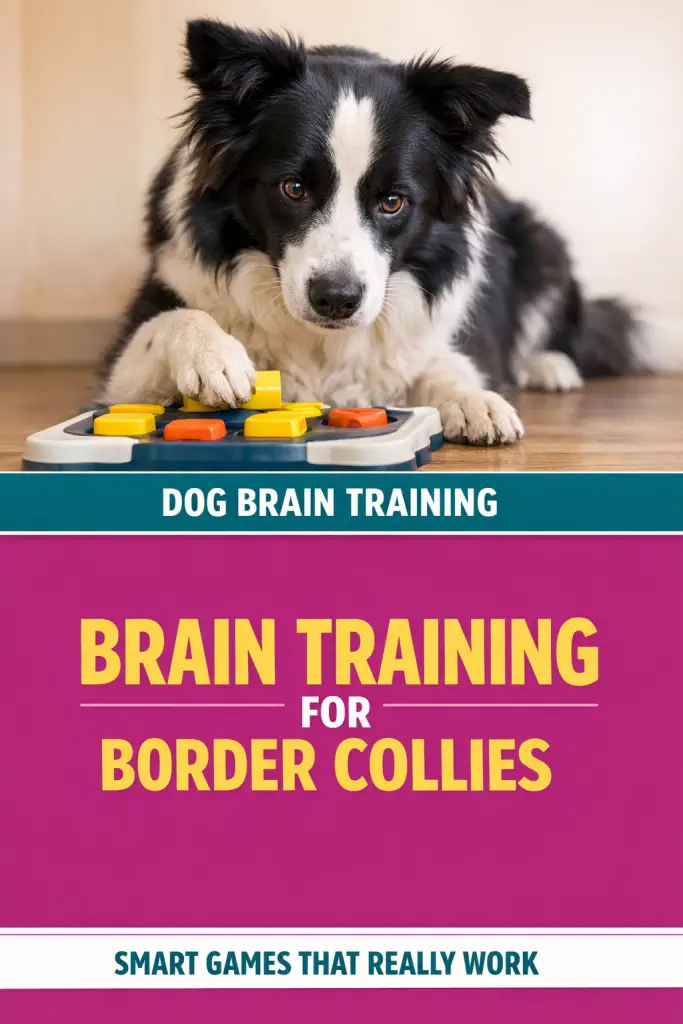
If you live with a Border Collie, you already know this truth: their brain never switches off. They’re always watching, thinking, anticipating your next move—and if they’re bored, oh boy, they’ll invent their own fun. Chewed furniture, obsessive pacing, herding your kids… been there? I have too.
I started focusing on brain training for my own Border Collie after realizing that long walks alone just weren’t cutting it. Physical exercise helped, sure, but mental stimulation changed everything. A calmer dog. Better focus. Fewer “what did you destroy now?” moments. Let’s talk about how brain training actually works for Border Collies and how you can use it to raise a happier, saner, and more fulfilled dog.
Why Brain Training Is Non-Negotiable for Border Collies
Border Collies aren’t just smart—they’re working-level intelligent. They were bred to problem-solve, make decisions independently, and work for hours without mental fatigue. When that mental drive has nowhere to go, issues pop up fast.
What happens without enough mental stimulation?
A bored Border Collie often shows it through behaviors like:
- Excessive barking or whining
- Destructive chewing
- Obsessive behaviors like shadow chasing
- Hyper-fixation on movement or noises
- Difficulty settling indoors
FYI, these aren’t “bad dog” behaviors. They’re signs of an underworked brain. IMO, mental exercise is just as important as physical exercise—sometimes even more.
The magic balance: mind + body
Daily walks are great, but they don’t challenge decision-making. Brain training:
- Tires your dog faster than running
- Builds confidence and focus
- Strengthens communication between you and your dog
- Reduces anxiety and reactivity
A mentally satisfied Border Collie is calmer, happier, and way easier to live with 🙂
Understanding How Border Collies Learn
Before jumping into games and puzzles, it helps to understand how your Border Collie processes information. These dogs learn fast—but they also get bored fast.
Fast learners, faster thinkers
Border Collies:
- Pick up patterns quickly
- Anticipate commands before you finish them
- Notice tiny changes in routine
- Thrive on novelty and challenge
This means repetition without progression won’t work long-term. Once they “get it,” they’re ready for the next level.
Why problem-solving matters
Your dog doesn’t just want answers handed to them. They want to figure things out. Brain training taps into:
- Decision-making skills
- Memory and recall
- Cause-and-effect understanding
- Impulse control
The goal isn’t perfection. The goal is engagement.
Foundational Brain Training Skills to Teach First
Think of these as the building blocks. Once these are solid, everything else becomes easier.
Focus and engagement games
Before advanced training, your dog needs to choose to focus on you.
Simple ways to build focus:
- Reward eye contact
- Play “look at me” games
- Practice short training sessions multiple times a day
- Use high-value treats for mental work
Strong focus equals faster learning, especially for high-drive dogs like Border Collies.
Impulse control exercises
Border Collies act fast—sometimes too fast. Teaching them to pause is powerful.
Try exercises like:
- Waiting before meals
- “Leave it” with increasing difficulty
- Holding a sit before throwing a toy
- Doorway manners
These activities train the brain to slow down and think before reacting.
Interactive Brain Games Your Border Collie Will Love
This is where things get fun. Brain games don’t need to be complicated or expensive to be effective.
Food-based puzzle challenges
Food puzzles are gold for mental stimulation because they combine motivation with problem-solving.
Popular options include:
- Puzzle feeders with sliders or levers
- Snuffle mats for scent work
- Frozen Kongs with layered fillings
- DIY towel puzzles with hidden treats
Rotate puzzles often. Novelty keeps the brain engaged.
Hide-and-seek games
Border Collies excel at search tasks. You can start simple and build up.
Ideas to try:
- Hide treats around one room
- Hide toys and ask for retrieval
- Hide yourself and call your dog
- Increase distance and difficulty over time
This strengthens memory, scent work, and listening skills all at once.
Advanced Brain Training Activities for High-Energy Minds
Once the basics are solid, it’s time to really challenge that genius brain.
Trick training beyond the basics
Border Collies thrive on learning new behaviors, not just repeating old ones.
Advanced tricks to teach:
- Naming and retrieving specific toys
- Opening and closing doors
- Sorting objects by name or color
- Complex sequences like spin → bow → jump
Chaining behaviors together forces your dog to think ahead and remember steps.
Scent work and nose games
Mental fatigue hits faster when scent is involved. Nose work is incredibly powerful.
You can:
- Teach scent discrimination
- Hide scented objects
- Play “find it” with increasing difficulty
- Introduce beginner tracking games
Even 10–15 minutes of scent work can calm a Border Collie more than a long walk.
Using Training Sessions as Mental Workouts
Training isn’t just about obedience. It’s one of the best brain workouts you can give.
Short, frequent sessions work best
Border Collies learn best with:
- 5–10 minute sessions
- Multiple sessions per day
- Clear goals per session
- Quick wins and progression
End sessions while your dog is still excited. That keeps motivation high.
Mix obedience with problem-solving
Instead of drilling commands, add thinking elements:
- Ask for commands in new environments
- Change your position or distance
- Use hand signals instead of verbal cues
- Combine commands into sequences
This prevents autopilot learning and keeps your dog mentally engaged.
Brain Training for Puppies vs Adult Border Collies
Mental stimulation matters at every age, but the approach should shift over time.
Brain training for Border Collie puppies
Puppies need:
- Short, positive sessions
- Exploration-based games
- Confidence-building challenges
- Simple puzzles and toy rotation
Avoid overloading them. The goal is curiosity, not pressure.
Brain training for adult dogs
Adult Border Collies need:
- Increased difficulty
- Variety and novelty
- Purpose-driven tasks
- Ongoing skill progression
Even senior Border Collies benefit from gentle brain games that keep their minds sharp.
Common Mistakes That Limit Mental Growth
Sometimes good intentions backfire. Let’s avoid the most common brain-training mistakes.
Doing the same activities every day
Routine is comfortable—but it kills mental challenge. Rotate:
- Games
- Toys
- Training locations
- Reward types
Your dog should wonder, “What are we doing today?”
Overusing physical exercise alone
More running doesn’t equal more calm. Without mental work, you’ll just build stamina instead of satisfaction. A tired body with a bored brain still causes trouble.
Expecting instant calm
Brain training is cumulative. You’ll see improvements over days and weeks, not minutes. Stick with it.
How to Build a Daily Brain Training Routine
Consistency beats intensity every time.
A realistic daily structure
You don’t need hours. Try this:
- Morning: short training session
- Midday: puzzle or scent game
- Evening: obedience + trick practice
- Night: calm enrichment like licking or chewing
This balances stimulation with relaxation.
Listening to your dog’s signals
Mental fatigue looks different than physical fatigue. Signs include:
- Slower responses
- Choosing rest over play
- Relaxed body language
- Fewer attention-seeking behaviors
That’s your cue—you’ve done enough for the day.
The Emotional Benefits of Brain Training
This part doesn’t get talked about enough.
Brain training:
- Builds confidence
- Reduces anxiety
- Strengthens trust
- Improves communication
- Creates a deeper bond
You’re not just exercising a brain. You’re building a partnership.
Conclusion
Brain training for Border Collie dogs isn’t optional—it’s essential. These dogs were born to think, solve, and work, and when you meet that need, everything improves. You get a calmer home, a more focused dog, and a relationship built on understanding rather than frustration.
Start small. Stay consistent. Keep things fun. And remember, every puzzle solved and every new trick learned is your Border Collie doing what they were born to do—use that brilliant brain. So go grab a treat, set up a challenge, and let your dog surprise you. Trust me, they always do