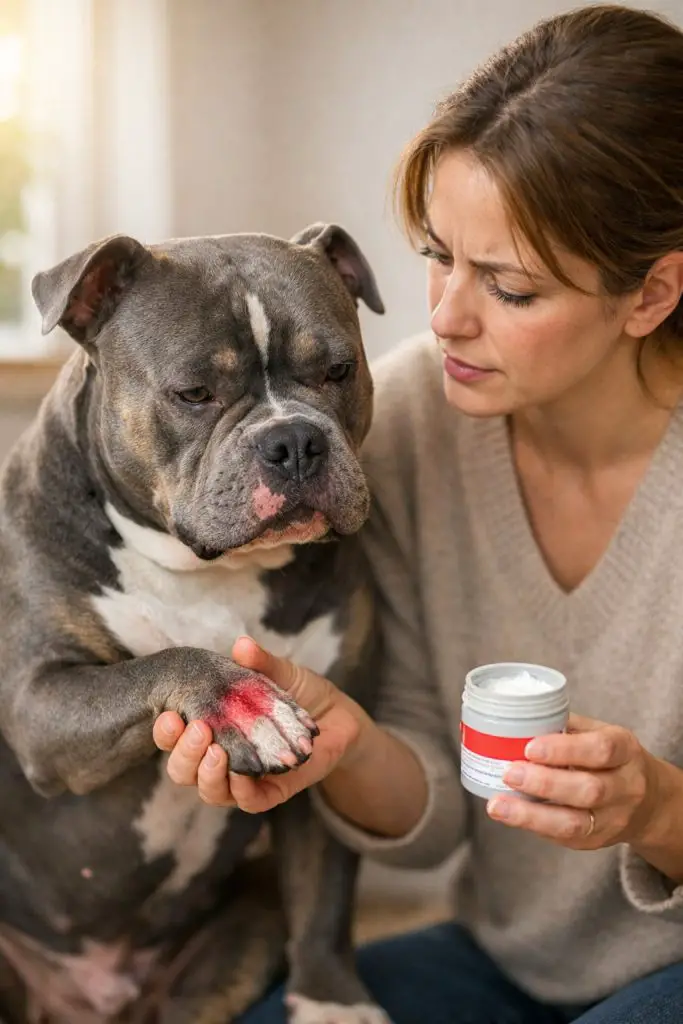
When Your Dog Has a Skin Problem and You’re Not Sure What to Do
If you’ve ever noticed your dog scratching nonstop, licking a sore spot, or developing a small rash, you probably know that worried feeling. You want to help them fast — and naturally, you look around the house for something that might soothe their skin. Many pet owners have Sudocrem in their cabinet for babies or minor skin irritations, so it’s a common question: Can I use Sudocrem on my dog?
I think most of us have been there at some point. I feel like when our pets are uncomfortable, we just want quick relief for them without waiting days for a vet appointment. In my experience, though, human products aren’t always as safe for dogs as they seem — even if they look harmless.
The good news is you’re in the right place. This guide will explain whether Sudocrem is safe for dogs, when it might help, when it’s risky, and what vets actually recommend — in simple, clear language you can trust.
Can You Put Sudocrem On Dogs?
Yes — Sudocrem can sometimes be used on dogs in small amounts, but only for minor skin issues and with precautions. It is not always safe, especially if dogs can lick it or if the skin problem is serious.
Quick Safety Facts
- Sudocrem contains zinc oxide, which can be harmful if dogs ingest large amounts.
- It may help with minor irritation, small rashes, or superficial sores.
- It should never be used on deep wounds or infections.
- Dogs that lick the area can develop stomach upset or zinc toxicity.
- Always apply a thin layer only.
- A vet-approved pet cream is usually safer.
- If symptoms persist more than 24–48 hours → consult a vet.
Immediate Safe Actions
If your dog has mild irritation:
- Clean the area gently with warm water.
- Dry thoroughly.
- Apply a tiny amount of Sudocrem.
- Prevent licking (cone or supervision).
What Is Sudocrem and Why Do People Consider Using It on Dogs?
Sudocrem is a popular antiseptic healing cream used for:
- Diaper rash
- Minor burns
- Cuts and scrapes
- Skin irritation
Its main ingredients include:
- Zinc oxide — protective barrier, soothing
- Benzyl alcohol — mild antiseptic
- Lanolin — moisturizing
- Benzyl benzoate — antibacterial properties
Because it works well on human skin irritation, pet owners naturally wonder if it can help dogs too.
And sometimes… it can.
But there are important caveats.
Is Sudocrem Safe for Dogs?
The honest answer: It depends on the situation.
When It May Be Relatively Safe
Sudocrem might be okay for:
- Small superficial cuts
- Mild skin irritation
- Minor rashes
- Light hot spots (early stage)
- Paw irritation (temporary use)
When It Is NOT Safe
Avoid using Sudocrem if:
- Your dog can lick the area easily
- The wound is deep or bleeding
- There is infection (pus, odor, swelling)
- Your dog has large affected skin areas
- The skin is broken significantly
- Your dog is a puppy
- The issue involves eyes, ears, or mouth
Important: Dogs metabolize substances differently than humans. What is safe for us is not always safe for them.
Why Zinc Oxide Can Be Risky for Dogs
The biggest concern with Sudocrem is zinc oxide ingestion.
Dogs naturally lick wounds — it’s instinctive.
If they ingest too much zinc oxide, it can cause:
- Vomiting
- Diarrhea
- Loss of appetite
- Lethargy
- Stomach irritation
In rare severe cases:
- Zinc toxicity
- Anemia
- Organ damage
FYI — small accidental licks usually cause mild stomach upset at worst, but repeated ingestion increases risk.
Common Situations Where Owners Want to Use Sudocrem
Let’s look at realistic scenarios.
Minor Skin Irritation or Rash
Possible causes:
- Allergies
- Contact irritation (grass, chemicals)
- Moisture buildup
- Grooming irritation
Sudocrem may provide temporary soothing.
Early Hot Spots
Hot spots start small but worsen quickly.
A thin layer might help protect skin — but hot spots often need vet treatment.
Paw Irritation
Winter salt, rough surfaces, or allergies can irritate paws.
Temporary use may help if licking is prevented.
How To Safely Use Sudocrem on a Dog (If You Choose To)
If you decide to use it, safety matters most.
Step-by-Step Safe Application
- Clean the area
- Use lukewarm water or pet-safe antiseptic.
- Dry completely
- Moisture can worsen irritation.
- Apply a very thin layer
- Less is better.
- Prevent licking
- Use an Elizabethan collar (cone) if needed.
- Monitor closely
- Check for redness, swelling, or worsening.
- Limit use to 1–2 days
- If no improvement → vet visit.
Key rule: Sudocrem should be a short-term solution only.
Signs You Should NOT Use Sudocrem and Call a Vet Instead
Sometimes skin problems signal something deeper.
Contact a vet if you notice:
- Persistent scratching
- Bleeding or open wounds
- Pus or discharge
- Bad odor
- Hair loss patches
- Swelling
- Pain when touched
- Fever or lethargy
- Rapidly spreading redness
IMO — when in doubt, a vet visit saves time and prevents complications.
Vet-Recommended Alternatives to Sudocrem for Dogs
There are safer options made specifically for pets.
Common alternatives include:
- Pet antiseptic creams
- Chlorhexidine sprays
- Veterinary wound ointments
- Hydrocortisone pet creams (vet-approved)
- Medicated hot spot treatments
Natural options sometimes used (with caution):
- Coconut oil (minor dryness only)
- Aloe vera (pure, dog-safe type only)
But remember — natural doesn’t automatically mean safe.
Why Dogs Develop Skin Irritation in the First Place
Understanding causes helps prevent future issues.
Common Causes
- Allergies (food or environmental)
- Fleas or parasites
- Moisture trapped in fur
- Bacterial infections
- Yeast infections
- Grooming reactions
- Anxiety licking
- Contact with irritants
Skin problems are one of the top reasons dogs visit vets.
When to Worry: Red Flags That Need Veterinary Care
Seek professional help quickly if:
- Symptoms last more than 48 hours
- Your dog seems in pain
- Skin worsens despite treatment
- Your dog keeps licking obsessively
- You suspect infection
- Your dog ingested Sudocrem
Early treatment prevents bigger problems later.
Safe Use Checklist for Pet Owners
If you’re considering Sudocrem, use this quick checklist.
✔ Skin issue is minor and superficial
✔ Area is small
✔ Dog cannot easily lick it
✔ Only a thin layer is applied
✔ Used for no more than 1–2 days
✔ No signs of infection
✔ Dog shows normal behavior
If any box is unchecked → skip Sudocrem and call your vet.
Frequently Asked Questions
Can Sudocrem help hot spots?
It may provide temporary protection, but hot spots often need veterinary treatment, especially antibiotics or medicated sprays.
Is Sudocrem safe for dog paws?
Small amounts can be used short-term, but licking risk is high. Paw balms made for dogs are safer.
What happens if my dog licks Sudocrem?
Usually mild stomach upset, but large ingestion can be harmful. Contact a vet if symptoms appear.
Can I use Sudocrem on puppies?
Best to avoid. Puppies are more sensitive and lick more frequently.
The Bottom Line: Should You Use Sudocrem on Dogs?
Here’s the honest truth — Sudocrem isn’t toxic in tiny amounts, but it isn’t designed for dogs either.
It can sometimes help with minor irritation if used carefully and temporarily.
However, vet-approved pet products are always the safest choice.
Final Thoughts: Helping Your Dog Feel Comfortable and Safe
Seeing your dog uncomfortable is tough. You want quick relief, reassurance, and to know you’re doing the right thing. The fact you’re researching before applying something already shows you’re a caring pet parent.
Most minor skin issues heal quickly with proper care, and when problems are more serious, vets have excellent treatments available. Trust your instincts — if something doesn’t look right, it’s okay to ask for help.
Your dog depends on you for safety, comfort, and health decisions. And with the right information, you’re absolutely capable of making the best choice for them.