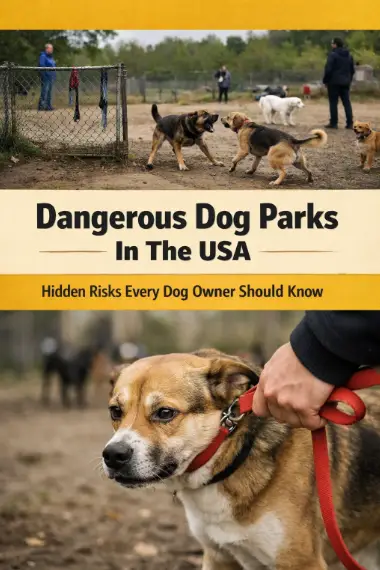
When a “Fun Outing” Turns Risky
Dog parks are supposed to be happy places. Wide open spaces. Wagging tails. Dogs running free while owners relax and chat. Sounds perfect, right?
But here’s the uncomfortable truth: not all dog parks are safe. Some are downright dangerous — and many pet owners don’t realize the risks until something goes wrong.
I started digging into this topic after a close call with my own dog. What looked like a normal park visit turned tense fast when an aggressive dog entered the mix. No warning signs. No owner stepping in. That moment changed how I see dog parks forever.
If you’ve ever wondered whether dog parks are actually safe — or why so many trainers quietly advise against them — this guide is for you.
Let’s talk honestly about dangerous dog parks in the USA, why problems happen, and how to protect your dog without giving up on exercise or socialization.
Why Some Dog Parks Become Dangerous
Dog parks don’t become unsafe overnight. Most problems build slowly, usually due to poor design, lack of rules, or human behavior.
Common Reasons Dog Parks Turn Risky
Here’s what often causes trouble:
- No supervision or enforcement of rules
- Irresponsible owners ignoring bad behavior
- Overcrowding, especially in urban areas
- Untrained or aggressive dogs off-leash
- Poor fencing or broken gates
- Mixing large and small dogs in the same space
IMO, the biggest issue isn’t the dogs — it’s the people. Dogs behave based on their environment, and chaotic spaces create chaos.
The Hidden Dangers Many Owners Overlook
Some risks aren’t obvious until you’ve experienced them firsthand.
1. Aggressive Dog Encounters
Even well-socialized dogs can react badly under stress. Loud barking, running packs, and competition over toys can trigger fights fast.
Warning signs of aggression include:
- Stiff body posture
- Growling or snapping
- Raised hackles
- Excessive mounting
- Guarding toys or people
If you notice these signs and owners aren’t stepping in, it’s time to leave.
2. Disease and Parasite Exposure
Dog parks are hotspots for illness.
Common issues include:
- Parvovirus
- Kennel cough
- Giardia
- Fleas and ticks
- Intestinal worms
Not all dogs visiting parks are vaccinated or healthy. FYI, even a quick visit can expose your dog to something that takes weeks (and vet bills) to recover from.
3. Injuries From Rough Play
Play can turn rough quickly, especially with size differences.
Common injuries include:
- Torn ligaments
- Bite wounds
- Scratches to eyes
- Broken teeth
- Puncture wounds hidden under fur
Small dogs are especially vulnerable in mixed-size parks.
Poor Dog Park Design: A Recipe for Trouble
Some dog parks are dangerous by design — even before dogs enter.
Design Flaws That Increase Risk
- Single-entry gates that cause crowding
- No separate areas for different dog sizes
- Limited visibility due to bushes or blind corners
- Hard surfaces like concrete or gravel
- Lack of shade or water
A well-designed dog park encourages calm behavior. A poorly designed one does the opposite.
Owner Behavior: The Biggest Risk Factor
Let’s be honest — not every dog owner should be at a dog park.
Common Owner Mistakes
- Sitting on phones instead of watching dogs
- Bringing dogs with known aggression issues
- Ignoring recall problems
- Allowing bullying behavior
- Bringing puppies too young to handle chaos
Dog parks rely on social trust. When that breaks down, everyone pays the price.
Why Trainers Often Warn Against Dog Parks
Many professional trainers and behaviorists quietly discourage dog park visits.
Why?
Because dog parks:
- Encourage unstructured socialization
- Reinforce bad habits like ignoring recall
- Expose dogs to uncontrolled stress
- Can worsen fear or reactivity
- Teach dogs to value other dogs more than owners
That doesn’t mean all dog parks are bad — but they’re rarely ideal for training or behavioral development.
High-Risk Dogs Who Should Avoid Dog Parks
Not every dog is a good candidate for dog parks, and that’s okay.
Dogs Who Are Better Off Avoiding Dog Parks
- Puppies under 6 months
- Senior dogs with joint issues
- Fearful or anxious dogs
- Dogs with poor recall
- Resource guarders
- Dogs recovering from injury
For these dogs, dog parks can do more harm than good.
Signs You’re in a Dangerous Dog Park
Sometimes you just get a bad feeling — and you should trust it.
Red Flags to Watch For
- No posted rules or guidelines
- Owners not paying attention
- Dogs bullying others repeatedly
- Aggressive behavior ignored
- Overcrowding during peak hours
- Broken fences or gates
If you notice multiple red flags, leave immediately. Your dog’s safety matters more than staying polite.
5 Dangerous Dog Parks in the USA (Reported by Owners)
Before we dive in, a quick but important note:
These dog parks aren’t labeled “dangerous” by official authorities. Instead, they’ve earned this reputation due to repeated owner complaints, reported incidents, poor design, or lack of supervision. Conditions can change over time, but these locations are often mentioned when pet owners talk about unsafe dog park experiences.
1. Washington Square Park Dog Run
This dog run is famous — and that’s part of the problem.
Located in the heart of NYC, it’s often overcrowded, noisy, and chaotic. Dogs of all temperaments and sizes are packed into a small space, which creates tension fast.
Common concerns include:
- Frequent dog fights
- Owners distracted by phones or socializing
- Limited space for high-energy dogs
IMO, this park can be overwhelming even for well-socialized dogs.
2. Runyon Canyon Dog Park
Runyon Canyon is popular with tourists and locals alike — but popularity doesn’t equal safety.
Dogs are often off-leash in crowded areas, and recall is rarely enforced. Add steep trails and inexperienced owners, and you’ve got a risky mix.
Reported issues:
- Aggressive encounters on trails
- Dogs running far out of owner control
- Injuries due to terrain and crowding
FYI, many trainers in LA quietly recommend avoiding peak hours here.
3. Zilker Metropolitan Park Dog Area
Zilker’s off-leash area is massive, which sounds great — but size comes with challenges.
Because the area is so open, owners often lose track of their dogs, and fights can happen far from help.
Common complaints:
- Poor monitoring of aggressive dogs
- Dogs harassing others unchecked
- Limited separation for small or timid dogs
Bigger isn’t always better when it comes to dog parks.
4. Piedmont Park Dog Park
This park sees heavy daily traffic, especially on weekends.
Many owners report repeat offenders — aggressive dogs whose behavior goes unaddressed — along with inconsistent rule enforcement.
Why owners raise concerns:
- Overcrowding during peak times
- Mixed dog sizes in shared areas
- Lack of supervision during busy hours
It’s a park where timing really matters — one bad visit can change everything.
5. Grant Park Dog Park
Grant Park’s dog area has received mixed reviews for years.
While some visits are uneventful, others report sudden fights and injuries, often linked to owners not intervening early enough.
Issues often mentioned:
- Inattentive owners
- Poor recall control
- Escalation of rough play
This is one of those parks where conditions can shift quickly from calm to chaotic.
Alternatives to Dog Parks (That Are Much Safer)
Here’s the good news: dog parks are not the only way to exercise or socialize your dog.
Safer Alternatives
- Structured playdates with known dogs
- Leashed hikes or sniff walks
- Training classes with supervision
- Dog daycare with evaluations
- Private fenced yards (rented by the hour)
These options provide controlled interaction and reduce risk significantly.
How to Use Dog Parks More Safely (If You Still Choose To Go)
If you’re determined to use dog parks, do it smartly.
Safety Tips for Smarter Visits
- Go during off-peak hours
- Leave at the first sign of tension
- Avoid toys and treats
- Keep visits short (20–30 minutes)
- Watch your dog constantly
- Practice strong recall
- Don’t hesitate to advocate for your dog
FYI, leaving early is always better than leaving after an injury.
Legal and Financial Risks You Should Know About
Dog park incidents don’t just cause emotional stress — they can cause legal problems.
Potential Consequences
- Vet bills from bite injuries
- Liability claims if your dog injures another
- Lawsuits in severe cases
- Local breed or leash law violations
Even if your dog wasn’t “at fault,” being involved can still be costly.
Why Dangerous Dog Parks Still Exist
So why don’t unsafe dog parks get fixed?
Common reasons include:
- Limited city funding
- Lack of staff for monitoring
- Dependence on volunteer enforcement
- Poor reporting systems
- High demand with little oversight
Until accountability improves, responsibility falls largely on owners.
What Responsible Dog Owners Can Do
Change starts small.
You can help by:
- Reporting unsafe conditions
- Educating other owners respectfully
- Leaving negative environments quickly
- Supporting better-designed parks
- Choosing safer alternatives
Your choices protect not just your dog — but others too.
Conclusion: Your Dog Deserves Better Than “Risky Fun”
Dog parks aren’t evil. But dangerous dog parks in the USA are more common than many people realize.
The biggest takeaway?
👉 Your dog doesn’t need a dog park to live a happy, fulfilled life.
Safe exercise, structured socialization, and your attention matter far more than unregulated chaos.
If something feels off, trust your instincts. Advocate for your dog. Walk away when needed.
Because at the end of the day, the safest dog is one whose owner puts their well-being first.
If this article made you rethink your next dog park visit, that’s a good thing. Your dog will thank you — probably with a wagging tail and a very happy nap.