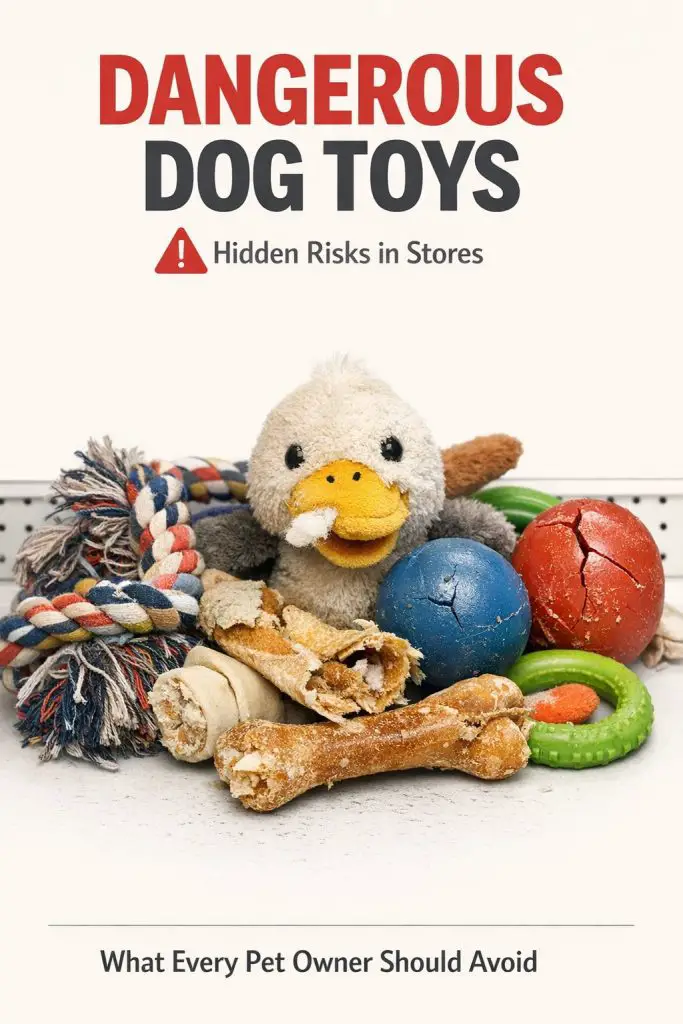
Just Because It’s on the Shelf Doesn’t Mean It’s Safe
Have you ever stood in a pet store aisle, staring at a wall of colorful dog toys, and thought, “Well… if they sell it here, it must be safe, right?”
You’re definitely not alone — and honestly, that assumption is exactly why I wanted to write this.
I learned this lesson the hard way after buying what looked like a “tough” chew toy for a dog I loved dearly. It was labeled durable, vet-recommended, and even had a cute cartoon dog smiling on the package. Less than a week later, that toy was shredded — and dangerously so. Small pieces everywhere. A close call that could’ve ended very differently.
That moment sent me down a rabbit hole of research, recalls, vet warnings, and real owner stories. And what I discovered surprised me: some of the most dangerous dog toys are sold openly in stores every day.
So let’s talk about which dog toys can actually be harmful, why they’re risky, and how you can protect your pup without becoming paranoid or overwhelmed.
Why Dangerous Dog Toys Are Still Sold in Stores
This is usually the first question people ask — and it’s a fair one.
The truth? Pet toy regulations are surprisingly loose. Unlike children’s toys, many dog toys don’t have to meet strict safety standards before hitting shelves. Most are tested for appeal, not durability or ingestion risk.
Here’s why risky toys still exist:
- No universal safety testing requirements
- Labels focus on marketing, not safety
- “Supervised play” disclaimers shift responsibility
- Different dogs have very different chewing styles
In other words, the burden often falls on you to decide what’s safe. IMO, that’s not ideal — but knowing what to look out for makes all the difference.
Rawhide Chews: One of the Biggest Hidden Risks
Rawhide is still everywhere — and it’s one of the most controversial dog “treats” sold in stores.
Why Rawhide Can Be Dangerous
Rawhide doesn’t soften like real food. Instead, it becomes rubbery and slippery once chewed.
Potential dangers include:
- Choking on large chunks
- Intestinal blockages
- Digestive distress
- Chemical residue from processing
Many rawhide products are made overseas using harsh chemicals to clean and preserve the hide. FYI, those chemicals aren’t always listed on the label.
If your dog is an aggressive chewer, rawhide is especially risky.
Rope Toys: Fun… Until They’re Not
Rope toys look harmless. They’re cheap, colorful, and dogs love them. But they’re one of the most common causes of emergency vet visits.
The Hidden Danger of Rope Fibers
When dogs chew or tear rope toys apart, they ingest long strands of fabric.
Those strands can:
- Wrap around intestines
- Cause serious blockages
- Require emergency surgery
Warning signs after rope ingestion include vomiting, lethargy, and refusal to eat. By the time symptoms appear, damage may already be severe.
Rope toys are best used only for short, supervised tug sessions — not solo chewing.
Plush Toys with Squeakers: A Choking Hazard Magnet
Soft plush toys are adorable — until your dog gets to the squeaker inside.
Why Squeakers Are So Risky
Many dogs instinctively want to “kill” the squeaker. Once removed, it becomes a perfect choking hazard.
Common risks include:
- Swallowed squeakers blocking airways
- Stuffing causing intestinal blockages
- Plastic fragments breaking off
If your dog destroys plush toys quickly, these are not safe options. Even “reinforced” plush toys can fail fast.
Hard Plastic and Nylon Chews That Break Teeth
If you’ve ever heard the advice, “If you can’t dent it with your fingernail, it’s too hard,” — it’s solid advice.
Why Ultra-Hard Toys Are Dangerous
Hard nylon or plastic toys don’t give under pressure. When dogs chew aggressively, the force transfers directly to their teeth.
This can lead to:
- Cracked teeth
- Fractures below the gumline
- Painful infections
Dental injuries are expensive and painful — and often caused by toys marketed as “indestructible.”
Tennis Balls: Surprisingly Abrasive
Tennis balls seem innocent, right? Most dogs love them.
But here’s the issue: the fuzzy outer layer acts like sandpaper.
Over time, chewing on tennis balls can:
- Wear down enamel
- Expose sensitive dentin
- Increase tooth decay risk
Some tennis balls are also coated with industrial materials, not pet-safe rubber. Dog-specific balls are safer — but even then, they shouldn’t be used as chew toys.
Toys with Small Parts or Decorations
Buttons, beads, glued-on eyes, and rubber nubs may look cute — but they’re risky.
Why Small Parts Are Dangerous
Dogs don’t chew gently. Anything attached can be torn off and swallowed.
These pieces can:
- Cause choking
- Block intestines
- Lead to surgery or worse
If a toy has decorations you wouldn’t give to a toddler, it probably doesn’t belong in your dog’s mouth either.
Cheap Imported Toys with Toxic Materials
This one makes a lot of people uncomfortable — but it matters.
Some low-cost toys may contain:
- Lead
- Phthalates
- Harmful dyes
These chemicals can leach when chewed or slobbered on repeatedly.
Red Flags on Labels
Be cautious if:
- The country of origin isn’t listed
- There’s no material breakdown
- The toy has a strong chemical smell
Safer toys usually disclose materials clearly and prioritize transparency.
Size Matters: Toys That Are Too Small
Even safe materials become dangerous when the toy is the wrong size.
Why Size Is Critical
A toy that fits entirely in your dog’s mouth can:
- Become lodged in the throat
- Be swallowed whole
- Cause sudden choking
Always size up, especially for powerful chewers or large breeds.
How to Spot Dangerous Dog Toys Before Buying
You don’t need to memorize every bad toy — just follow a few smart guidelines.
Quick Safety Checklist
Before buying, ask yourself:
- Can my dog break this apart quickly?
- Are there small or detachable parts?
- Is the material clearly listed?
- Does it feel excessively hard?
- Is the size appropriate?
If you hesitate on any of these, it’s best to pass.
Safer Alternatives Worth Considering
The goal isn’t to ban toys — it’s to choose smarter ones.
Better Toy Options Include:
- Natural rubber toys with some flexibility
- Single-piece designs with no stuffing
- Food-dispensing toys that encourage slower play
- Durable rubber balls designed specifically for dogs
Rotate toys regularly to reduce boredom and destructive chewing.
Supervision Still Matters (Even With Safe Toys)
No toy is 100% risk-free. Even the best ones wear down.
Best Practices for Toy Safety
- Inspect toys weekly for damage
- Discard toys with cracks or tears
- Supervise new toys initially
- Match toy type to your dog’s chewing style
Think of toys like shoes — once they’re worn out, they’re no longer safe.
Why Your Dog’s Chewing Style Changes Over Time
One thing many owners overlook: dogs change.
Puppies teethe. Adults get stronger jaws. Seniors may chew differently due to dental pain.
A toy that was safe last year might not be safe now. Regular reassessment is key.
Common Myths About Dog Toy Safety
Let’s quickly clear up a few misconceptions.
- “Expensive means safe” — not always
- “Vet recommended” — sometimes paid placement
- “My dog’s never had a problem” — until they do
- “Indestructible toys are best” — often the opposite
Trust observation more than marketing.
Conclusion: Smart Choices Make a Real Difference
Dangerous dog toys in stores are more common than most people realize — but awareness is powerful.
By learning what to avoid, watching how your dog actually plays, and choosing toys intentionally, you dramatically reduce the risk of choking, injury, or emergency vet visits.
The goal isn’t perfection. It’s progress.
Take a second look at your dog’s toy box today. Remove anything questionable. Replace it with safer options that match your dog’s needs.
Your dog trusts you with their safety — and now you’re better equipped to protect it.