You may know the Doberman Pinscher for its sharp look and strong presence, but this breed offers much more than appearances. You get a working dog with a long history, clear purpose, and a reputation shaped by both fact and myth.
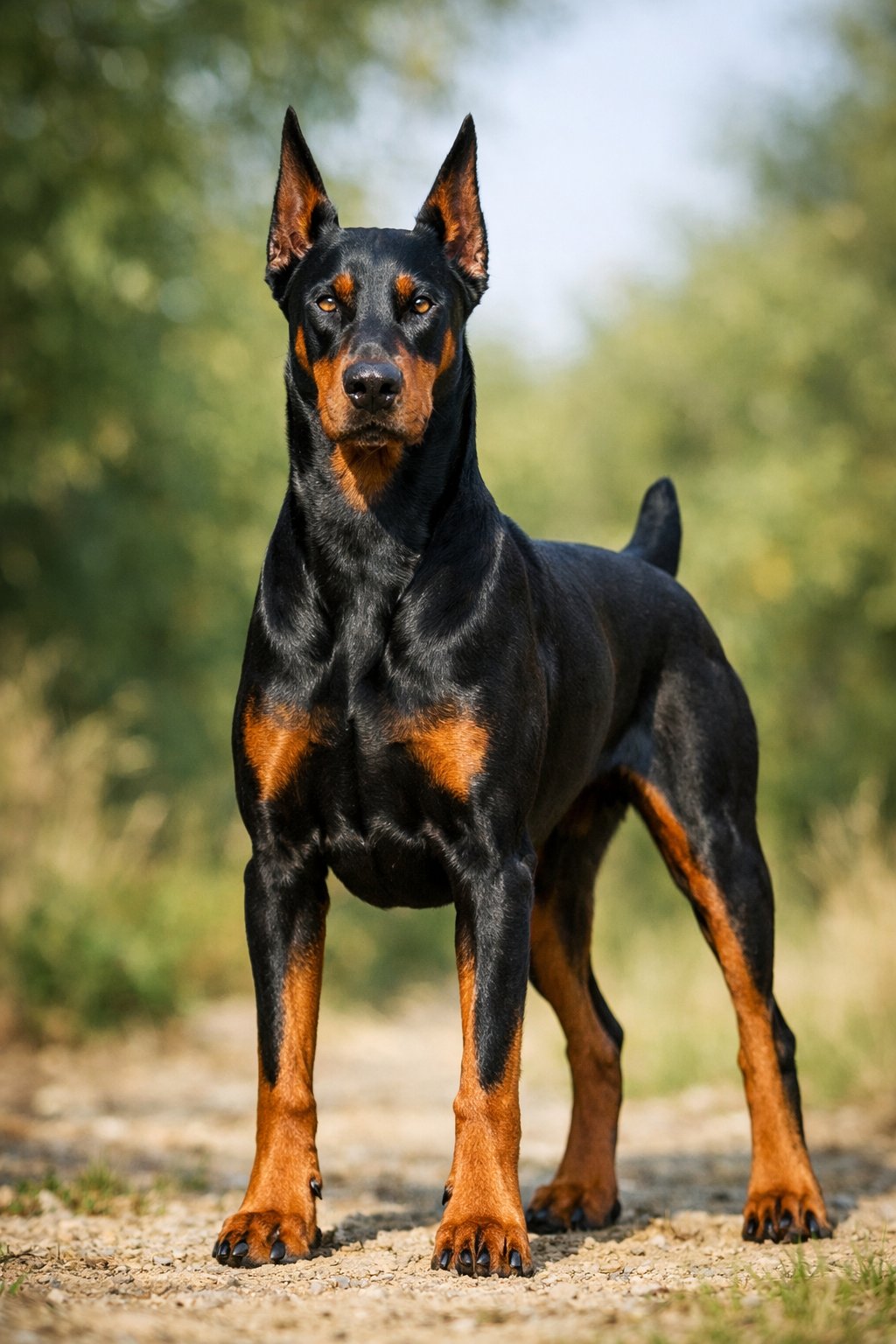
The Doberman Pinscher is a loyal, intelligent, and protective dog breed developed in Germany to work closely with people and guard them. You will see how the doberman breed formed, what sets its body and movement apart, and why proper training shapes its calm and focused behavior.
You will also explore common Doberman types, health concerns, and lifespan, along with real-world guidance on adoption, breeders, and the Doberman community. Photos throughout the article help you connect traits to real dogs, so you can better judge if this breed fits your home and lifestyle.
Doberman Pinscher Origins and History
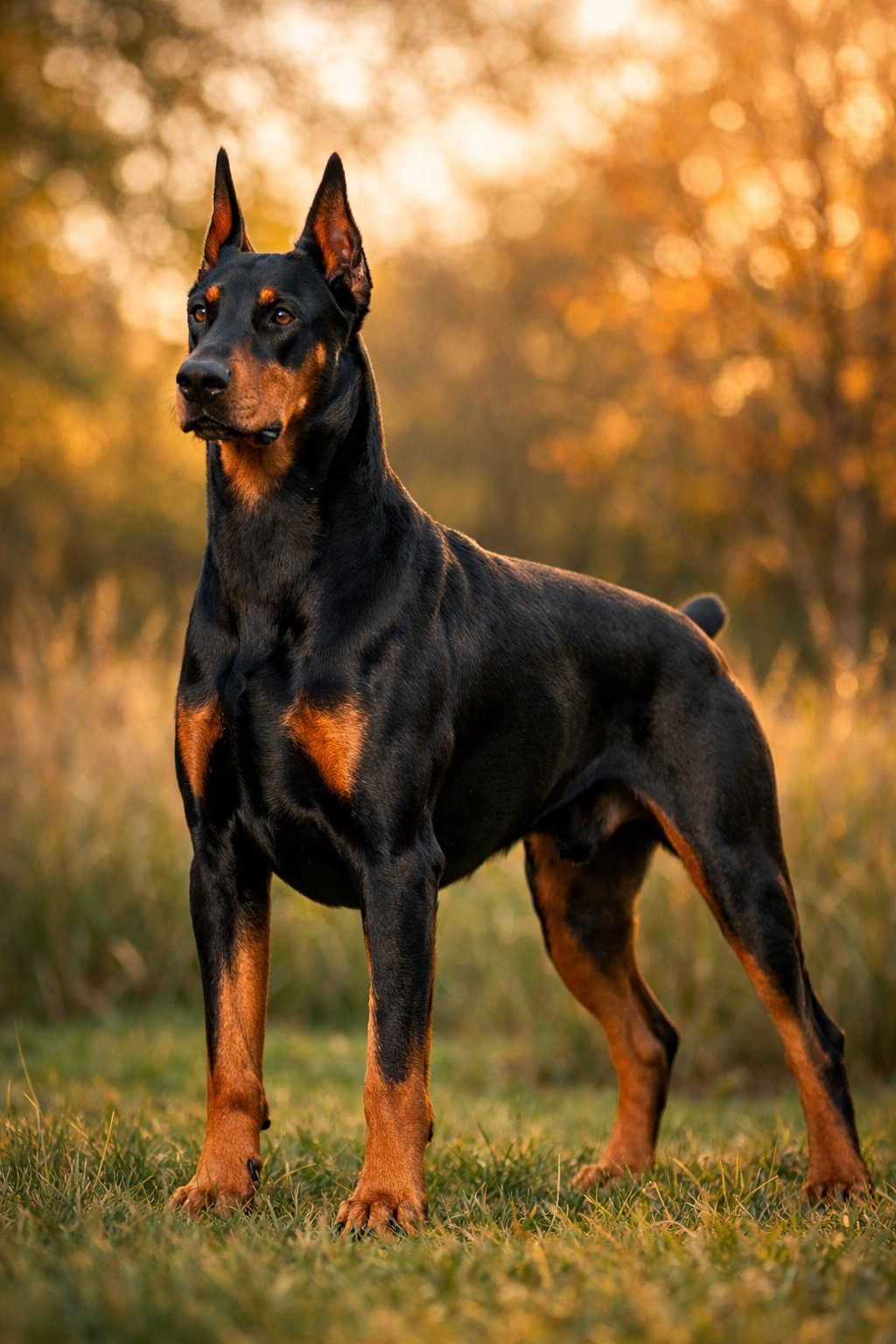
The Doberman Pinscher began in late 19th century Germany with a clear purpose. You can trace the breed to one man, selected crosses, and early roles as a working and guard dog. These choices shaped the modern Doberman and its reputation.
The Legacy of Karl Friedrich Louis Dobermann
You can credit Karl Friedrich Louis Dobermann for creating the Doberman Pinscher. Louis Dobermann lived in Apolda, Germany, and worked as a tax collector, night watchman, and dog catcher. His jobs put him at risk, so he needed a dog that offered protection and control.
He aimed for a dog that stayed loyal, alert, and strong. Dobermann bred dogs he could access through his work and local sources. After his death in 1894, German breeders honored him by naming the breed Dobermann Pinscher. Over time, many countries shortened the name to Doberman or Dobe.
His goal was function, not looks. That focus explains why the breed developed a confident posture, sharp awareness, and a close bond with its handler.
Breeds That Created the Doberman
You should understand the Doberman as a planned mix, not a natural landrace. Records vary, but historians agree on several key influences. Each breed added a specific trait that still matters today.
| Contributing Breed | Likely Contribution |
|---|---|
| German Pinscher | Drive, alertness, and size |
| Rottweiler | Strength and guarding instinct |
| Greyhound | Speed and athletic build |
| Weimaraner | Endurance and scent ability |
| Manchester Terrier | Focus and sharp response |
You can see these traits in the modern Doberman Pinscher. The breed combines speed with power and pairs intelligence with control. This balance supports both work and companionship.
Early Uses as a Working and Guard Dog
You first saw the Doberman Pinscher used as a working dog and guard dog. Early owners relied on the breed to protect property and escort handlers during risky duties. The dog stayed close, watched strangers, and responded fast to threats.
Police and military units later adopted the Doberman for patrol and message work. The breed learned tasks quickly and followed commands with precision. Its sleek build helped it move through cities with ease.
These early roles shaped how you experience the Doberman today. You get a dog that stays loyal, alert, and deeply focused on your direction.
Distinctive Appearance and Physical Traits
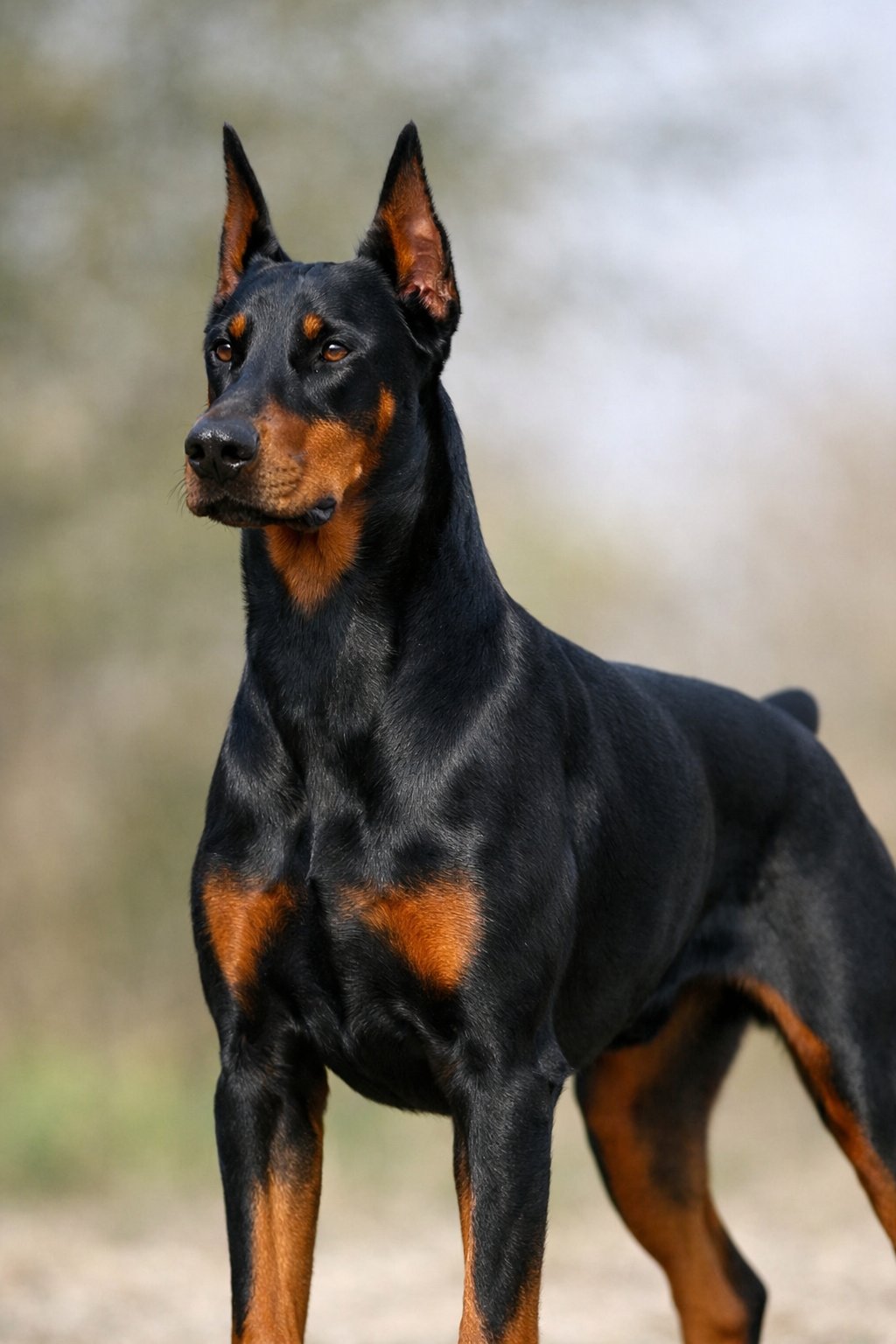
You can spot a Doberman Pinscher by its clean lines, firm build, and alert stance. Coat color, body structure, and traditional alterations shape how this powerful dog looks and moves.
Coat Colors and Rust Markings
The Doberman has a short, smooth coat that lies close to the body. It feels firm and shows muscle tone clearly. Shedding stays light and easy to manage.
Common coat colors include black, red, blue, and fawn. Many people call the red doberman a deep rust or brown shade. You may also hear about the white doberman, which is rare and linked to health concerns.
Doberman pinscher characteristics include sharp rust markings in set areas. These markings appear above the eyes, on the muzzle, chest, legs, and under the tail.
| Base Color | Rust Markings |
|---|---|
| Black | Tan to rust |
| Red | Light rust |
| Blue | Tan |
| Fawn | Light tan |
Clear contrast matters more than shade depth.
Size and Structure
You see strength and balance in the Doberman’s frame. This breed has a deep chest, long neck, and straight back. The body looks square, not stretched.
Adult males stand about 26 to 28 inches tall. Females measure slightly smaller at 24 to 26 inches. Weight usually falls between 60 and 90 pounds.
Muscle shows without bulk. Legs stay long and firm, built for speed and control. When you watch a Doberman move, steps look smooth and direct. This structure supports work roles and active family life.
The head looks wedge-shaped with a strong jaw. Eyes appear alert and focused, adding to the breed’s confident look.
Ear Cropping and Tail Docking
Ear cropping and tail docking are traditional practices for this breed. Cropped ears stand upright, while docked tails appear short.
Many countries ban or restrict these procedures. In those places, Dobermans keep natural ears that fold forward and long, thin tails. These natural features do not affect health or ability.
In the United States, some owners still choose these options for tradition or breed standard reasons. If you consider them, work with a licensed vet and learn local laws.
Both choices remain personal. A Doberman keeps its strong presence with or without these changes.
Doberman Temperament and Behavior
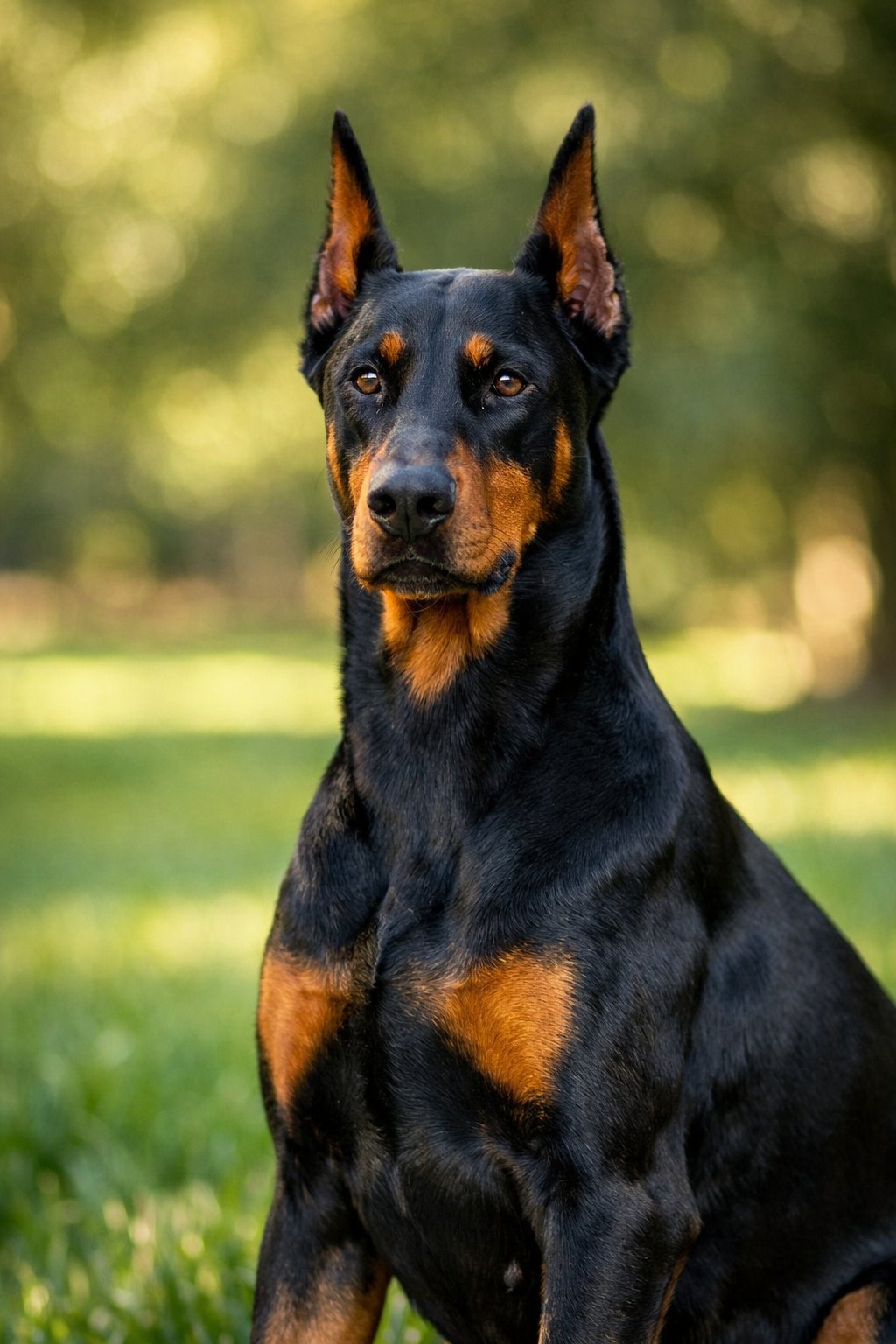
You get a dog that blends loyalty, focus, and energy. This breed protects its people, learns fast, and needs daily structure. Your experience depends on training, social time, and clear leadership.
Protective Instincts and Loyalty
The Doberman Pinscher shows strong protective instincts. You will notice alert behavior, close watching, and quick response to new people or sounds. This trait comes from its history as a working dog.
A well-raised dobe stays calm and steady at home. It does not act aggressive without reason. Early social time helps your dog judge real threats and ignore normal activity.
Dobermans bond closely with you. They prefer to stay near and often follow you from room to room. This loyalty makes them strong candidates for roles like schutzhund, tracking, and personal protection when trained with care.
Family Life and Children
You can expect a devoted family dog when you raise a Doberman with structure. Many do well with children they know and trust. They often act patient and watchful during play.
You should supervise all dog and child interactions. Teach kids how to respect space and avoid rough handling. Clear rules keep both safe and relaxed.
Dobermans do best in homes where they feel included. Long hours alone can lead to stress. With proper training, some Dobermans also succeed as a therapy dog or service dog, especially when calm and people-focused.
Trainability and Intelligence
This breed learns fast and responds well to clear commands. You will see best results with short, focused sessions. Use rewards, firm rules, and calm correction.
Dobermans rank high in problem solving. They remember routines and notice small changes. This intelligence supports advanced work like tracking and obedience sports.
You should avoid harsh methods. They can shut down or resist if pushed too hard. Consistent training builds trust and control. A trained dobe listens, adapts, and works with you instead of against you.
Exercise and Mental Stimulation
You need to plan daily activity for a Doberman. Physical and mental work prevent boredom and stress. Skipping exercise often leads to pacing or destructive habits.
Aim for a mix of activities:
- Brisk walks or runs
- Obedience drills
- Scent games and tracking work
- Structured play with rules
Mental tasks matter as much as movement. Puzzle toys and training games keep focus sharp. A busy Doberman stays calmer, healthier, and easier to live with.
Types and Variations of the Doberman Pinscher
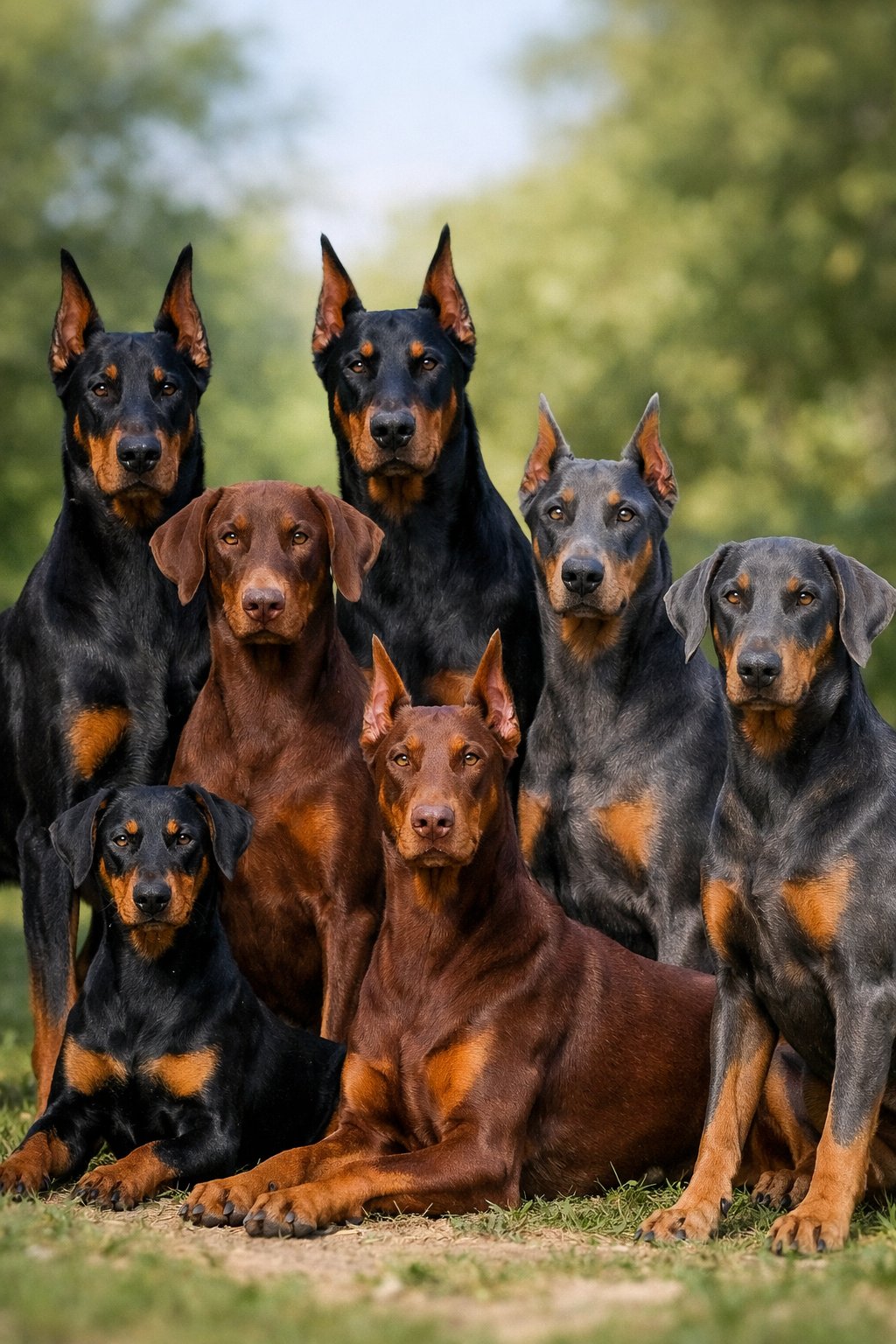
The Doberman Pinscher comes from one breed, but breeding goals shape clear differences. You will see changes in build, energy level, coat color, and purpose.
American Doberman vs. European Doberman
You may hear people talk about American and European Dobermans. These are bloodlines, not separate breeds. The American Kennel Club recognizes only one Doberman breed.
The American Doberman often has a slimmer frame and smoother movement. Breeders focus on show standards and family life. You may notice a calmer attitude and lighter bone structure.
The European Doberman usually looks larger and more muscular. Breeders often focus on working ability, drive, and strength. These dogs tend to need firm training, regular exercise, and clear rules.
Key differences you may notice:
- Build: European lines look heavier and stronger
- Energy: European lines often show higher drive
- Use: American lines fit well in homes; European lines often work in protection or sport
Recognized Color Varieties
Dobermans come in a small set of accepted colors. All recognized colors include rust markings on the face, chest, legs, and tail area.
The table below shows the standard colors accepted by major kennel clubs like the AKC:
| Color | Description |
|---|---|
| Black & Rust | Deep black coat with sharp rust markings |
| Red & Rust | Brownish-red coat with warm rust points |
| Blue & Rust | Gray-blue coat with lighter rust markings |
| Fawn & Rust | Pale tan coat with soft rust points |
You may hear terms like white or king Doberman. These are not recognized colors or types. Some come from poor breeding and may link to health risks.
Doberman Pinscher Mixes
A Doberman Pinscher mix combines a Doberman with another breed. These dogs are not part of the Doberman breed standard, but many make loyal pets.
Common mixes include Doberman-Lab, Doberman-German Shepherd, and Doberman-Rottweiler. Each mix shows traits from both parents, so size, coat, and behavior can vary.
You should expect strong loyalty, high energy, and a need for training. Many mixes still need daily exercise and clear structure. Health and temperament depend on breeding quality and early care.
Health Issues and Longevity
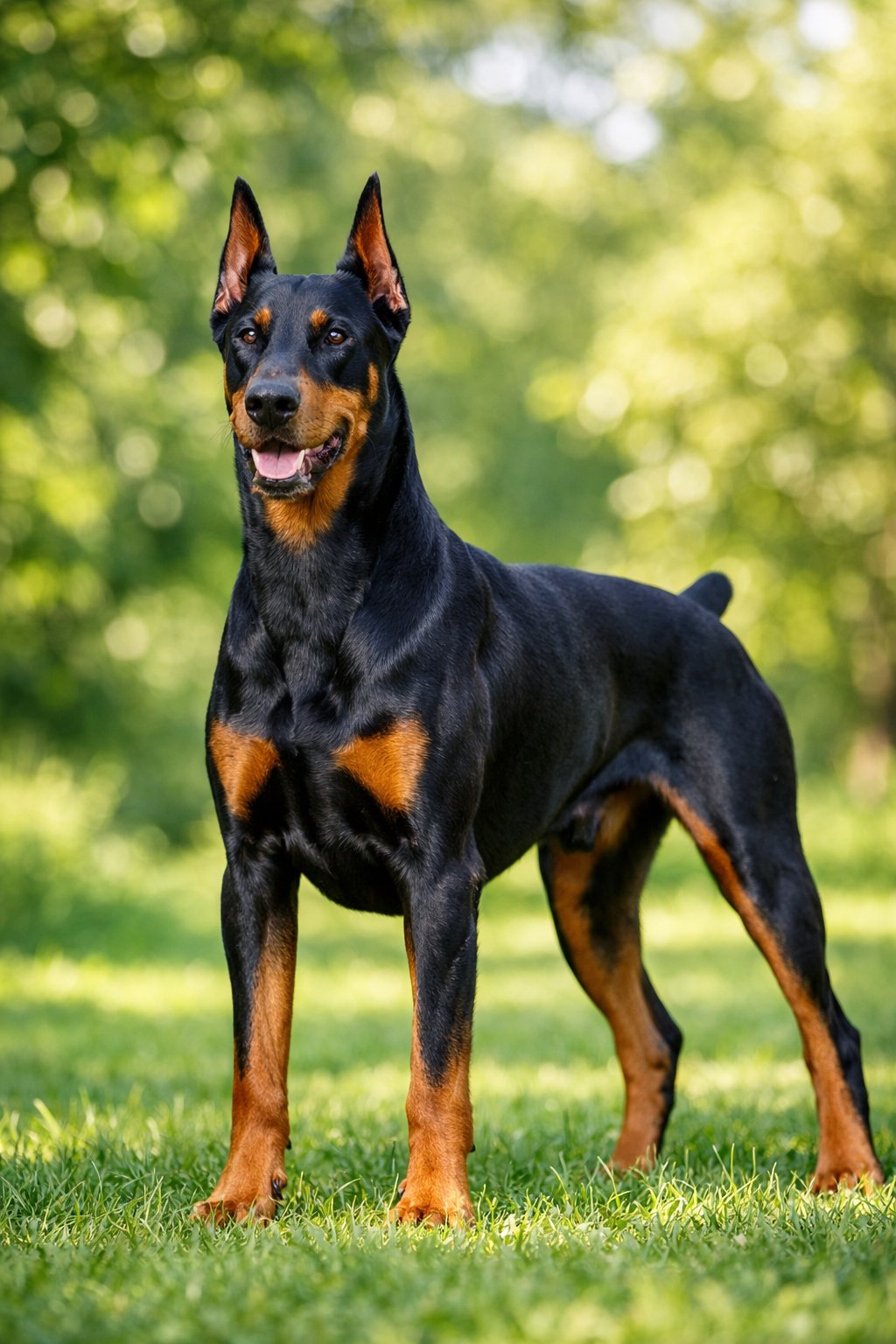
Doberman Pinschers often live 10–12 years with proper care. You can improve quality of life by understanding inherited risks, keeping up with routine care, and acting fast when health changes appear.
Common Genetic Disorders
Dobermans face several inherited health problems that can affect daily life. Dilated cardiomyopathy (DCM) is the most serious. It weakens the heart and can cause sudden heart failure, sometimes without warning.
Von Willebrand disease affects blood clotting. Dogs may bleed longer after surgery or injury. Hip dysplasia can lead to pain, stiffness, and trouble rising. Some Dobermans develop Wobbler syndrome, which causes neck pain and an unsteady walk.
Digestive emergencies also matter. Bloat, also called GDV, twists the stomach and cuts off blood flow. It requires immediate surgery. Eye disease, such as progressive retinal problems, can also reduce vision over time.
Preventative Care and Nutrition
Preventative care lowers risk and helps catch problems early. Schedule regular heart screenings, including echocardiograms and Holter monitoring, especially as your dog ages. Genetic testing can help identify risks like von Willebrand disease before symptoms appear.
Feed a balanced diet that meets Association of American Feed Control Officials (AAFCO) standards. Proper nutrition supports heart health, joints, and immune function. Avoid overfeeding and keep your dog at a healthy weight to reduce stress on the heart and hips.
To lower bloat risk, feed smaller meals, avoid hard exercise after eating, and consider a preventive stomach tacking surgery if your vet recommends it.
Signs of Illness and When to Seek Help
You should watch closely for early warning signs. Coughing, weakness, fainting, or low stamina may signal heart disease. Limping, stiffness, or trouble standing can point to hip or spine issues.
Digestive signs require fast action. A swollen belly, dry heaving, drooling, or restlessness may indicate GDV. This is an emergency, and you must seek care at once.
Other red flags include frequent nosebleeds, pale gums, vision changes, or sudden behavior shifts. Trust your instincts. If something feels off, prompt veterinary care can save your dog’s life.
Adoption, Breeders, and Doberman Community
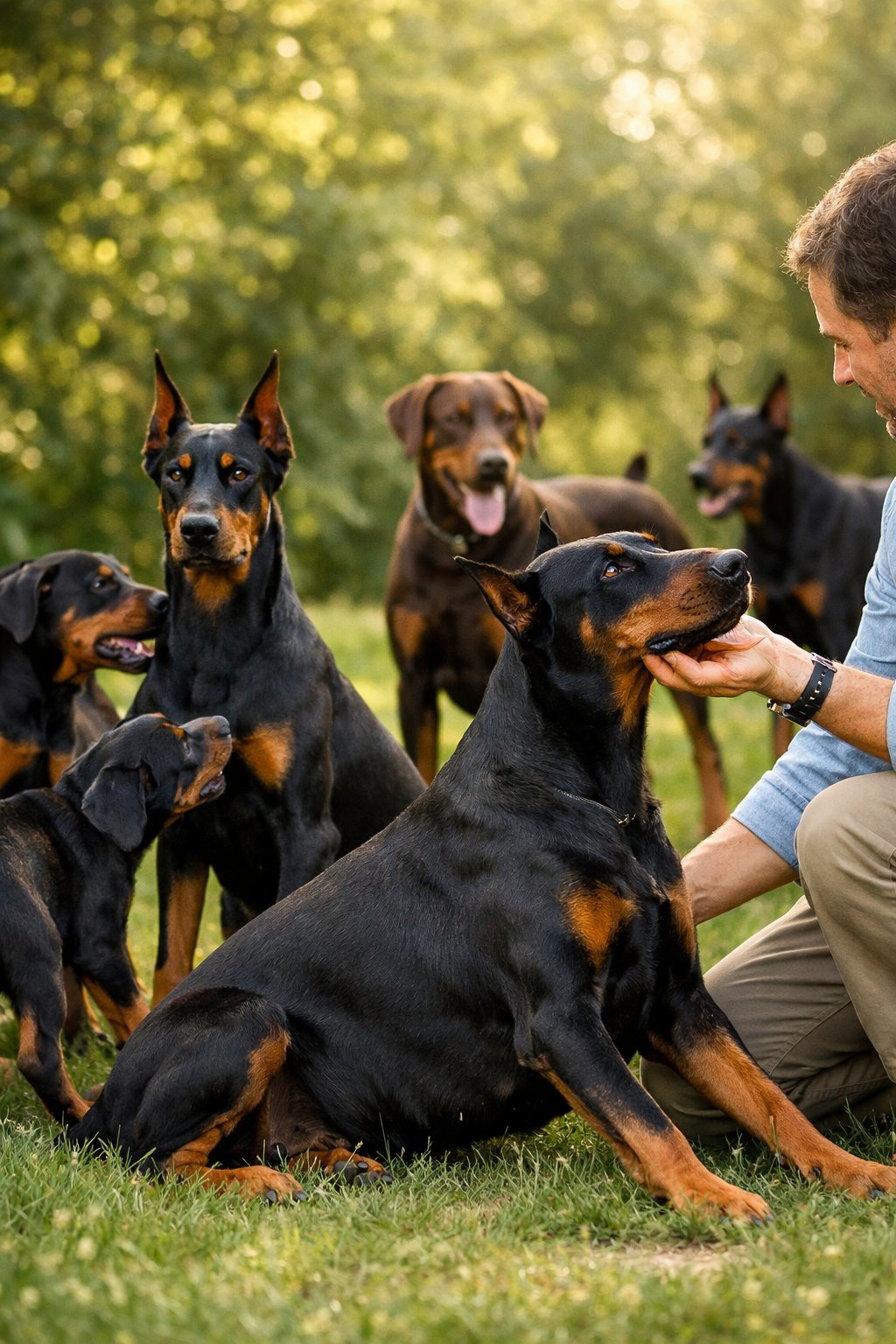
You have two main paths when adding a Doberman to your life: adoption or buying from a responsible breeder. Strong breed clubs and rescue groups help you make informed choices and support you long after you bring a dog home.
Finding a Responsible Breeder
A responsible breeder plans each litter with health, structure, and temperament in mind. You should expect clear health records, honest answers, and ongoing support. Avoid sellers who rush the process or refuse questions.
What to look for
- Health testing for hips, heart, and genetic issues
- Puppies raised in clean home settings
- A written contract and return policy
- Willingness to meet you and screen your home
The Doberman Pinscher Club of America (DPCA) keeps a breeder referral list that helps you find active breeders in the U.S. and other countries. The AKC Marketplace also lists breeders, but you still need to verify health testing and ethics yourself.
Doberman Rescue and Adoption
Doberman rescue groups focus on saving, assessing, and rehoming dogs in need. Many rescued Dobermans already have basic training and adult temperaments, which helps you know what to expect.
You can find adoptable Dobermans through:
- Breed-specific rescues
- Local shelters
- Adoption networks like Petfinder and Chewy
Rescue groups often match dogs to homes based on lifestyle, not speed. You may complete an application, interview, and home check. This process protects both you and the dog. Adoption fees usually cover vet care, spay or neuter surgery, and basic training support.
Breed Clubs and Organizations
Breed clubs connect you with trusted information and experienced owners. They also promote responsible ownership and education.
Key benefits
- Access to breeder referrals and rescue contacts
- Health and training resources
- Events like shows, trials, and seminars
The Doberman Pinscher Club of America sets breed standards and supports research and rescue efforts. Local Doberman clubs offer hands-on help, from training advice to social events. When you stay involved, you gain reliable guidance and a strong support network for your dog.