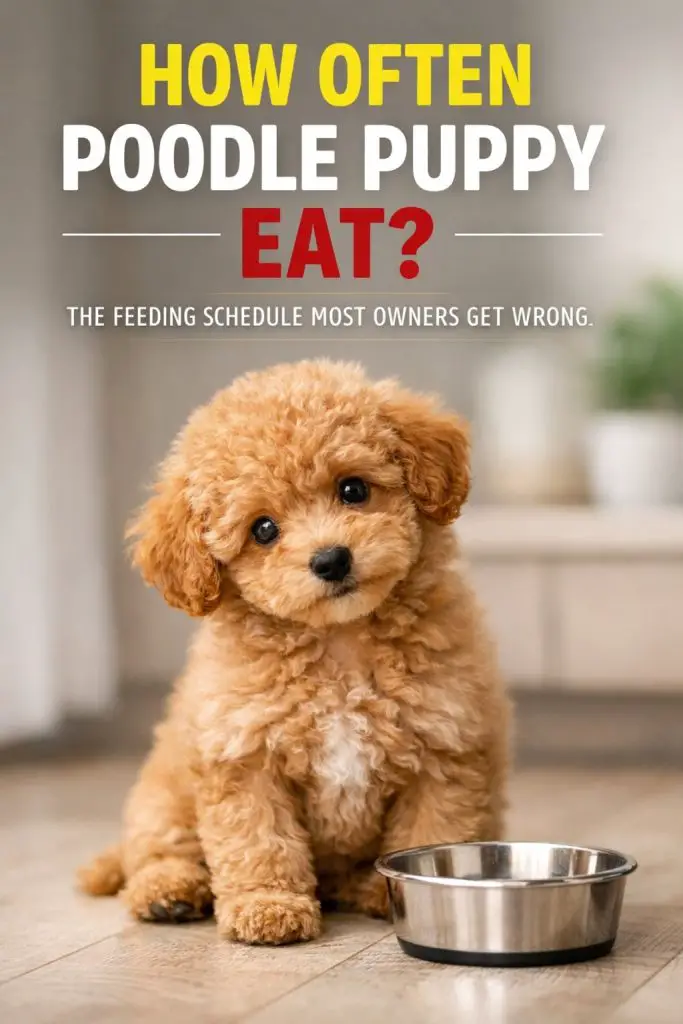
Bringing home a Poodle puppy is exciting, but feeding questions hit fast. One of the biggest head-scratchers is how often should a Poodle puppy eat. Feed too little or too infrequently, and you worry about growth. Feed too often or too much, and suddenly digestion, potty training, and energy levels feel off. It’s a surprisingly common problem, especially for first-time Poodle parents.
I’ve been there myself. When my first Poodle puppy came home, I remember standing in the kitchen staring at the food bag thinking, “Okay… but how many times today?” I think many of us overthink it at first, and honestly, that’s normal. In my opinion, once you understand the why behind feeding frequency, everything gets easier. That’s exactly what I’ll help you do in this article.
By the end of this guide, you’ll have a clear, age-based answer to how often your Poodle puppy should eat, plus practical tips that actually work in real life. No guesswork, no guilt—just a feeding routine that supports healthy growth and a happy puppy.
Why Feeding Frequency Matters for Poodle Puppies
Poodle puppies grow fast. Their bodies burn energy quickly, and their stomachs are small. That combination means they need regular meals spread throughout the day, not one or two big servings.
Feeding frequency affects more than just hunger. It plays a role in:
- Stable energy levels throughout the day
- Healthy digestion and fewer tummy upsets
- Better potty training consistency
- Steady growth and muscle development
Skip meals or space them too far apart, and you might notice low energy, fussiness, or irregular bathroom habits. Feed too often without structure, and things can feel chaotic fast.
How Often Should A Poodle Puppy Eat By Age
This is the part most people want straight away, so let’s break it down clearly. Age matters more than size when deciding feeding frequency.
8–12 Weeks Old
At this stage, your Poodle puppy is still adjusting to life away from mom. Their stomach is tiny, and they need frequent fuel.
How often:
- 4 meals per day
Ideal feeding times:
- 7:00 AM
- 11:00 AM
- 3:00 PM
- 7:00 PM
Why so often? Because young puppies can’t store energy well yet. Smaller, frequent meals help prevent blood sugar dips and keep them comfortable.
3–6 Months Old
This is the rapid growth phase. Your puppy is more active, more curious, and burning calories like crazy.
How often:
- 3 meals per day
Ideal feeding times:
- 7:00 AM
- 1:00 PM
- 7:00 PM
At this age, you can safely drop one meal while still supporting healthy growth. IMO, this schedule also makes potty training much more predictable.
6–12 Months Old
Now your Poodle puppy is transitioning toward adulthood. Their digestion is stronger, and their energy levels are more stable.
How often:
- 2 meals per day
Ideal feeding times:
- 7:00 AM
- 7:00 PM
Most Poodles do great on this schedule. It mirrors what they’ll likely eat as adults and keeps routines simple.
Does Poodle Size Change Feeding Frequency?
This is a common question, especially with Toy, Miniature, and Standard Poodles.
Short answer: feeding frequency stays mostly the same.
Long answer: portion size changes, but meal timing usually doesn’t.
- Toy Poodles may need closer attention early on to avoid low blood sugar.
- Miniature Poodles follow the standard age-based schedule well.
- Standard Poodles eat larger portions but don’t usually need extra meals.
If your puppy seems lethargic or overly hungry, that’s when you reassess—not automatically add meals.
How Much Should You Feed at Each Meal?
Frequency tells you when to feed, but amount tells you how much. While food labels offer guidelines, they’re not perfect.
A few general tips:
- Divide the daily recommended amount by the number of meals
- Adjust slightly based on activity level
- Watch your puppy’s body condition, not just the bowl
Signs you’re feeding the right amount include steady weight gain, good energy, and normal stools.
Why Consistent Feeding Times Matter
Feeding “whenever” sounds flexible, but puppies thrive on routine. Consistent feeding times help with:
- Predictable potty breaks
- Reduced begging and anxiety
- Easier training sessions
FYI, puppies learn patterns fast. When meals are reliable, their bodies adapt quickly, making your life easier too.
Can You Free-Feed A Poodle Puppy?
Free-feeding means leaving food out all day. For most Poodle puppies, this is not recommended.
Here’s why:
- It disrupts potty training
- Makes it harder to monitor appetite
- Encourages picky eating habits
Scheduled meals teach structure and help you notice changes early, which is important during growth stages.
What Happens If You Feed Too Often?
More meals doesn’t always mean better. Feeding too often can lead to:
- Digestive upset
- Weight gain
- Confusion around hunger cues
If your puppy always seems hungry, it’s usually a portion issue—not a frequency issue.
What If You Feed Too Infrequently?
Feeding too little or too rarely can be just as problematic.
Possible signs include:
- Low energy
- Whining or restlessness
- Loose stools or vomiting
Young puppies especially need regular meals to stay balanced.
Adjusting Feeding Frequency During Growth Spurts
Poodles go through noticeable growth spurts. During these times, appetite often increases.
Instead of adding extra meals, try:
- Slightly increasing portion size
- Monitoring weight weekly
- Keeping feeding times consistent
This keeps structure intact while meeting increased energy needs.
How Feeding Frequency Affects Training
Food is a powerful training tool. When meals are well-timed, training becomes easier.
Best practices include:
- Training shortly before meals when motivation is higher
- Using part of a meal as training rewards
- Avoiding heavy training right after eating
This approach supports focus without upsetting digestion.
Signs Your Poodle Puppy’s Feeding Schedule Is Working
Wondering if you’ve nailed it? Look for these signs:
- Steady growth without rapid weight gain
- Consistent bathroom habits
- Good energy throughout the day
- Calm behavior around meals
If all of these line up, you’re doing great—even if you doubted yourself at first.
When To Change Feeding Frequency
You don’t need to change feeding schedules often. Most changes happen naturally with age.
Switch feeding frequency when:
- Your puppy reaches a new age milestone
- Your vet recommends an adjustment
- Energy levels or digestion consistently change
Avoid frequent changes just because your puppy begs. Trust the routine.
Final Thoughts On How Often Should A Poodle Puppy Eat
Feeding your Poodle puppy doesn’t have to feel overwhelming. Once you follow an age-based schedule, stick to consistent times, and adjust portions as needed, everything falls into place.
I feel like feeding routines are one of those things that seem complicated until they suddenly aren’t. Stick with it, observe your puppy, and don’t stress over perfection. A calm, consistent approach wins every time.
Frequently Asked Questions
How often should a Poodle puppy eat at 8 weeks old?
An 8-week-old Poodle puppy should eat 4 times per day, spaced evenly to support digestion and stable energy.
When can a Poodle puppy switch to two meals a day?
Most Poodle puppies can transition to two meals per day between 6 and 12 months, depending on growth and activity level.
Is it okay if my Poodle puppy skips a meal?
Occasional skipped meals happen, but frequent skipping may signal stress, illness, or feeding schedule issues and should be monitored closely.
Should I feed my Poodle puppy before or after training?
Feeding after training usually works best, as puppies are more motivated and focused when slightly hungry.
Does feeding frequency affect potty training?
Yes. Consistent feeding times lead to predictable bathroom schedules, making potty training much easier and faster.