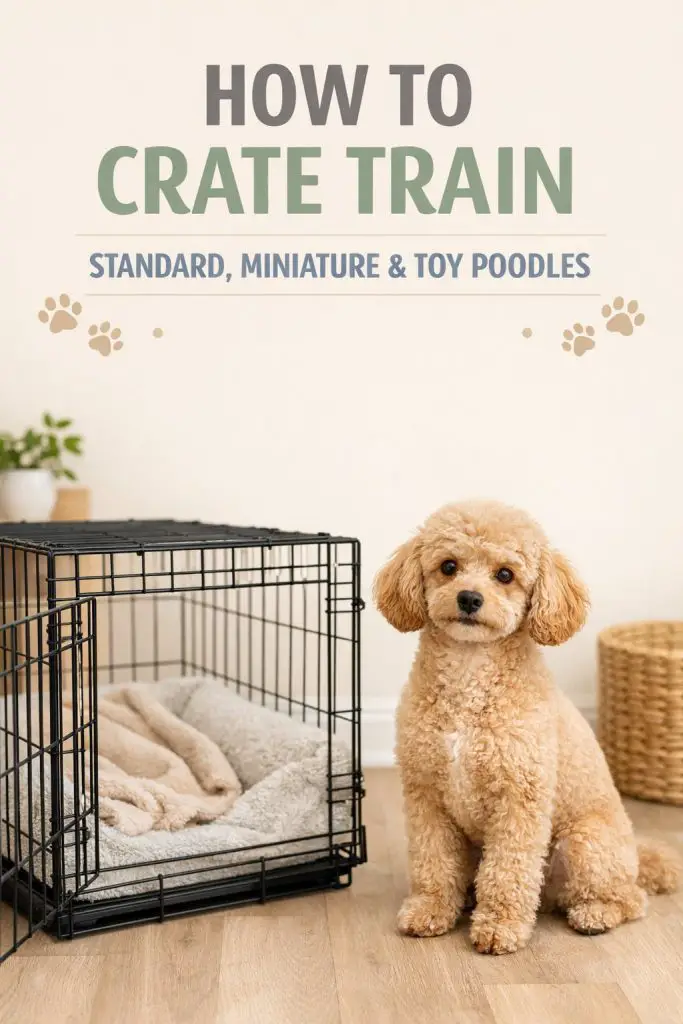
Crate training can feel intimidating—especially when you’re staring at those sweet poodle eyes and wondering, “Am I doing this right?” If you’ve ever worried that crate training might be cruel, confusing, or just plain stressful, you’re not alone. I’ve been there too, questioning every step and Googling at 2 a.m. while my poodle whined softly in the background.
The truth is, crate training can be one of the best things you do for your poodle—whether you have a Standard, Miniature, or Toy. When done correctly, a crate becomes a safe, cozy den that helps with potty training, reduces anxiety, and gives you peace of mind. Let’s walk through this together, step by step, like friends chatting over coffee, so you can crate train your poodle with confidence.
Why Crate Training Is Important for Poodles
Poodles are incredibly smart, sensitive, and people-focused dogs. That combination is amazing—but it also means they can develop bad habits quickly if they don’t have structure.
Crate training helps by:
- Creating a safe space your poodle can relax in
- Supporting potty training by teaching bladder control
- Preventing destructive behaviors when you’re not home
- Reducing separation anxiety over time
IMO, crate training isn’t about confinement—it’s about communication. You’re teaching your poodle where they can truly switch off and feel secure.
Understanding the Differences Between Standard, Miniature, and Toy Poodles
Before we dive into training, it’s important to recognize that size and temperament matter.
Standard Poodles
Standard Poodles are larger, more physically active, and often mature a bit slower. They usually need:
- Larger crates
- More physical exercise before crate time
- Longer adjustment periods
Miniature Poodles
Miniature Poodles fall right in the middle. They’re energetic but adaptable and often pick up crate training quickly with consistency.
Toy Poodles
Toy Poodles are tiny, sensitive, and deeply attached to their humans. They often struggle the most with crate training at first and need:
- Extra reassurance
- Shorter crate sessions
- A very gradual approach
The method stays the same, but the pace and emotional support change based on size and personality.
Choosing the Right Crate for Your Poodle
The crate itself can make or break the entire process.
What Size Crate Does a Poodle Need?
Your poodle should be able to:
- Stand up without crouching
- Turn around comfortably
- Lie down fully stretched
Crate size guidelines:
- Toy Poodle: 18–22 inches
- Miniature Poodle: 24–30 inches
- Standard Poodle: 36–42 inches
Wire vs Plastic vs Soft Crates
Each type has pros and cons:
- Wire crates: Great airflow and visibility (ideal for training)
- Plastic crates: More den-like and cozy
- Soft crates: Better for trained dogs only
For beginners, I always recommend a wire crate with a divider.
How To Introduce the Crate (The Right Way)
This is where many people go wrong. Never force your poodle into the crate. That’s a fast track to fear and resistance.
Step 1: Make the Crate Inviting
Place the crate in a quiet but social area of your home. Add:
- A soft bed or blanket
- A favorite toy
- Something that smells like you
Leave the door open and let your poodle explore on their own.
Step 2: Use Food as a Positive Association
Food is your secret weapon here.
- Toss treats near the crate
- Gradually place them inside
- Let your poodle walk in and out freely
Praise calmly—don’t overdo it. We want the crate to feel normal, not dramatic.
Crate Training Step-by-Step (Beginner Friendly)
Once your poodle is comfortable entering the crate, you can start real training.
Step 3: Short Closed-Door Sessions
- Ask your poodle to enter the crate
- Close the door for 5–10 seconds
- Stay nearby and speak calmly
- Open the door before they panic
Repeat this several times a day.
Step 4: Gradually Increase Time
Slowly extend crate time:
- 30 seconds
- 1 minute
- 5 minutes
- 10 minutes
If your poodle whines, wait for a moment of quiet before opening the door. This teaches them that calm behavior = freedom.
Crate Training a Poodle Puppy vs an Adult Poodle
Puppy Crate Training
Puppies have small bladders and big emotions.
Keep in mind:
- Puppies under 6 months can’t hold it long
- Nighttime crate breaks are normal
- Expect accidents—don’t punish them
Consistency matters more than perfection.
Adult Poodle Crate Training
Adult poodles may have bad habits or past trauma. Go slower and focus heavily on positive reinforcement.
FYI, adult dogs can be crate trained successfully—it just takes patience.
Creating a Crate Training Schedule
Dogs thrive on routine, and poodles are no exception.
Sample Daily Crate Schedule
- Morning: Potty → play → crate (short)
- Afternoon: Exercise → crate (rest)
- Evening: Family time → crate (brief)
- Night: Potty → crate for sleep
Never use the crate as punishment. It should always feel safe.
Nighttime Crate Training Tips
Nighttime is often the hardest part.
What Helps Most:
- Place the crate near your bed initially
- Use a light blanket to cover part of the crate
- Keep nighttime potty trips boring and calm
If your poodle cries, ask yourself:
- Do they need to potty?
- Are they scared or overtired?
Respond calmly, not emotionally.
How Long Can Poodles Stay in a Crate?
This depends on age and size.
General guidelines:
- Puppies: 1 hour per month of age
- Adult Toy & Miniature Poodles: 3–4 hours
- Adult Standard Poodles: 4–6 hours
Even the best-trained poodle shouldn’t live in a crate all day.
Common Crate Training Mistakes to Avoid
Let’s save you some frustration.
Avoid these mistakes:
- Rushing the process
- Letting whining immediately win
- Using the crate only when leaving
- Skipping exercise before crate time
Crate training is a marathon, not a sprint.
What If My Poodle Has Separation Anxiety?
Poodles are prone to separation anxiety, especially Toy and Miniature types.
Signs of Anxiety:
- Excessive whining or barking
- Drooling or scratching the crate
- Panic behaviors
What Helps:
- Short, frequent crate sessions
- Leaving calmly (no big goodbyes)
- Providing safe chew toys
If anxiety is severe, consult a professional trainer or vet.
When Will My Poodle Actually Like the Crate?
This is the question everyone asks.
For most poodles:
- Puppies: 2–4 weeks
- Adults: 3–6 weeks
One day, you’ll notice your poodle walking into the crate on their own. That’s when you know it worked.
Final Thoughts: You’ve Got This
Crate training Standard, Miniature, and Toy Poodles isn’t about control—it’s about trust. With patience, consistency, and empathy, your poodle will learn that their crate is a safe place, not a scary one.
Remember:
- Go at your dog’s pace
- Celebrate small wins
- Stay calm and consistent
If you stick with it, you’ll raise a confident, well-adjusted poodle—and trust me, future-you will be so grateful you did. 🐾