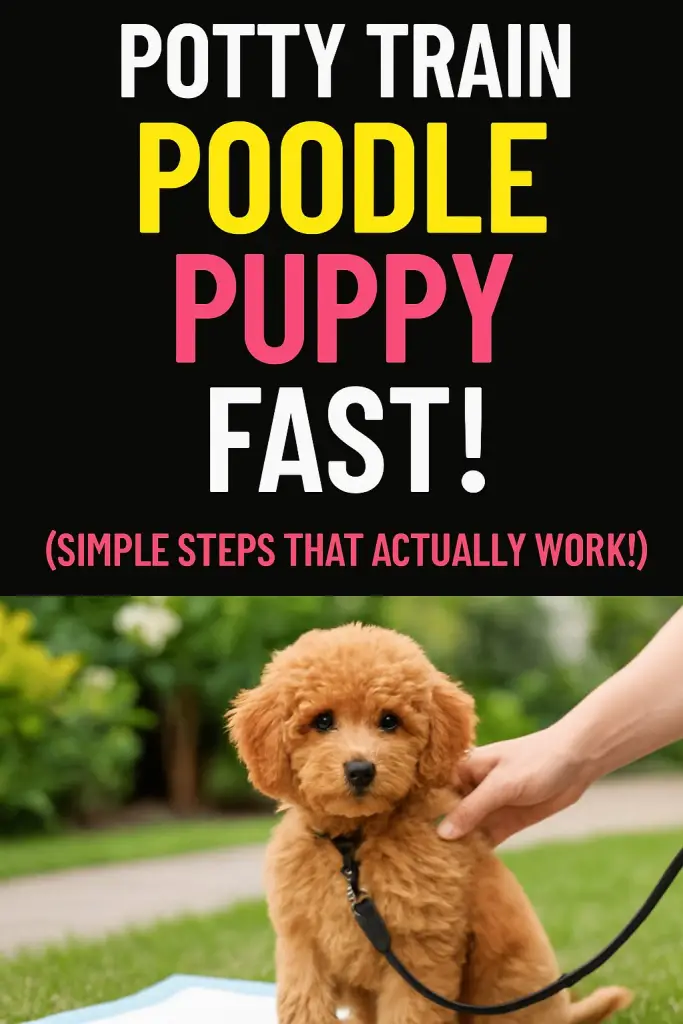
Let’s Talk About the Messy Part of Puppy Parenting
If you’re reading this, chances are you’re staring at a tiny, fluffy poodle puppy… and maybe a suspicious puddle on your floor. Potty training a poodle puppy can feel overwhelming at first, especially when accidents happen five minutes after you just took them outside. Trust me, I’ve been there. When I brought home my first poodle puppy, I thought intelligence would magically equal instant potty manners. Spoiler alert: it doesn’t work that way.
The good news? Poodles are incredibly smart and eager to please, which makes potty training much easier once you use the right approach. This guide will walk you through everything step by step, without stress, guilt, or unrealistic expectations. Think of this as a chat between friends who love dogs and want clean floors.
Understanding How a Poodle Puppy Thinks
Before you start training, it helps to understand what’s going on inside that curly little head.
Why poodles learn faster than most breeds
Poodles are known for their intelligence, but that doesn’t mean they’re born potty trained. What it does mean is that they:
- Pick up patterns quickly
- Respond well to praise and routines
- Remember positive and negative experiences
This is why consistency matters more than strictness. IMO, poodles don’t respond well to harsh reactions. They respond to clarity.
Bladder control and age expectations
Here’s the reality check every new puppy owner needs. A young puppy physically cannot hold their bladder for long. A simple rule:
- Puppies can hold it for about one hour per month of age
- An 8-week-old puppy may need to go every 1–2 hours
If accidents happen, it’s not stubbornness. It’s biology.
Setting Up Your Home for Potty Training Success
Potty training starts before the first trip outside.
Choose a designated potty spot
Pick one outdoor area and stick to it. Dogs thrive on repetition. When your puppy smells previous potty spots, it triggers the urge to go.
If you live in an apartment, you can still succeed with:
- A specific patch of grass
- Puppy pads placed in the same location
- A balcony potty system
The key is one location, every time.
Limit freedom at the beginning
Too much freedom equals too many accidents. Early on, your puppy should always be:
- In a crate
- In a playpen
- Tethered to you
This isn’t about control. It’s about setting them up to win.
Crate Training and Potty Training Go Hand in Hand
If potty training feels impossible, crate training is probably missing from the picture.
Why crates actually help puppies
Dogs naturally avoid soiling their sleeping area. A properly sized crate:
- Teaches bladder control
- Prevents sneaky accidents
- Creates a safe, calm space
The crate should be just big enough to stand, turn, and lie down. Too big, and they’ll potty in one corner and sleep in another.
How to use the crate correctly
Use the crate:
- At night
- When you can’t supervise
- After playtime, before potty breaks
Never use it as punishment. The crate should feel like a bedroom, not a timeout zone.
Creating a Potty Training Schedule That Actually Works
Schedules sound boring, but they’re the secret weapon here.
When to take your poodle puppy outside
Take your puppy out:
- First thing in the morning
- After eating
- After drinking
- After naps
- After playtime
- Before bedtime
Yes, that’s a lot. But this phase doesn’t last forever, I promise.
Feeding times matter more than you think
Free-feeding makes potty training harder. Instead:
- Feed meals at the same times daily
- Remove the bowl after 15–20 minutes
- Track when your puppy usually needs to go
Predictable food equals predictable potty times.
How to Teach Your Puppy What “Go Potty” Means
This is where the magic happens.
Use a consistent potty cue
Pick a simple phrase like:
- “Go potty”
- “Do your business”
- “Potty time”
Say it calmly while your puppy is actively going. Over time, they’ll associate the words with the action.
Reward immediately and enthusiastically
Timing is everything. The reward should happen:
- Within 1–2 seconds of finishing
- Outside, at the potty spot
- With praise and a treat
Go a little over the top. Yes, your neighbors may judge. Worth it.
Handling Accidents Without Losing Your Mind
Accidents are part of the process. Even with smart poodles.
What NOT to do when accidents happen
Never:
- Rub their nose in it
- Yell or punish
- Drag them outside afterward
This only teaches fear, not understanding.
The calm, effective response
If you catch them mid-accident:
- Interrupt gently with a clap or “uh-oh”
- Take them outside immediately
- Praise if they finish outside
If you find it later, clean it up quietly and move on. Your puppy isn’t being spiteful. FYI, dogs don’t potty out of revenge.
Cleaning Products That Prevent Repeat Accidents
Your puppy’s nose is way better than yours.
Why regular cleaners don’t work
Standard cleaners leave behind scent markers. Your puppy thinks, “Oh, bathroom spot.”
Use enzymatic cleaners every time
Look for cleaners specifically designed for pet urine. These:
- Break down odor molecules
- Prevent repeat marking
- Protect your training progress
This step is boring but non-negotiable.
Potty Training at Night Without Losing Sleep
Nighttime is often the hardest part.
How often puppies need night potty breaks
Young puppies may need:
- One potty break per night
- Sometimes two in the early weeks
Set an alarm. Don’t wait for crying if possible.
Gradually stretching nighttime control
As your puppy grows:
- Push the potty break later by 15 minutes every few nights
- Watch for signs of readiness
- Celebrate progress quietly
Soon enough, you’ll sleep through the night again 😴.
Potty Training in Apartments and Small Spaces
Apartment living doesn’t doom potty training.
Pads vs outdoor training
Both can work, but consistency matters.
- If you start with pads, transition slowly
- Move pads closer to the door over time
- Gradually shift outdoors
Switching back and forth too often can confuse your puppy.
Elevator and hallway challenges
Carry your puppy at first if possible. This prevents “almost made it” accidents. As bladder control improves, walking becomes easier.
Common Potty Training Mistakes (And How to Avoid Them)
Even experienced dog owners slip up.
Inconsistent routines
Skipping potty breaks because “they just went” often backfires. Puppies change fast.
Too much freedom too soon
If accidents increase, reduce space again. This isn’t failure. It’s feedback.
Expecting perfection too early
Most puppies:
- Improve significantly by 4–6 months
- Are fully reliable closer to 6–8 months
Progress isn’t linear. That’s normal.
Signs Your Poodle Puppy Is Almost Fully Potty Trained
You’ll start noticing:
- Longer stretches without accidents
- Clear signals like sitting by the door
- Fewer night wake-ups
Celebrate these wins. They matter more than perfection.
Final Thoughts: You’ve Got This (Seriously)
Potty training a poodle puppy isn’t about being strict or perfect. It’s about patience, consistency, and understanding how your puppy learns. Accidents don’t mean failure. They mean your puppy is still learning, just like you are.
Stick to a routine. Praise generously. Laugh off the messy moments. One day soon, you’ll realize it’s been weeks since the last accident—and that’s a pretty great feeling. So grab the treats, set the schedule, and enjoy the journey. Your smart, curly companion will get there