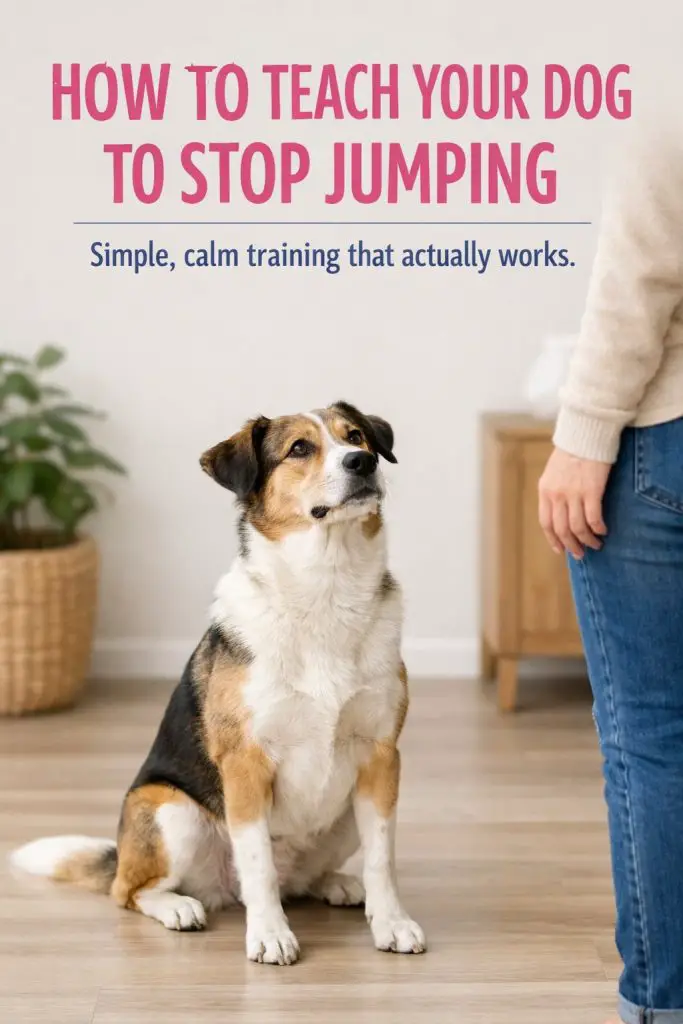
Why Does My Dog Have to Jump on Everyone?
If your dog treats every guest like a long-lost best friend and launches into the air the moment someone walks through the door, you’re not alone. Dog jumping is one of the most common — and frustrating — behavior problems pet parents deal with.
I’ve been there too. I still remember apologizing constantly while trying to peel muddy paws off visitors’ clothes, wondering why my dog wouldn’t just “get it.” The good news? Jumping isn’t a bad-dog problem — it’s a communication and training issue, and it’s absolutely fixable.
In this guide, I’ll walk you through how to teach your dog to stop jumping in a clear, friendly, and realistic way. No harsh punishment, no complicated techniques — just proven, positive methods that actually work in real homes.
Let’s fix the jumping once and for all.
Why Do Dogs Jump in the First Place?
Before we correct the behavior, it helps to understand why it’s happening. Dogs don’t jump to annoy you — IMO, they’re just being dogs.
Common reasons dogs jump:
- Excitement when greeting people
- Attention-seeking behavior
- Learned habits (jumping worked before, so they keep doing it)
- Lack of impulse control
- Overstimulation
Dogs naturally greet face-to-face. Since humans are taller, jumping feels like the logical solution. FYI — even scolding can reinforce jumping if your dog interprets it as attention.
Key takeaway: Jumping is often rewarded unintentionally, which keeps the habit alive.
Why You Should Address Jumping Early
Jumping might seem harmless when your dog is small, but it can quickly become a serious issue.
Problems jumping can cause:
- Knocking over children or elderly guests
- Scratched skin or torn clothing
- Reinforcing bad manners
- Increased anxiety or overexcitement
Teaching your dog to greet calmly is about safety, respect, and confidence — not punishment.
The Golden Rule of Stopping Jumping: Don’t Reward It
Here’s the most important concept to understand:
What gets rewarded gets repeated.
If jumping earns attention — eye contact, talking, touching — your dog will keep doing it.
What not to do:
- Don’t push your dog away
- Don’t knee them in the chest
- Don’t yell or scold
- Don’t pet them while they’re jumping
Even negative attention can feel like a win to an excited dog.
Teach an Incompatible Behavior (The Secret Weapon)
Instead of just saying “no jumping,” teach your dog what to do instead.
Best alternatives to jumping:
- Sit
- Four paws on the floor
- Go to place (mat or bed)
Dogs can’t jump and sit at the same time — that’s why this works so well.
Step-by-Step: How To Teach Your Dog To Stop Jumping
Step 1: Ignore the Jumping Completely
This part feels awkward, but it’s powerful.
- Turn your body away
- Avoid eye contact
- Cross your arms
- Stay silent
The moment your dog has four paws on the floor, calmly reward them.
Timing matters. Reward calm, not chaos.
Step 2: Reward Calm Behavior Immediately
Have treats ready — always.
When your dog:
- Stops jumping
- Sits naturally
- Stands calmly
👉 Reward instantly with:
- A treat
- Calm praise
- Gentle petting
This teaches your dog that calm behavior = good things happen.
Step 3: Teach a Reliable “Sit” for Greetings
If your dog knows “sit,” turn it into their default greeting behavior.
How to practice:
- Ask your dog to sit before you greet them
- Only pet them after they sit
- If they jump, remove attention
- Try again
Practice this multiple times a day — short, positive sessions work best.
How To Stop Jumping on Guests (Real-Life Scenarios)
Training at home is one thing. Guests add excitement — and challenge.
Before guests arrive:
- Exercise your dog (walk or play)
- Prepare treats near the door
- Put your dog on a leash if needed
When guests enter:
- Ask guests to ignore your dog at first
- No touching, talking, or eye contact
- Reward your dog when they stay calm or sit
If your dog jumps:
- Guest turns away
- You calmly guide your dog back
- Try again
Consistency is everything. One person allowing jumping can undo progress.
Use Management Tools While Training
Training takes time. Management prevents setbacks.
Helpful tools:
- Leash during greetings
- Baby gates to control access
- Crate or place command for overexcited dogs
These tools aren’t failures — they’re smart training supports.
Teach “Four on the Floor”
Some dogs struggle with sitting when excited. That’s okay.
How to reinforce four paws on the floor:
- Reward your dog the moment all paws touch the ground
- Drop treats low to encourage grounded posture
- Praise calm standing
Over time, your dog learns that keeping paws down gets rewards.
What About Jumping During Walks?
Dogs often jump when:
- Seeing other dogs
- Greeting strangers
- Getting overexcited
Tips for walks:
- Ask for a sit before greetings
- Keep greetings short
- Reward calm behavior immediately
- Walk away if your dog jumps
Your dog learns that polite behavior keeps the fun going.
Should You Ever Punish Jumping?
Short answer: No.
Punishment can:
- Increase anxiety
- Damage trust
- Create confusion
- Suppress behavior temporarily (not fix it)
Positive reinforcement builds understanding and confidence — and lasts longer.
Common Mistakes That Slow Progress
Avoid these traps:
- ❌ Inconsistent rules
- ❌ Letting “some people” allow jumping
- ❌ Forgetting to reward calm moments
- ❌ Expecting instant results
Training is about repetition, not perfection.
How Long Does It Take to Stop Jumping?
Every dog is different.
Typical timeline:
- 1–2 weeks: Noticeable improvement
- 3–4 weeks: Stronger habits
- 6+ weeks: Reliable calm greetings
Puppies learn faster, but adult dogs absolutely can learn too. Age is not a limitation.
Special Tips for Puppies vs Adult Dogs
Puppies:
- Short, frequent sessions
- Lots of rewards
- Lower expectations early on
Adult dogs:
- Stronger habits take longer to change
- Be extra consistent
- Celebrate small wins
Both can learn — patience is key.
When to Get Professional Help
If jumping comes with:
- Aggression
- Fear
- Anxiety
- Excessive hyperactivity
A certified dog trainer or behaviorist can provide personalized support. There’s no shame in asking for help.
Make Calm Greetings a Lifestyle
Training doesn’t stop after a few weeks.
Reinforce calm behavior by:
- Rewarding polite greetings
- Practicing regularly
- Staying consistent with rules
- Keeping energy levels balanced
Dogs thrive on clear expectations.
Conclusion: You Can Teach Your Dog to Stop Jumping
Jumping isn’t bad behavior — it’s untrained behavior. With patience, consistency, and positive reinforcement, your dog can absolutely learn to greet people politely.
Remember:
- Ignore jumping
- Reward calm behavior
- Teach an alternative like sit
- Stay consistent with everyone involved
Start today. Practice a little every day. And before you know it, you’ll open the door to calm, confident greetings — no jumping required.
Your dog wants to get it right. You just have to show them how. 🐾