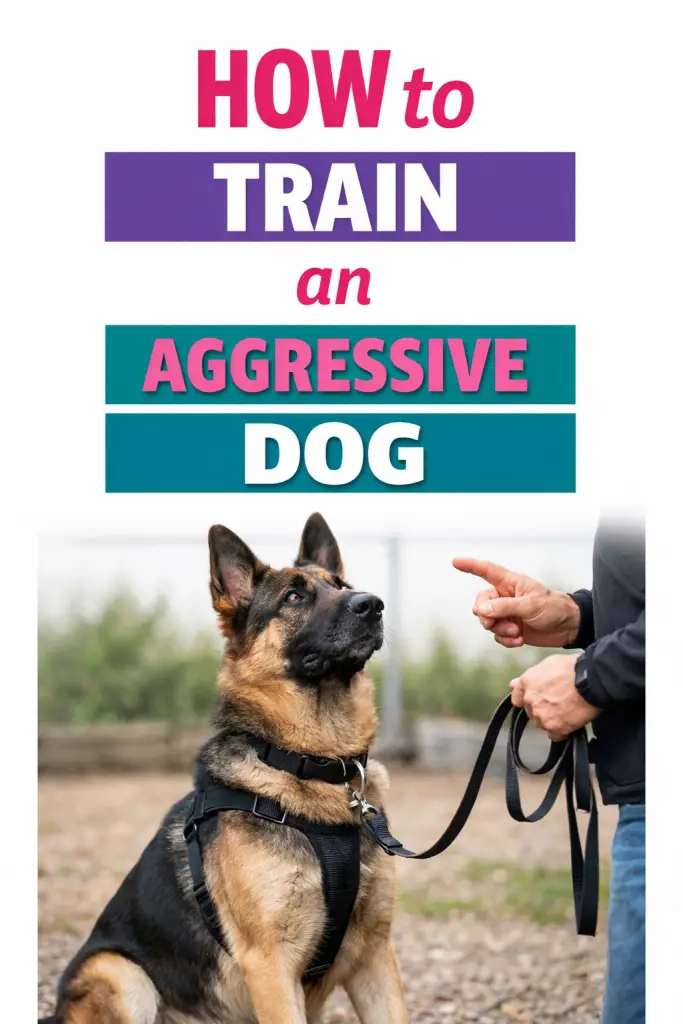
You’re Not a Bad Dog Parent—You’re Just Stuck
If you’re here, chances are you’re dealing with a dog that growls, snaps, lunges, or scares you sometimes—and honestly, that’s stressful. You might be asking yourself, “Did I mess up?” or “Is my dog broken?” Spoiler alert: no and no.
I’ve been there myself. I once worked with a dog who would stiffen the second another dog appeared. Walks felt like walking on eggshells. Training an aggressive dog can feel overwhelming, isolating, and downright exhausting. But here’s the good news—aggression can be managed, reduced, and often transformed with the right approach, patience, and mindset.
So let’s talk honestly, friend-to-friend, about how to train an aggressive dog the right way—without fear, force, or fluff. FYI, this isn’t about “dominating” your dog. It’s about understanding them.
Understanding Aggression: What’s Really Going On?
Aggression isn’t a personality flaw. It’s a communication tool your dog uses when they feel threatened, scared, frustrated, or overwhelmed. Once you understand that, everything changes.
Common Types of Dog Aggression
Not all aggression looks the same. Identifying the type helps you train smarter, not harder.
- Fear-based aggression – Triggered when a dog feels unsafe
- Territorial aggression – Guarding space, home, or people
- Leash aggression – Explosive reactions during walks
- Resource guarding – Protecting food, toys, or beds
- Redirected aggression – Taking frustration out on the nearest target
IMO, most “aggressive” dogs are actually anxious dogs with poor coping skills. Doesn’t that reframe things?
Warning Signs You Should Never Ignore
Aggression rarely comes out of nowhere. Dogs warn us first.
- Stiff body posture
- Whale eye (white of the eyes showing)
- Growling or snarling
- Lip lifting or snapping
Never punish these signals. They’re your dog’s way of saying, “I’m uncomfortable—please help.”
Step One: Safety Comes Before Training
Before you try to “fix” behavior, you need to prevent dangerous situations. Training only works when everyone feels safe.
Set Up a Management Plan
Think of management as putting guardrails on behavior while training is in progress.
- Use a secure leash or harness on walks
- Avoid known triggers temporarily
- Create safe spaces at home
- Separate dogs or people when needed
This isn’t failure—it’s strategy.
Why Punishment Makes Aggression Worse
Yelling, hitting, alpha rolls, or shock collars might suppress behavior short-term. But long-term? They increase fear and make aggression explode later.
Fear + punishment = ticking time bomb.
Training should reduce stress, not add to it.
Build Trust First: The Foundation of All Training
You cannot train aggression out of a dog that doesn’t trust you. Period.
Become the Calm, Predictable Leader
Leadership isn’t about control—it’s about consistency.
- Stick to routines
- Use calm body language
- Reward good choices immediately
- Avoid emotional reactions during outbursts
Dogs learn fastest when they feel safe and understood.
Strengthen Your Bond Daily
Simple activities build trust faster than formal training.
- Hand-feeding meals
- Calm leash walks
- Gentle play sessions
- Rewarding eye contact
When your dog trusts you, they’re more open to learning new responses.
Positive Reinforcement: The Only Method That Works Long-Term
If you take one thing from this article, let it be this: positive reinforcement changes emotional responses, not just behavior.
Why Rewards Beat Corrections
Aggression is emotional. You can’t correct fear out of a dog—but you can rewire it.
Rewards help your dog think:
“When that scary thing appears, good stuff happens.”
That’s powerful.
What to Use as Rewards
Every dog is different, so experiment.
- High-value treats (chicken, cheese, hot dogs)
- Favorite toys
- Praise and calm affection
- Space and distance from triggers
Use what motivates your dog the most.
Desensitization and Counterconditioning Explained Simply
These sound fancy, but they’re actually very practical.
Desensitization: Slow Exposure
This means exposing your dog to triggers at a distance they can handle—no reactions allowed.
Example:
- Dog notices another dog
- No barking or lunging
- You reward calm behavior
Over time, you gradually decrease the distance.
Counterconditioning: Change the Emotion
This pairs the trigger with something amazing.
Trigger = treat
Trigger = calm praise
Trigger = positive experience
Eventually, your dog thinks:
“Oh, that thing again? Cool. Snacks.”
That’s the goal.
Teaching Alternative Behaviors That Replace Aggression
Dogs don’t just stop behaviors—they replace them.
Train These Core Skills First
These commands give your dog better options.
- Look at me – Redirects focus
- Leave it – Disengages from triggers
- Sit or down – Encourages calm
- Touch – Creates movement and focus
Practice these in low-stress environments before using them around triggers.
Reward Calm, Not Just Obedience
Calmness is a behavior. Treat it like one.
- Reward relaxed body language
- Praise slow breathing
- Reinforce disengaging from triggers
Calm dogs don’t need to fight.
Leash Aggression: One of the Most Common Struggles
Leash aggression doesn’t mean your dog is aggressive off-leash. The leash removes escape options and increases frustration.
Fix the Walk Before the Behavior
A few simple changes help immediately.
- Use a front-clip harness
- Increase distance from triggers
- Walk during quieter hours
- Keep sessions short
Short, successful walks beat long, stressful ones every time.
Practice Pattern Games
Predictable movement reduces anxiety.
- Treat every few steps
- Walk in gentle curves
- Stop and reward calm check-ins
Structure builds confidence.
When You Should Call a Professional Trainer
Some cases need expert help—and that’s okay.
Signs You Need Professional Support
- Bites or near-bites
- Aggression toward family members
- Escalating intensity
- Multiple triggers
Look for a certified positive reinforcement trainer or behaviorist. Avoid anyone who guarantees instant results.
Real change takes time.
How Long Does Training an Aggressive Dog Take?
Let’s be real—this isn’t a weekend project.
What Progress Actually Looks Like
Progress often shows up quietly.
- Shorter reactions
- Faster recovery
- Less intense responses
- More trust
Celebrate small wins. They add up.
Set Realistic Expectations
Some dogs improve dramatically. Others learn lifelong management. Both outcomes are success.
Your goal isn’t perfection—it’s safety, trust, and quality of life.
Mistakes That Slow Progress (We’ve All Made Them)
Even well-meaning owners slip up.
- Moving too fast
- Inconsistent rules
- Training when emotions are high
- Skipping management
Training aggressive dogs requires patience. Grace—for your dog and yourself—matters.
Conclusion: Your Dog Isn’t the Problem—Fear Is
Training an aggressive dog isn’t about control or dominance. It’s about understanding, trust, and emotional change. With positive reinforcement, patience, and the right strategies, aggressive behavior can soften, shrink, and sometimes disappear entirely.
You’re not alone in this. You’re not failing. And your dog isn’t “bad.”
Start small. Stay consistent. And remember—every calm moment is progress