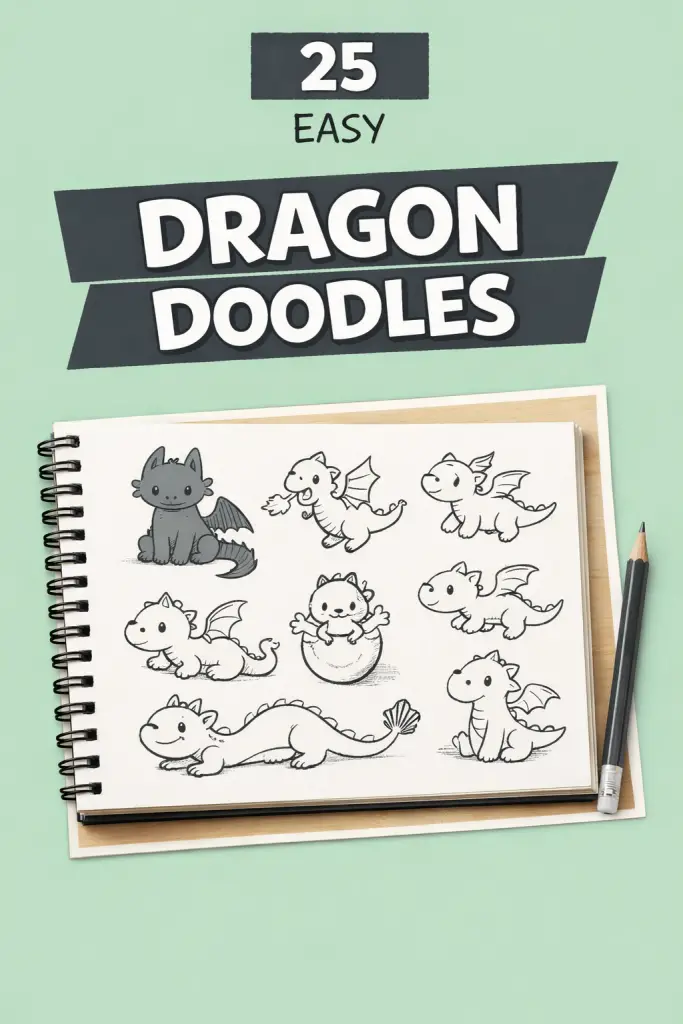
Yes, Your Dragon Doodles Can Be Trained.
Ever stared at a page full of messy dragon doodles and thought, “Why do my dragons look like confused lizards with wings?” Yeah… been there. If you love doodling dragons but feel stuck between adorable chaos and total creative meltdown, you’re not alone. Training your dragon doodles isn’t about being a “real artist”—it’s about guiding your imagination so your sketches finally match what’s in your head.
I’ve been doodling dragons in notebooks, planners, and random sticky notes for years. Some looked epic. Others… well, let’s just say they were emotionally damaged reptiles. Over time, I figured out simple ways to train my dragon doodles easily, without overthinking anatomy or killing the fun. That’s exactly what I’m sharing with you here.
So grab a pen, relax your shoulders, and let’s turn those wild scribbles into confident, expressive dragon doodles—one friendly sketch at a time.
What “Training” a Dragon Doodle Actually Means
It’s Not About Perfection
When we say training your dragon doodles, we’re not talking about rigid rules or art-school pressure. Training means repetition with intention. You’re teaching your hand and brain to work together so your dragons look more consistent, expressive, and fun.
Think of it like this: your doodles are baby dragons. They’re chaotic, adorable, and a little destructive. With the right guidance, they grow into confident creatures with personality.
The Core Goal
Your main goal is simple:
- Draw dragons faster
- Make them recognizable
- Give them character, not stress
Once you shift your mindset, everything gets easier. IMO, this is where most people get stuck—they try to master instead of play.
Start With Simple Dragon Shapes (Seriously, Simple)
Break Dragons Into Easy Forms
Every dragon doodle—yes, even the epic ones—starts with basic shapes. Circles, ovals, and lines are your best friends here.
Start with:
- A circle or oval for the head
- A bean shape for the body
- Simple curved lines for the neck and tail
That’s it. No scales. No details. Just structure.
Why this works? Because structure gives confidence. Once the base looks right, everything else feels natural instead of forced.
Practice Shape-Only Dragons
Before adding details, do a full page of dragons made only of shapes:
- Heads + bodies
- No eyes
- No wings
- No flames (yet 🔥)
This trains your hand without overwhelming your brain. FYI, this step alone can improve your doodles fast.
Master the Dragon Head First
The Head Is Where Personality Lives
If your dragon looks “off,” it’s usually the head. A well-trained dragon doodle always starts with a clear, expressive head.
Focus on:
- Head shape (round = cute, angular = fierce)
- Snout length (short = playful, long = wise)
- Eye size (big eyes = friendly, small eyes = grumpy)
Once the head works, the rest follows naturally.
Easy Dragon Face Variations
Try these beginner-friendly styles:
- Chibi dragon: Big head, tiny body
- Cartoon dragon: Oval head, oversized eyes
- Simple fierce dragon: Triangle head, sharp eyes
Stick to one style for a while. Consistency is training.
Train Your Lines to Be Confident (No Sketch Anxiety)
One Line Is Better Than Five
Dragon doodles look messy when we over-sketch. Training your doodles means committing to your lines—even if they’re imperfect.
Use:
- Slow, deliberate strokes
- Light pressure at first
- Fewer corrections
If a line goes wrong, keep it. Seriously. Confidence beats perfection every time.
Line Warm-Up Trick
Before doodling dragons, warm up with:
- Curved lines
- Loops
- S-shapes
Do this for two minutes. Your lines will instantly feel smoother, and your dragons will thank you.
Wings Don’t Have to Be Hard (Promise)
Simplify Wing Structure
Wings scare people. They shouldn’t. At their core, dragon wings are just triangles with fingers.
Start with:
- One triangle per wing
- Add 2–3 curved “finger” lines
- Connect with soft curves
That’s it. No feathers. No stress.
Cute vs Fierce Wings
You can change the vibe easily:
- Rounded edges = cute dragon
- Sharp angles = fierce dragon
- Small wings = baby dragon
- Oversized wings = dramatic dragon
Training your dragon doodles means learning these shortcuts so you don’t freeze mid-sketch.
Give Your Dragons a Body That Makes Sense
Keep the Body Secondary
Here’s a secret: the body matters less than the head in doodles. Keep it simple so it supports the character instead of overpowering it.
Use:
- Bean shapes
- Slight curves
- Minimal limbs
If you’re unsure, make the body smaller. It almost always works.
Easy Body Poses to Practice
Train with these poses first:
- Sitting dragon
- Standing dragon
- Curled sleeping dragon
- Flying side-view dragon
Repeat the same pose multiple times. Repetition = confidence.
Expressions Are the Real Magic
Train Emotional Variety
Your dragon doodles come alive when they show emotion. Start exaggerating expressions on purpose.
Practice:
- Happy (big eyes, curved mouth)
- Angry (angled brows, sharp teeth)
- Sleepy (half-closed eyes)
- Confused (uneven eyes, tilted head)
The more you exaggerate, the clearer your style becomes.
One Emotion Per Page
Fill a page with dragons showing one emotion only. This trains consistency and helps you develop a recognizable doodle style.
Add Details Last (Not First)
Details Should Enhance, Not Distract
Scales, spikes, horns, and flames are fun—but they’re dessert, not the meal. Add them after your base doodle feels right.
Easy details to start with:
- Two horns max
- A few back spikes
- One flame shape
Less detail often looks cleaner and more confident.
Choose a Signature Detail
Pick one detail you love and repeat it across your dragons:
- Curly horns
- Star-shaped pupils
- Heart-shaped flames
This builds style identity, which is a huge part of training doodles.
Create a Simple Dragon Doodle Routine
Consistency Beats Talent
You don’t need hours. You need consistency.
Try this routine:
- 5 minutes: shape practice
- 5 minutes: heads only
- 5 minutes: full dragon doodles
That’s 15 minutes. Totally doable, right?
Use “Bad Pages” on Purpose
Dedicate some pages to bad doodles only. No erasing. No fixing. This removes pressure and speeds up improvement.
Trust me—some of your best dragons will sneak in there.
Common Dragon Doodle Mistakes (And How to Fix Them)
Overthinking Anatomy
Dragons are mythical. They don’t need perfect anatomy. If it looks cool or cute, it works.
Fix: Simplify and exaggerate.
Comparing Your Doodles
Comparison kills creativity fast.
Fix: Compare today’s doodles to last week’s, not someone else’s Instagram feed.
Quitting Too Early
Most people stop right before their doodles start improving.
Fix: Set tiny goals and celebrate progress.
Turning Dragon Doodles Into Something More
Use Them Everywhere
Once trained, your dragon doodles can live everywhere:
- Planners
- Journals
- Stickers
- Digital art
- Pinterest graphics
This makes practice feel useful, not random.
Digitizing Your Doodles
If you want to level up:
- Scan or photograph your doodles
- Clean them up digitally
- Reuse them as assets
This is optional, but super fun if you’re into creative projects.
Conclusion: Your Dragons Are Already Better Than You Think
Training your dragon doodles doesn’t require talent, fancy tools, or endless tutorials. It just takes simple shapes, repetition, and a relaxed mindset. Start with heads, keep bodies easy, simplify wings, and let expressions do the heavy lifting.
Most importantly, don’t forget why you started doodling dragons in the first place—it’s fun. So keep playing, keep sketching, and let your dragons grow alongside your confidence.
Now go train those doodles. Your notebook is waiting