If you’ve ever stood in your pajamas at 6 a.m., staring at the rain outside while your puppy stares back at you like, “So… you going out there or not?” — you’re not alone. Housetraining a puppy is one of the biggest challenges new dog parents face, especially if you live in an apartment, work long hours, or don’t have easy outdoor access.
That’s exactly why indoor dog toilets have become such a game-changer. I started researching and testing indoor potty options after realizing that rushing outside every hour just wasn’t realistic — and honestly, it was stressing both me and the pup out. Once I figured out how to use an indoor dog toilet properly, housetraining became calmer, faster, and way more predictable.
So let’s talk about how to use an indoor dog toilet the right way — without confusion, guilt, or endless accidents.
What Is an Indoor Dog Toilet (And Why It Works)
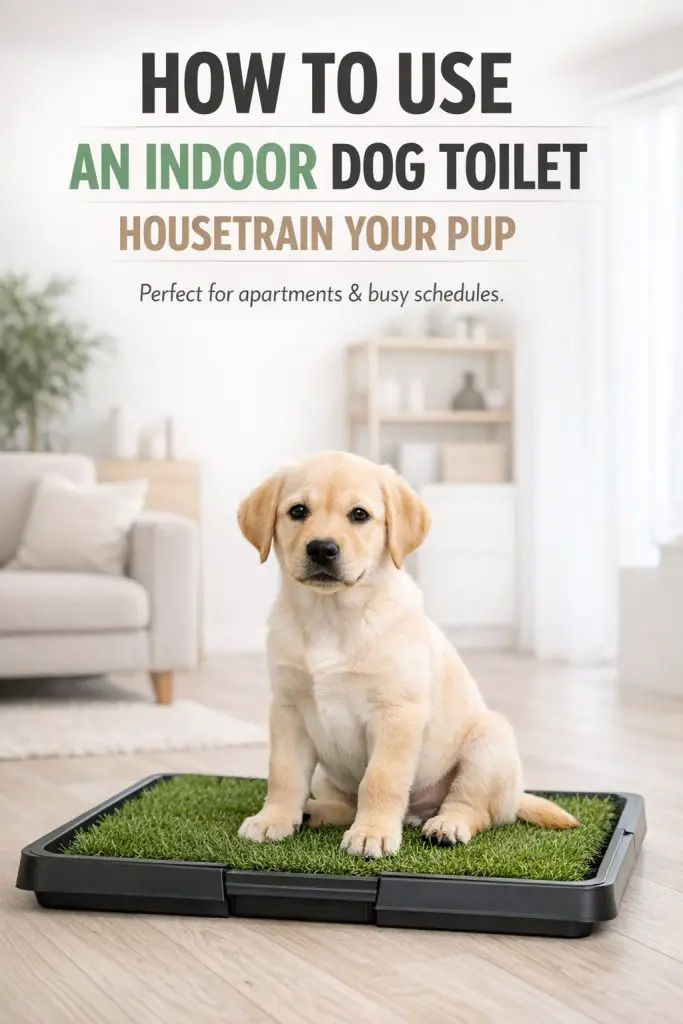
An indoor dog toilet is a designated potty system designed for dogs to relieve themselves inside your home — in a controlled, hygienic way.
Unlike basic pee pads tossed on the floor, indoor dog toilets are structured systems that teach location-based potty habits, which is key for housetraining success.
Most indoor dog toilets include:
- A tray or base
- A grass pad (real or artificial) or absorbent surface
- A drainage or collection layer underneath
Why they work so well:
Dogs learn through repetition and clear signals. An indoor dog toilet creates one consistent potty spot, which helps your pup understand where it’s okay to go.
Is an Indoor Dog Toilet Right for Your Puppy?
Before diving in, let’s be real — indoor dog toilets aren’t just for one “type” of dog parent.
They’re especially helpful if:
- You live in an apartment or high-rise
- You have no yard or limited outdoor access
- You work long hours or have a busy schedule
- You’re housetraining a young puppy with limited bladder control
- You live in extreme weather conditions
IMO, the biggest benefit is removing pressure. You’re not racing the clock every hour, and your puppy isn’t punished for accidents they physically can’t avoid yet.
Choosing the Right Indoor Dog Toilet for Your Pup
Not all indoor dog toilets are created equal, and choosing the right one makes training much easier.
Size Matters More Than You Think
Your puppy should be able to:
- Stand comfortably
- Turn around
- Sniff and position naturally
A toilet that’s too small leads to missed aim and frustration.
Grass vs. Absorbent Pads
Here’s a quick breakdown:
Grass-style toilets
- Mimic outdoor potty surfaces
- Help transition to outside later
- Better for dogs who dislike pads
Absorbent pad systems
- Easier cleanup
- Often cheaper
- Better for very young puppies at first
FYI: Many people start with absorbent pads, then switch to grass once the puppy understands the concept.
Where to Place the Indoor Dog Toilet
Location is huge when it comes to success.
Best Placement Tips
- Choose a quiet, low-traffic area
- Avoid placing it near food or sleeping spaces
- Keep it easily accessible at all times
- Use the same spot consistently
Dogs thrive on routine. Moving the toilet around the house sends mixed signals and slows progress.
How To Introduce Your Puppy to an Indoor Dog Toilet
This is where patience pays off.
Step-by-Step Introduction
- Let your puppy explore the toilet without pressure
- Allow sniffing and standing on it
- Reward calm interest with praise or treats
- Don’t force them onto it
The goal is to make the toilet feel safe and neutral — not scary or confusing.
Using an Indoor Dog Toilet for Daily Housetraining
Once introduced, consistency becomes everything.
When to Guide Your Puppy to the Toilet
Take your puppy to the indoor toilet:
- After waking up
- After eating or drinking
- After playtime
- Before bedtime
- Every 1–2 hours for young puppies
Yes, it feels repetitive — but repetition is how puppies learn.
What to Do During Potty Time
- Calmly place your puppy on the toilet
- Use a consistent cue like “go potty”
- Stand nearby but don’t distract
- Praise immediately after success
Timing matters. Praise after the fact doesn’t connect the behavior.
Handling Accidents Without Stress
Accidents are part of the process — full stop.
What NOT to Do
- Don’t yell
- Don’t rub their nose in it
- Don’t punish after the fact
Your puppy isn’t being stubborn. They’re learning bladder control and rules at the same time.
What TO Do Instead
- Clean accidents thoroughly with an enzyme cleaner
- Calmly redirect next time
- Increase potty breaks if accidents are frequent
Trust me, stress slows training more than anything else.
How Long Does It Take to Housetrain Using an Indoor Dog Toilet?
Every puppy is different, but here’s a realistic timeline:
- First 1–2 weeks: Understanding location
- Weeks 3–4: Fewer accidents, more consistency
- 1–2 months: Reliable indoor potty habits
Smaller breeds may take longer due to bladder size — totally normal.
Transitioning from Indoor Dog Toilet to Outdoor Potty (Optional)
Some people keep indoor toilets long-term. Others want a full outdoor transition. Both are valid.
Gradual Transition Method
- Move the toilet closer to the door over time
- Introduce outdoor potty breaks alongside indoor use
- Use the same potty cue outdoors
- Slowly reduce indoor access
This prevents confusion and regression.
Cleaning and Maintaining the Indoor Dog Toilet
Cleanliness keeps your pup using it — and keeps your home smelling fresh.
Daily Maintenance
- Remove solid waste immediately
- Rinse or replace pads/grass as needed
Weekly Deep Clean
- Wash tray with pet-safe cleaner
- Replace grass if odor lingers
- Sanitize drainage layers
A dirty toilet = puppy looking for alternatives. Ask me how I know 😅
Common Mistakes That Slow Down Housetraining
Avoid these, and you’ll save yourself weeks of frustration:
- Moving the toilet location too often
- Inconsistent potty schedules
- Forgetting praise and rewards
- Expecting overnight success
- Skipping cleanup routines
Housetraining isn’t about perfection — it’s about consistency.
Final Thoughts: Making Indoor Potty Training Work for You
Using an indoor dog toilet doesn’t mean you’re “cheating” or doing something wrong. It means you’re working with your lifestyle and your puppy’s needs, not against them.
With the right setup, routine, and mindset, an indoor dog toilet can:
- Reduce stress
- Speed up housetraining
- Create clear potty habits
- Make puppy life more manageable
If you’re feeling overwhelmed right now, take a breath. You’re doing better than you think. Start small, stay consistent, and give both yourself and your pup a little grace.
Your future, accident-free floors will thank you. 🐾