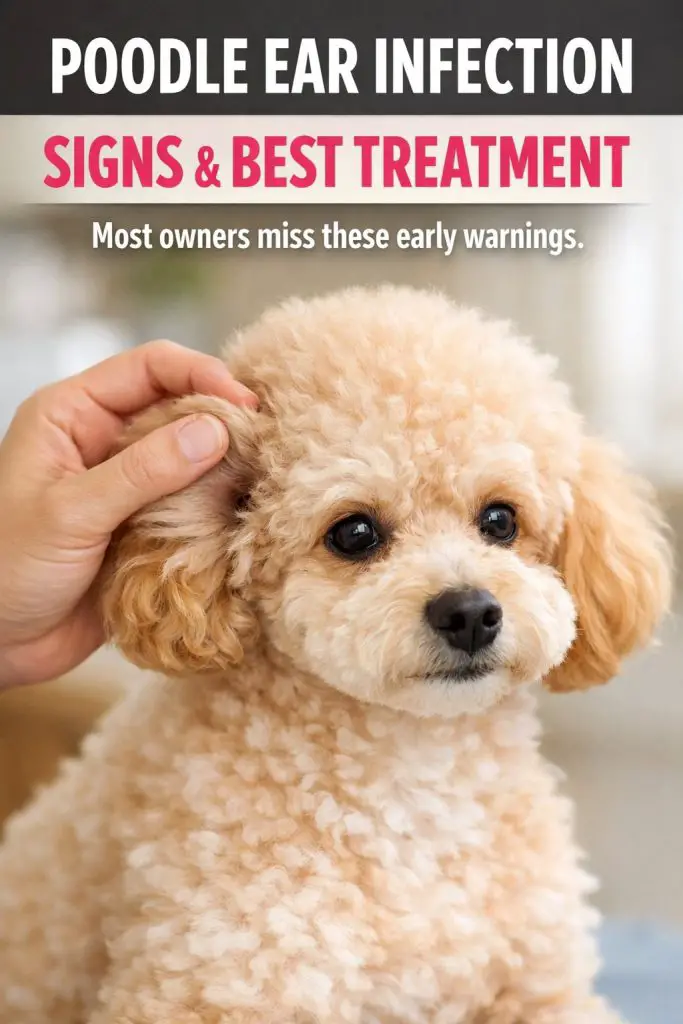
If you’ve ever noticed your Poodle shaking their head nonstop, scratching their ears like they’re itchy beyond belief, or giving off a smell that just isn’t normal, you’re probably dealing with an ear infection. Poodle ear infections are one of the most common health issues owners face, mainly because of those adorable floppy ears that trap moisture and debris. Left untreated, a simple infection can turn painful fast and seriously affect your dog’s comfort and hearing.
I’ve dealt with this more times than I care to admit. I think every Poodle owner eventually has that moment of panic when they spot redness or gunk inside the ear. In my opinion, the tricky part isn’t just treating the infection—it’s knowing what caused it and how to stop it from coming back. I feel like once you understand what’s happening inside those ears, everything becomes way less stressful.
The good news? You’re in the right place. This article will walk you through clear signs, causes, and the best treatments for Poodle ear infections, so you can take action confidently and keep your pup comfortable, healthy, and happy.
Why Poodles Are So Prone to Ear Infections
Poodles have a perfect storm of traits that make ear infections more likely. Their ears aren’t “bad,” they just need extra attention.
Here’s why infections happen so often:
- Floppy ears reduce airflow, creating a warm, moist environment
- Thick hair inside the ear canal traps wax and debris
- Allergies are common in Poodles and often affect the ears first
- Frequent swimming or baths leave moisture behind
FYI, moisture is bacteria and yeast’s favorite playground. Once it’s trapped, infection can develop quickly.
Common Signs of a Poodle Ear Infection
Catching an ear infection early makes treatment much easier. So what should you watch for?
Early Warning Signs You Shouldn’t Ignore
- Frequent head shaking
- Scratching or rubbing ears on furniture
- Redness inside the ear
- Mild odor
- Dark wax buildup
These signs usually mean irritation or the beginning of an infection.
Advanced Symptoms That Need Immediate Attention
If the infection progresses, symptoms get harder to miss:
- Strong, foul smell
- Yellow, brown, or bloody discharge
- Swelling or heat around the ear
- Pain when ears are touched
- Loss of balance or tilted head
At this stage, home care alone isn’t enough. A vet visit becomes essential.
Types of Ear Infections in Poodles
Not all ear infections are the same, and treatment depends on the cause.
Bacterial Ear Infections
These are often caused by trapped moisture or untreated irritation. They usually produce thick discharge and a strong odor.
Yeast Ear Infections
Yeast infections are extremely common in Poodles, especially those with allergies. They often smell sweet or musty, kind of like bread or corn chips.
Ear Mites (Less Common in Adult Poodles)
Ear mites are more common in puppies but can still happen. Symptoms include intense itching and dark, crumbly debris.
What Causes Poodle Ear Infections?
Understanding the cause is key to choosing the best treatment.
Most Common Causes
- Moisture buildup after swimming or baths
- Food or environmental allergies
- Excess ear hair blocking airflow
- Poor ear cleaning habits
- Foreign objects like grass seeds
IMO, allergies are one of the most overlooked triggers. Many recurring ear infections won’t fully clear until the allergy is addressed.
How to Check Your Poodle’s Ears at Home
You don’t need special tools—just a calm moment and good lighting.
Look for:
- Pink (not red) skin
- Minimal wax
- No strong odor
- No swelling
If you see redness, discharge, or smell, it’s time to act.
Best Treatment Options for Poodle Ear Infections
Treatment depends on severity, but let’s break it down clearly.
Veterinary Treatment (Most Effective for Active Infections)
For moderate to severe infections, vets usually prescribe:
- Medicated ear drops (antibiotic, antifungal, or both)
- Anti-inflammatory medication to reduce pain and swelling
- Oral medication in severe or chronic cases
Follow the full treatment course even if symptoms improve early.
Step-by-Step: How to Apply Ear Medication Correctly
- Gently clean visible debris (if advised by your vet)
- Apply the prescribed drops
- Massage the base of the ear for 20–30 seconds
- Let your dog shake their head
- Reward with a treat
Consistency matters more than perfection.
Home Care and Supportive Treatments
Home care works best alongside vet treatment or for prevention.
Safe Home Care Options
- Vet-approved ear cleaners (never alcohol or hydrogen peroxide)
- Drying ears thoroughly after baths or swimming
- Routine hair trimming around ear openings
Avoid DIY remedies unless your vet approves them. Some “natural cures” can make infections worse.
How to Clean a Poodle’s Ears Properly
Regular cleaning prevents most infections.
Step-by-Step Ear Cleaning Guide
- Use a dog-specific ear cleaner
- Fill the ear canal gently
- Massage the ear base
- Allow your dog to shake
- Wipe excess with cotton (never Q-tips)
Once a week is enough for most Poodles unless your vet suggests otherwise.
Preventing Future Ear Infections
Prevention is where you win long-term.
Simple Prevention Tips That Actually Work
- Dry ears completely after water exposure
- Keep ear hair trimmed, not plucked excessively
- Address food or environmental allergies
- Clean ears regularly, not obsessively
- Schedule routine vet checks
Consistency beats intensity every time.
Diet and Allergies: The Hidden Connection
Many chronic ear infections trace back to food sensitivities.
Common triggers include:
- Chicken
- Beef
- Dairy
- Wheat
If ear infections keep returning, your vet may recommend an elimination diet. It’s not fun, but it’s often a game-changer.
When to See the Vet (No Guessing Here)
You should book a vet visit if:
- Symptoms last more than 2–3 days
- Pain or swelling is present
- Discharge is thick or bloody
- Infections keep returning
Delaying treatment can lead to chronic ear disease or hearing loss.
Long-Term Care for Poodles with Chronic Ear Issues
Some Poodles are simply more sensitive than others.
Long-term management may include:
- Regular allergy management
- Maintenance ear cleaning routines
- Prescription preventive drops
- Seasonal checkups
It’s manageable, even if it feels overwhelming at first.
Emotional Side: Your Poodle Feels This Too
Ear infections aren’t just uncomfortable—they’re painful. Dogs may act withdrawn, irritable, or anxious. Once treatment starts working, you’ll often see their personality bounce back fast. That’s always the most rewarding part.
Final Thoughts
Poodle ear infections are common, but they’re absolutely manageable. With early detection, proper treatment, and consistent care, most dogs recover quickly and stay comfortable long-term. The key is not ignoring early signs and being proactive about prevention.
If you ever feel unsure, trust your instincts. You know your dog better than anyone else.
Frequently Asked Questions (FAQ)
1. How long does it take for a Poodle ear infection to heal?
Most mild to moderate infections improve within 7–14 days with proper treatment. Chronic infections may take longer and require follow-up care.
2. Can I treat my Poodle’s ear infection at home?
Home care can help with prevention and mild irritation, but active infections usually need veterinary medication to fully resolve.
3. Are Poodle ear infections contagious?
Bacterial and yeast infections are not contagious, but ear mites can spread between animals.
4. How often should I clean my Poodle’s ears?
For most Poodles, once a week is sufficient. Dogs with recurring issues may need more frequent cleaning under vet guidance.
5. Why does my Poodle keep getting ear infections?
Recurring infections are often linked to allergies, moisture buildup, or underlying skin conditions. Identifying and managing the root cause is essential for long-term relief.