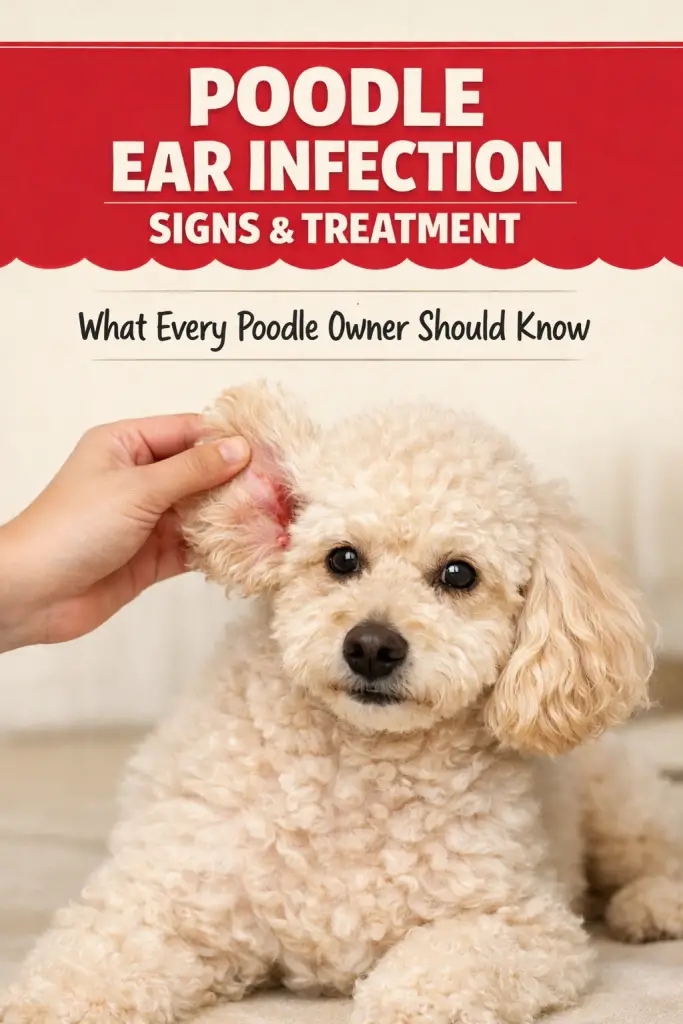
When Your Happy Poodle Suddenly Isn’t So Happy
One day your Poodle is bouncing around like usual… and the next, they’re shaking their head nonstop, scratching their ears, or pulling away when you touch them. You notice a strange smell. Maybe some redness. Maybe even discharge. And suddenly, you’re worried. Is it serious? Did you miss something? Is your dog in pain?
I think almost every Poodle owner goes through this at least once. In my experience, ear infections are one of the most common (and frustrating) issues with this breed. I feel like they sneak up on you — especially because Poodles have those adorable, fluffy ears that trap moisture so easily.
The good news? You’re not alone — and most Poodle ear infections are very treatable when caught early. In this guide, I’ll walk you through the clear signs, causes, safe treatment options, and when to call the vet, step by step, in simple language you can actually use.
How Do You Treat a Poodle Ear Infection?
A Poodle ear infection usually shows up as head shaking, scratching, redness, bad odor, or discharge. Treatment depends on the cause (yeast, bacteria, allergies, or moisture), but early care makes a big difference.
Here’s what you need to know right away:
- Head shaking and scratching are early warning signs
- A strong smell often means yeast involvement
- Mild infections may improve with vet-approved ear cleaners
- Moderate to severe cases need prescription ear drops
- Never use random home remedies like vinegar without guidance
- Chronic infections often link back to allergies or grooming issues
Immediate safe action:
- Gently check your Poodle’s ears in good light
- If there’s pain, swelling, or thick discharge → call your vet
- If it looks mildly red and slightly dirty → clean carefully and monitor 24–48 hours
Why Poodles Are Prone to Ear Infections
Poodles are especially vulnerable — and it’s not your fault.
Floppy Ear Structure
Their long, hanging ears limit airflow. Less air = more trapped moisture. And moisture creates the perfect environment for yeast and bacteria.
Hair Growth Inside the Ear Canal
Unlike some breeds, Poodles grow hair inside their ear canals. That hair can trap debris and moisture.
Frequent Grooming and Bathing
Poodles are often bathed more than other breeds. Water left behind in the ears is one of the biggest triggers.
Allergies
Food and environmental allergies are very common in Poodles. Chronic ear infections are often a symptom of underlying allergies.
Common Signs of a Poodle Ear Infection
Let’s break this down clearly so you know exactly what to watch for.
Early Warning Signs
- Mild head shaking
- Light scratching
- Slight redness inside the ear
- Subtle odor
Moderate Symptoms
- Strong smell (yeasty or sour)
- Dark brown, yellow, or green discharge
- Increased scratching
- Sensitivity when touched
Serious Symptoms (Call Your Vet)
- Swelling of the ear flap
- Thick pus-like discharge
- Crying when ear is touched
- Loss of balance
- Head tilt
If you see balance issues, don’t wait. That could mean the infection has moved deeper.
What Causes Poodle Ear Infections?
Understanding the “why” helps you prevent repeat problems.
1. Moisture
After baths, swimming, or rainy walks, water can stay trapped inside.
2. Yeast Overgrowth
Yeast naturally lives in the ear — but when conditions are right, it multiplies fast.
Signs of yeast:
- Brown debris
- Strong musty odor
- Intense itching
3. Bacterial Infection
Often secondary to moisture or scratching.
Signs:
- Yellow or green discharge
- Swelling
- Pain
4. Allergies
If your Poodle gets repeated infections, allergies may be the root cause.
Common allergy clues:
- Paw licking
- Face rubbing
- Seasonal flare-ups
- Red skin
Step-by-Step: How to Safely Handle a Mild Ear Infection at Home
Important: Only attempt this if symptoms are mild. If in doubt, call your vet.
Step 1: Inspect the Ear
Use soft lighting. Look for:
- Redness
- Discharge
- Swelling
- Odor
Step 2: Use a Vet-Approved Ear Cleaner
Never use hydrogen peroxide or alcohol. These irritate the ear.
- Lift the ear flap.
- Fill the ear canal with cleaner.
- Gently massage the base of the ear for 20–30 seconds.
- Let your dog shake.
- Wipe away debris with gauze (not cotton swabs).
Step 3: Monitor for 48 Hours
If symptoms:
- Improve → continue cleaning as directed.
- Stay the same or worsen → schedule a vet visit.
Best Treatment Options for Poodle Ear Infections
Treatment depends on severity.
Mild Cases
- Professional ear cleaning
- Prescription medicated drops
- Anti-inflammatory drops
Moderate to Severe Cases
- Antibiotic or antifungal ear drops
- Oral medication
- Anti-inflammatory medication
- Allergy management if needed
Chronic or Recurring Cases
Your vet may recommend:
- Allergy testing
- Diet trials
- Long-term ear maintenance routine
IMO, chronic ear infections are usually a sign of something deeper going on — often allergies.
When Should You Call the Vet?
Here’s a simple guide.
Call your vet if:
- Your Poodle seems in pain
- There’s thick discharge
- The ear is swollen shut
- Your dog tilts their head
- Infection keeps returning
- Cleaning doesn’t improve things in 48 hours
It’s always better to check early than treat late.
How to Prevent Future Ear Infections
Prevention is honestly the secret weapon here.
Weekly Ear Checks
Make it a habit. Lift the ears and look inside once a week.
Keep Ears Dry After Baths
After bathing:
- Gently dry outer ear
- Ask your groomer to be careful with water exposure
Trim Excess Hair Carefully
If recommended by your vet or groomer, remove excess hair that traps moisture.
Manage Allergies
If your Poodle has chronic ear issues, ask your vet about:
- Diet changes
- Allergy medications
- Omega-3 supplements
Routine Cleaning
For infection-prone Poodles:
- Clean ears once weekly
- Use vet-approved products only
Simple At-Home Ear Check Checklist
Save this section for easy reference.
✔ Check ears once weekly
✔ Look for redness or discharge
✔ Smell for strong odor
✔ Dry ears thoroughly after baths
✔ Use only vet-approved cleaners
✔ Call vet if symptoms last more than 48 hours
This simple routine can prevent most flare-ups.
Frequently Asked Questions
Can I use apple cider vinegar?
It’s often recommended online, but FYI — it can burn irritated skin and make infections worse. Always ask your vet first.
How long does a Poodle ear infection last?
With proper treatment, most improve within 7–10 days. Chronic cases may take longer.
Are ear infections painful?
Yes, they can be very uncomfortable. That’s why early treatment matters.
Can food cause ear infections?
Indirectly, yes. Food allergies can trigger inflammation that leads to recurring ear problems.
The Emotional Side of It (Because It Matters)
It’s stressful when your Poodle isn’t feeling well. They can’t tell you what hurts — and that makes it harder.
But here’s something reassuring: ear infections are extremely common and very treatable. Catching them early makes all the difference.
You’re not a bad pet parent if it happens. You’re a responsible one for learning how to handle it.
Final Thoughts: Protecting Those Fluffy Ears
Poodle ear infections can feel overwhelming at first, especially if you’re seeing redness, discharge, or constant head shaking. But once you understand the signs, causes, and safe treatment options, it becomes much more manageable.
The biggest takeaways?
- Watch for early symptoms
- Act quickly
- Don’t ignore recurring infections
- Build a simple weekly ear routine
With the right care, most Poodles recover quickly and go right back to being their playful, happy selves.
And honestly? Once you build a prevention routine, you’ll feel so much more confident handling it next time.
Your Poodle’s ears are part of their charm — and now you know exactly how to protect them.