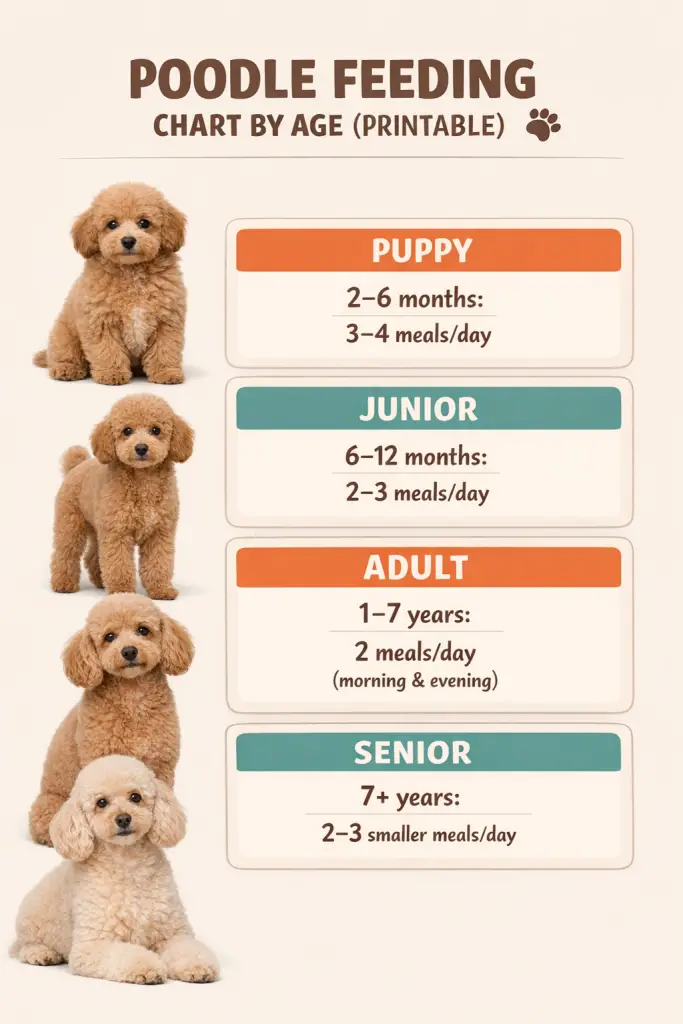
If you’ve ever stared at a bag of puppy food and thought, “Okay… but how much am I actually supposed to feed my Poodle?” — you’re definitely not alone. The biggest problem most Poodle owners face is overfeeding or underfeeding, especially during puppyhood when growth is fast and confusing. One day your Poodle seems starving, the next day they barely touch their bowl, and suddenly you’re wondering if you’re doing something wrong. And honestly? That’s exactly why a Poodle feeding chart by age (printable) is such a lifesaver.
I’ve been around Poodles for years, and I feel like feeding them is one of those things nobody truly masters on day one. In my opinion, Poodles are extra tricky because they’re smart, sometimes picky, and their energy levels can change daily. I think every Poodle parent has had that moment of panic like, “Wait… is this too much food? Too little?” So in this article, I’m going to help you fix that with a clear, realistic feeding plan you can actually follow.
By the end of this guide, you’ll have a simple feeding chart by age, a printable-style schedule you can copy, and the confidence to feed your Poodle without stress. No guesswork, no confusion — just a clear solution that makes your daily routine easier.
Why Poodles Need a Feeding Chart (Not Just “Follow the Bag”)
Here’s the truth: food bags give general guidelines, but Poodles aren’t “general.”
Poodles come in different sizes, and even within the same size, their metabolism and activity level can be totally different.
A feeding chart helps because it creates structure, and structure is exactly what your Poodle thrives on.
A good chart also helps you avoid common problems like:
- Upset stomach from random feeding amounts
- Unwanted weight gain
- Low energy from underfeeding
- Begging habits and food obsession
- Bad poop schedules (yep, feeding impacts potty training too!)
Bottom line: a feeding chart isn’t just about food — it’s about creating a healthy routine.
Poodle Feeding Chart By Age (Printable)
Below is an easy-to-follow Poodle feeding chart by age. This works well for most healthy Poodles eating high-quality dry kibble.
✅ Important note: This is a general guide. Your vet is always the best person to confirm the perfect amount for your dog.
Poodle Puppy Feeding Chart (8 Weeks to 12 Months)
Age: 8–12 weeks (2–3 months)
- Meals per day: 4 meals
- Total per day: ½ to 1 cup
Age: 3 months
- Meals per day: 3–4 meals
- Total per day: ¾ to 1¼ cups
Age: 4 months
- Meals per day: 3 meals
- Total per day: 1 to 1½ cups
Age: 5 months
- Meals per day: 3 meals
- Total per day: 1¼ to 1¾ cups
Age: 6 months
- Meals per day: 2–3 meals
- Total per day: 1½ to 2 cups
Age: 7–9 months
- Meals per day: 2 meals
- Total per day: 1½ to 2¼ cups
Age: 10–12 months
- Meals per day: 2 meals
- Total per day: 1½ to 2½ cups
✅ Most Poodles transition to adult food around 10–12 months, but toy breeds can sometimes switch earlier.
Toy Poodle Feeding Chart By Age (Printable)
Toy Poodles are tiny, but their metabolism is fast. That means they may need smaller meals more frequently, especially as puppies.
Toy Poodle Feeding Guide
Age: 8–12 weeks
- Meals per day: 4 meals
- Total per day: ¼ to ½ cup
Age: 3–4 months
- Meals per day: 3–4 meals
- Total per day: ⅓ to ⅔ cup
Age: 5–6 months
- Meals per day: 3 meals
- Total per day: ½ to ¾ cup
Age: 7–12 months
- Meals per day: 2 meals
- Total per day: ½ to 1 cup
✅ Big takeaway: Toy Poodles are prone to low blood sugar, so skipping meals is not a great idea.
Miniature Poodle Feeding Chart By Age (Printable)
Miniature Poodles usually fall in the “medium-small” category and do well with a steady routine.
Miniature Poodle Feeding Guide
Age: 8–12 weeks
- Meals per day: 4 meals
- Total per day: ½ to ¾ cup
Age: 3–4 months
- Meals per day: 3 meals
- Total per day: ¾ to 1¼ cups
Age: 5–6 months
- Meals per day: 3 meals
- Total per day: 1 to 1½ cups
Age: 7–12 months
- Meals per day: 2 meals
- Total per day: 1¼ to 2 cups
Standard Poodle Feeding Chart By Age (Printable)
Standard Poodles grow big and need more calories, but you still want controlled portions to avoid “growing too fast.”
Standard Poodle Feeding Guide
Age: 8–12 weeks
- Meals per day: 4 meals
- Total per day: 1 to 2 cups
Age: 3–4 months
- Meals per day: 3 meals
- Total per day: 2 to 3 cups
Age: 5–6 months
- Meals per day: 3 meals
- Total per day: 2½ to 4 cups
Age: 7–12 months
- Meals per day: 2 meals
- Total per day: 3 to 5 cups
✅ Standard Poodles often stay on puppy food until 12–15 months depending on vet guidance.
How Much Should a Poodle Eat Per Day? (The Quick Answer)
If you’re in a rush and just want a simple shortcut, here’s the general daily feeding range:
- Toy Poodle: ½ to 1 cup/day
- Miniature Poodle: 1 to 2 cups/day
- Standard Poodle: 3 to 5 cups/day
But here’s the key detail: food amount depends on calories, not just “cups.”
Some foods are calorie-dense, so feeding 2 cups of one brand might be equal to 3 cups of another.
IMO, the best habit you can build is checking the calories per cup on the bag.
The Best Feeding Schedule by Age (Simple Routine)
Poodles love routine. Feeding at random times can lead to begging, anxiety, and bathroom chaos.
Here’s a clean schedule you can copy:
8–12 Weeks (4 Meals)
- 7:00 AM
- 11:00 AM
- 3:00 PM
- 7:00 PM
3–6 Months (3 Meals)
- 7:00 AM
- 1:00 PM
- 7:00 PM
6–12 Months (2 Meals)
- 7:00 AM
- 7:00 PM
✅ Consistency helps with:
- digestion
- potty schedule
- energy levels
- training success
Signs You’re Feeding Your Poodle the Right Amount
Sometimes you can follow a chart perfectly… and still wonder “Is this working?”
Here are the signs your feeding amount is on point:
- Your Poodle has steady energy
- Poops are firm and regular
- You can feel ribs but not see them
- They aren’t inhaling food like they’ve been starving for 3 days
- Their coat looks shiny and healthy
A healthy Poodle should look lean, athletic, and light on their feet.
Signs You Might Be Overfeeding (Super Common!)
Overfeeding doesn’t always look obvious at first. A lot of Poodles gain slowly over time.
Watch for:
- Soft belly that seems round all the time
- Less interest in playing
- Heavy breathing after small activity
- Poops become large and messy
- Your Poodle starts looking “thick” around the waist
Important: Extra weight isn’t just a cosmetic thing. It can strain joints, especially in growing puppies.
Signs You Might Be Underfeeding
Underfeeding can happen if you’re trying to “keep them small” or if you’re scared of weight gain.
Look out for:
- Visible ribs and hip bones
- Low energy and sleeping too much
- Constant hunger and food obsession
- Slow growth in puppies
- Dull coat
If you’re seeing these signs, increase food slightly and speak with your vet.
Dry Food vs Wet Food vs Fresh Food (Which Is Best for Poodles?)
Let’s talk honestly — every owner has opinions here, and Poodles can be picky.
Dry Food (Kibble)
✅ Best for most people because it’s:
- affordable
- easy to portion
- convenient for routines
Wet Food
Great for picky eaters, but:
- harder to portion
- can be pricey
Fresh / Home-Cooked
Can be amazing if balanced correctly, but:
- requires planning
- must include proper nutrients
FYI: If you do home-cooked meals, don’t guess nutrients — work with your vet or a canine nutritionist.
Treats and Training Snacks (Yes, They Count!)
This part surprises many people.
Treats should be 10% or less of daily calories.
If your Poodle gets lots of treats during training, adjust meals slightly.
Simple ways to manage treats:
- use tiny pieces
- use part of their kibble as treats
- choose low-calorie training treats
Bold tip: Treats are food. If treats go up, meals must go down a little.
Water: The Most Overlooked “Feeding” Topic
Hydration affects digestion, poop quality, and appetite.
Make sure your Poodle always has:
- clean water
- a bowl they actually like
- easy access (especially for small puppies)
If your dog is eating mostly dry food, water matters even more.
Printable Feeding Chart Tips (Make It Easy to Stick With)
If you want this to feel truly “printable,” here’s the simplest setup:
What to Put on Your Printable Chart
- Age range
- Meals per day
- Total daily food
- Feeding times
- Notes section (weight, appetite changes)
You can stick it on:
- your fridge
- pantry door
- feeding station wall
✅ Even better? Put it in a plastic sleeve and mark it with a dry erase pen.
Common Poodle Feeding Mistakes (And How to Fix Them)
Let’s save you from the stuff almost everyone does at first.
1) Free-feeding all day
Solution: Switch to timed meals and pick the bowl up after 20 minutes.
2) Changing food too often
Solution: Give foods time to work. Switch slowly over 7–10 days.
3) Feeding based on begging
Solution: Stick to your chart, not the puppy eyes.
4) Not adjusting for activity level
Solution: Active Poodles may need more. Lazy weeks may need less.
Your chart is a starting point — your dog’s body is the real answer.
When Should You Switch From Puppy Food to Adult Food?
General guidelines:
- Toy Poodle: around 9–12 months
- Miniature Poodle: around 10–12 months
- Standard Poodle: around 12–15 months
Your vet may recommend staying on puppy food longer for Standards because they mature slowly.
Final Thoughts (You’ve Got This)
Feeding a Poodle doesn’t have to feel confusing or stressful. Once you have a simple Poodle feeding chart by age (printable) and a routine you can follow, everything becomes easier — meals, training, potty time, even your dog’s mood.
Start with the chart in this guide, watch your Poodle’s body condition, and adjust gently. And if you ever feel stuck, just remember: a healthy feeding routine is built step-by-step, not overnight.
FAQ: Poodle Feeding Chart By Age (Printable)
1) How many times a day should I feed my Poodle puppy?
A Poodle puppy should eat 3 to 4 times a day in the early months. Most puppies do best with 4 meals/day at 8–12 weeks, then 3 meals/day from 3–6 months, and 2 meals/day after 6 months.
2) How much should I feed my Toy Poodle puppy?
Most Toy Poodle puppies eat around ¼ to ½ cup per day at 8–12 weeks, increasing gradually as they grow. Split the amount into multiple meals to prevent hunger spikes and help support steady energy.
3) Is it okay if my Poodle acts hungry all the time?
Yes, it can be normal — Poodles are smart and quickly learn that acting hungry gets attention. But constant hunger could also mean the food isn’t filling enough or the portions are too small. Check body condition and talk to your vet if the hunger feels extreme.
4) Should I measure food in cups or grams?
Grams are more accurate, especially if you want consistent results. Cups can vary depending on how you scoop. If possible, use a kitchen scale for the best portion control.
5) When should I stop feeding puppy food to my Poodle?
Most Poodles switch to adult food between 9–12 months, but Standard Poodles may need puppy food up to 12–15 months. The best timing depends on growth rate, body condition, and your vet’s advice.