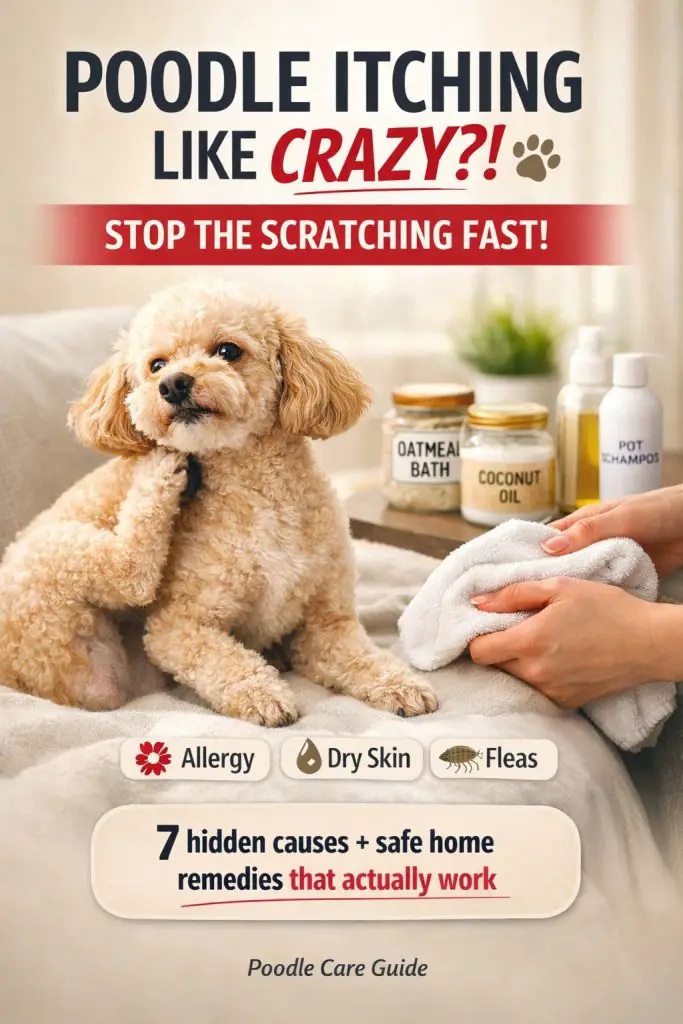
If your poodle is itching like crazy, I know how stressful that feels. One minute they’re totally fine, and the next they’re scratching nonstop, licking their paws, rubbing their face on the carpet, or chewing their skin like something is bothering them 24/7. The hard part is that itching can look “small” at first, but it can quickly turn into red skin, hair loss, scabs, or even infections if it keeps going.
I’ve dealt with itchy poodles (and itchy, sensitive-skin dogs in general) more times than I can count, and honestly, I think it’s one of the most frustrating issues because the cause isn’t always obvious. In my opinion, poodles are amazing dogs, but they can also be extra sensitive to grooming products, weather changes, diet ingredients, and allergies. I feel like once you understand the true trigger behind the itching, you can calm it down faster and stop it from constantly coming back.
And don’t worry—this article is going to help you. We’ll go through the most common causes of poodle itching, what you can safely try at home, and how to know when it’s time to stop guessing and call the vet. By the end, you’ll have a clear plan and your poodle will (hopefully) be way more comfortable.
Why Poodles Get Itchy So Easily (And Why It Can Feel Random)
Poodles are known for their curly, fluffy coat and low-shedding hair, but that same coat can make skin issues more common. Their curls can trap moisture close to the skin, hold onto allergens from outside, and hide early signs of irritation until it gets bad.
Poodles are also more likely than some other breeds to deal with allergies and sensitive skin. That means even normal stuff like grass, dust, shampoo, or certain foods can cause a full-body itch spiral.
Here’s the most important thing to understand: itching is almost always a symptom, not the real problem. Your dog is reacting to something, and your job is to figure out what that “something” is.
Quick Clues to Check Before You Try Any Home Remedy
Before you start changing food or trying treatments, take a few minutes to observe your poodle like a little detective. This helps you narrow down the cause much faster.
Look closely for these signs:
- Paw licking or chewing
- Face rubbing on furniture or carpet
- Scratching the neck and ears
- Biting at the base of the tail
- Red bumps, scabs, or raw patches
- Flaky skin / dandruff
- Bad smell (musty, sour, or “corn chips”)
- Hair thinning or bald spots
- Ear shaking or scratching ears constantly
If you notice bleeding, open sores, swelling, pus, or your dog is crying from discomfort, skip home remedies and call your vet. That usually means infection or severe inflammation.
Common Causes of “Poodle Itching Like Crazy”
Let’s go through the most common reasons your poodle might be scratching nonstop. Sometimes it’s just one cause. Other times, it’s a combo (like allergies + dry skin + grooming irritation all happening together).
Environmental allergies (super common)
Environmental allergies are one of the biggest reasons poodles itch, especially during certain seasons. They can react to things like pollen, mold, grass, or dust mites—and they don’t need to roll in a flower field to have a reaction. Sometimes just a normal walk is enough.
Common triggers include:
- Pollen (spring and summer)
- Grass
- Mold and mildew
- Dust mites
- Household sprays, perfumes, scented candles
- Laundry detergent residue
Signs it might be environmental:
- Itching gets worse in certain months
- Your dog licks paws after walks
- Rubbing face or snout a lot
- Random ear irritation
IMO, if your poodle gets itchy every year around the same time, allergies are at the top of the list.
Food allergies and food sensitivities
Food allergies can show up as skin itching, not just stomach problems. In fact, many dogs will itch for months before you ever see tummy trouble.
Common food triggers:
- Chicken (very common)
- Beef
- Dairy
- Eggs
- Wheat
- Some treats with mixed ingredients
Signs it could be food-related:
- Itching all year long (not seasonal)
- Paw licking and ear infections together
- Red belly or itchy rear end
- Sometimes soft stool (but not always)
Food issues can be sneaky because they can build slowly over time. One day your dog is fine, then suddenly they’re itchy every single day.
Fleas (even when you don’t see them)
A lot of people assume “no fleas = not fleas,” but that’s not always true. Some dogs have flea allergy dermatitis, which means a single bite can cause major itching.
Even if you don’t see fleas, check for:
- Scratching near tail base
- Tiny black specks (“flea dirt”) in fur
- Sudden itch flare after outdoor time
If fleas are possible in your area, consistent flea prevention is usually worth it—because it’s one of the easiest problems to rule out.
Dry skin (weather + bathing makes it worse)
Dry skin is a huge cause of itching in colder weather or when baths happen too often. Indoor heating can dry skin out fast, and harsh shampoos can strip natural oils.
Dry skin triggers include:
- Winter weather
- Indoor heaters
- Low humidity
- Frequent bathing
- Strong shampoos or fragrance sprays
- Not rinsing fully
Signs of dry skin:
- Dandruff flakes
- Dull coat
- Mild itch all over
- No strong smell or wet patches
Dry skin also makes the skin barrier weaker, so your poodle becomes more sensitive to everything else.
Yeast overgrowth (the “corn chip smell” problem)
Yeast infections are super common in paws, ears, and skin folds. And poodles can be extra prone to them because moisture gets trapped in curly coats.
Signs it might be yeast:
- Smells like corn chips, bread, or “musty socks”
- Constant paw licking
- Red between the toes
- Darkened or thickened skin
- Greasy coat feeling
Yeast can get worse fast if the skin stays warm and damp, so drying paws and coat fully is a big deal.
Grooming irritation (clippers, products, mats)
Poodles get groomed more than most breeds, so grooming-related itching is extremely common.
It can happen from:
- Clippers irritating the skin (clipper rash)
- A new shampoo, spray, or conditioner
- Mats being brushed out aggressively
- Hair being cut very short suddenly
Signs grooming may be the cause:
- Itching starts right after grooming
- Small red bumps on back or legs
- Your dog acts “annoyed” when touched
- No strong smell or infection signs
FYI, even “natural” shampoos can cause reactions. Skin doesn’t care if something is natural—it cares if it’s irritating.
Skin infections and hot spots
If your poodle has been scratching long enough, skin can break, and bacteria can move in. That’s how you get hot spots or infected patches.
Signs of a hot spot:
- A wet, raw patch of skin
- Strong smell
- Yellow crusting or oozing
- Your dog won’t stop licking one spot
Hot spots usually need a vet because they spread quickly and can become painful.
Ear infections (sometimes the itch is coming from the ears)
Sometimes the “itching” you’re seeing is actually ear-related. Dogs will scratch their neck and ears and rub their face, and it can look like a skin problem.
Signs of ear infection:
- Head shaking
- Ear scratching
- Redness inside the ear
- Bad smell
- Brown or yellow discharge
Poodles can be more prone to ear issues, especially if hair grows inside the ears and traps moisture.
Safe Home Remedies to Calm Your Poodle’s Itching
Now let’s talk about what you can do at home to help right away. These are gentle options that are generally safe and helpful for mild to moderate itching.
Oatmeal bath (the classic itch relief)
Colloidal oatmeal is one of the best natural ways to calm itchy skin.
Why it helps:
- Supports the skin barrier
- Reduces inflammation
- Soothes irritation
How to do it:
- Use a dog-safe oatmeal shampoo or colloidal oatmeal powder
- Bathe with lukewarm water (not hot)
- Let it sit for 5–10 minutes
- Rinse thoroughly
- Pat dry gently
Best for: dryness, mild allergies, irritated skin
Avoid if: your dog has open sores, bleeding, or severe infection smell
Paw rinse after walks (amazing for allergy itch)
This is one of the simplest things that helps the most for environmental allergies.
Quick routine:
- Rinse paws with clean lukewarm water
- Dry carefully (especially between toes)
- Repeat after every walk during allergy season
This removes pollen and grass allergens before your dog licks them into the skin.
Switch to a fragrance-free sensitive skin shampoo
If your poodle has sensitive skin, strong shampoo can keep the itch going nonstop.
Look for:
- Fragrance-free
- Hypoallergenic
- Oatmeal-based
- No harsh detergents
And here’s the part most people miss: rinse longer than you think. Leftover shampoo residue is a huge hidden itch trigger.
Coconut oil (use carefully)
Coconut oil can help some dogs, but it can also make others worse—especially if yeast is involved.
Safe way to try it:
- Use a tiny amount on dry patches only
- Don’t coat the whole body
- Stop immediately if itching increases
- Prevent licking if needed
Best for: mild dryness
Not great for: yeast smells, greasy skin, recurring infections
Keep the coat fully dry and mat-free
Moisture trapped in curls is a common reason itching keeps coming back.
Helpful habits:
- Brush regularly to prevent mats
- Dry your poodle completely after baths
- Don’t let them stay damp after rain walks
- Check armpits, belly, behind ears
A slightly damp coat can turn into a yeast party fast, especially in warmer weather.
Add omega-3s for long-term skin support
Omega-3 fatty acids are one of the best long-term supports for itchy skin from inflammation.
Options include:
- Vet-approved fish oil supplements
- Omega-3 rich dog foods
Best for: allergies, dry skin, overall coat health
Keep in mind: results take a few weeks, so don’t expect overnight magic.
Use a humidifier (super helpful in winter)
If your poodle’s itching gets worse in winter, indoor air dryness may be part of the problem.
A humidifier can:
- Reduce flaking
- Improve skin moisture
- Calm mild itching
It’s simple, but it works surprisingly well for some dogs.
What NOT to Do (Because Some “Fixes” Make It Worse)
When your dog is suffering, it’s tempting to try every hack online. But some things are risky.
Avoid these:
- Human anti-itch creams (many aren’t dog-safe)
- Essential oils (some are toxic to dogs)
- Vinegar on raw or inflamed skin
- Over-bathing (dries skin out)
- Ignoring ear problems
The goal is calm the skin + find the trigger, not overwhelm the skin with harsh treatments.
When It’s Time to Call the Vet
Home remedies are great for mild itch, but some cases need professional help.
Call your vet if you notice:
- Open sores, bleeding, swelling
- Pus, crusting, or strong odor
- Hair loss spreading quickly
- Your dog can’t sleep due to itching
- Recurring ear infections
- Symptoms lasting more than 7–10 days
A vet can check for:
- Parasites
- Yeast and bacteria infections
- Allergies
- Underlying skin conditions
If your poodle is scratching nonstop and getting worse, don’t wait too long. Skin issues escalate quickly.
Easy Prevention Tips So It Doesn’t Keep Coming Back
Once you calm the itching, prevention helps keep flare-ups smaller.
Try this routine:
- Brush 2–4 times a week
- Rinse paws after walks during allergy season
- Use gentle shampoo every 3–6 weeks
- Wash bedding weekly
- Keep flea prevention consistent
- Track what foods or treats might be triggers
- Watch ears closely for early signs of infection
Consistency is the secret. Skin problems love “random routines.”
FAQ: Poodle Itching Like Crazy? (Causes And Home Remedies)
Why is my poodle itching so much but there are no fleas?
It could still be flea allergy dermatitis, where one bite triggers intense itching. Environmental allergies like pollen and dust mites are also extremely common. Consistent flea prevention and allergy-friendly habits like paw rinsing can help confirm the cause.
What is the safest home remedy for poodle itching?
A colloidal oatmeal bath is one of the safest and most effective options for mild itching. It soothes irritated skin, supports the skin barrier, and reduces inflammation when used with lukewarm water and a thorough rinse.
Why does my poodle keep licking their paws until they’re red?
Paw licking often points to allergies from grass or pollen, but it can also be yeast overgrowth—especially if there’s a corn chip or musty smell. Rinsing paws after walks and drying thoroughly helps, but recurring redness should be evaluated by a vet.
Can food allergies cause itching even if my poodle has normal poop?
Yes. Many dogs show skin symptoms first, like itching, ear infections, or paw licking, without obvious stomach issues. A proper elimination diet under veterinary guidance is the most reliable way to confirm food triggers.
When should I stop home remedies and take my poodle to the vet?
Go to the vet if you see open sores, swelling, oozing, strong odor, spreading hair loss, severe discomfort, or if the itching lasts longer than 7–10 days. These signs can mean infection or a more serious allergic condition needing prescription treatment.