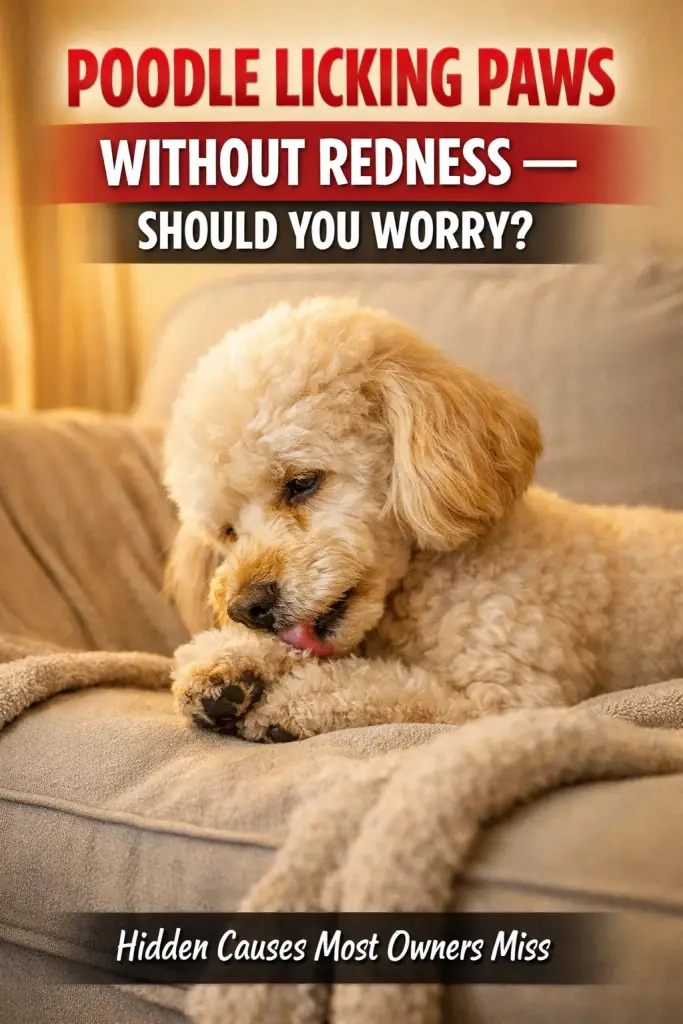
If you’ve noticed your Poodle licking their paws over and over, you’re definitely not alone. Many Poodle owners suddenly realize one day that the licking isn’t just grooming — it’s constant. You might hear that repetitive licking sound at night, see damp fur around the paws, or even notice redness between the toes. It can be stressful because you don’t know if it’s something minor… or something that needs attention.
I think most pet parents immediately worry when they see repetitive behavior like this. I feel the same way when dogs show signs that might mean discomfort. In my experience, paw licking is one of those things that can be totally harmless sometimes — but other times it’s your dog’s way of saying, “Hey, something isn’t right.”
The good news is this guide will walk you through clear, safe, step-by-step understanding of why Poodles lick their paws constantly and what you can do to help. No scary medical talk — just practical, owner-friendly advice you can actually use.
Why Is My Poodle Licking Their Paws Constantly?
Most of the time, constant paw licking in Poodles happens due to allergies, irritation, anxiety, or minor infections. Less commonly, it can relate to pain or skin conditions.
Quick Fix & Action List
• Check paws for redness, swelling, cuts, or debris
• Wipe paws after outdoor walks
• Watch if licking happens more during stress or boredom
• Switch to hypoallergenic food if allergies are suspected
• Keep paws dry and clean
• Use vet-approved soothing balms if skin is irritated
• Book a vet visit if licking causes wounds or bleeding
Immediate Safe Action:
If paws look raw, swollen, or bleeding → stop licking using a cone temporarily and contact your vet.
Why Poodles Are More Prone To Paw Licking
Poodles have sensitive skin and allergy-prone immune systems. Their curly coat can also trap moisture and irritants around paws.
Common Poodle-specific triggers:
• Environmental allergies
• Food sensitivities
• Yeast overgrowth between toes
• Anxiety or high intelligence boredom
• Grooming product reactions
Most Common Causes Of Constant Paw Licking
Allergies (Most Common Cause)
This is usually the #1 reason.
Types include:
Environmental Allergies
• Grass
• Pollen
• Dust mites
• Mold
Food Allergies
• Chicken
• Beef
• Dairy
• Wheat
Signs It’s Likely Allergies:
• Licking all four paws
• Ear itching
• Red belly or armpits
• Seasonal flare-ups
Yeast Or Bacterial Infections
Moist paws = perfect environment for yeast.
Signs of infection:
• Corn chip smell (classic yeast sign)
• Brown saliva staining
• Red inflamed skin
• Sticky or greasy paw pads
Anxiety Or Stress Licking
Poodles are highly intelligent and emotional dogs.
They may lick when:
• Left alone too long
• Under-stimulated mentally
• Routine changes happen
• Loud environments stress them
Think of it like nail biting in humans.
Injury Or Pain
Sometimes licking is your dog trying to soothe pain.
Possible triggers:
• Tiny cuts
• Thorn splinters
• Nail injuries
• Joint discomfort
Always check paws closely.
When Paw Licking Becomes A Problem
Occasional licking = normal grooming.
Constant licking = something needs attention.
Warning Signs To Watch
• Hair loss on paws
• Skin turning dark brown or black
• Bleeding or open sores
• Limping
• Sudden behavior change
If you see these → vet visit recommended.
How To Stop Poodle Paw Licking (Step-By-Step)
Step 1 — Inspect The Paws
Check:
- Between toes
- Under pads
- Around nails
- Top of paw
Look for:
• Redness
• Swelling
• Foreign objects
• Moist skin
Step 2 — Clean The Paws Properly
Daily paw wipe helps a LOT.
Simple routine:
- Use lukewarm water or dog paw wipes
- Dry thoroughly (very important)
- Apply vet-safe paw balm if dry
Moisture left behind = yeast risk.
Step 3 — Identify Allergy Patterns
Ask yourself:
• Worse after walks? → Environmental
• Worse after meals? → Food
• Worse during certain months? → Seasonal
Tracking patterns helps vets help faster.
Step 4 — Improve Mental Stimulation
If licking is anxiety-related:
Try:
• Puzzle feeders
• Snuffle mats
• Short training sessions
• Daily routine consistency
IMO, mental stimulation is massively underrated for Poodles.
Step 5 — Diet Review
Sometimes switching to:
• Limited ingredient food
• Fish-based protein
• Grain-free (only if vet recommends)
can reduce allergy triggers.
Home Remedies That Are Generally Safe
(Always patch test first)
Helpful options:
• Oatmeal paw soaks
• Coconut oil (thin layer only)
• Vet-approved antiseptic wipes
Avoid:
• Human creams
• Essential oils (many are toxic to dogs)
• Alcohol-based cleaners
Vet Treatments You Might See (FYI)
Your vet might suggest:
• Allergy medication
• Medicated wipes
• Antifungal creams
• Antibiotics (if infection exists)
• Cytopoint or Apoquel for severe allergies
These are common and safe when prescribed properly.
How To Prevent Future Paw Licking
Daily Prevention Routine
• Wipe paws after walks
• Keep paw hair trimmed
• Maintain healthy weight
• Feed consistent diet
• Reduce exposure to known allergens
Simple Paw Health Checklist (Save This)
✔ Check paws weekly
✔ Dry paws after rain or baths
✔ Watch seasonal allergy changes
✔ Provide mental stimulation daily
✔ Use gentle grooming products
✔ Track licking frequency changes
✔ Schedule yearly vet skin check
This checklist alone prevents many chronic issues.
Frequently Asked Questions
Is It Normal For Poodles To Lick Their Paws Sometimes?
Yes. Occasional licking = grooming.
Constant obsessive licking = investigate cause.
Can Food Alone Cause Paw Licking?
Yes — especially protein allergies.
But usually it’s food + environment combined.
How Long Before I Should Worry?
If licking continues:
• More than 3–5 days nonstop
• Causes redness or sores
• Comes with limping
→ Get vet advice.
Emotional Side: You’re Not A Bad Dog Parent
Let’s be real — when dogs do repetitive behaviors, owners often feel guilty.
But here’s truth:
You noticing the behavior early already means you’re doing great.
Paw licking is extremely common, especially in Poodles. Catching it early makes treatment easier and faster.
Final Thoughts: You’ve Got This
If your Poodle is licking their paws constantly, don’t panic. Most causes are manageable once you identify the trigger. With small daily habits — paw cleaning, allergy awareness, and mental stimulation — many dogs improve quickly.
Your dog isn’t being “annoying” or “weird.” They’re communicating. And the fact you’re reading this means you care enough to listen.
Start with simple checks. Track patterns. And if something feels off, trust your instinct and talk to your vet.
Healthy paws = happier Poodle = less stress for you.
And honestly? A comfortable, itch-free Poodle is one of the happiest sights any dog parent can have. 🐾