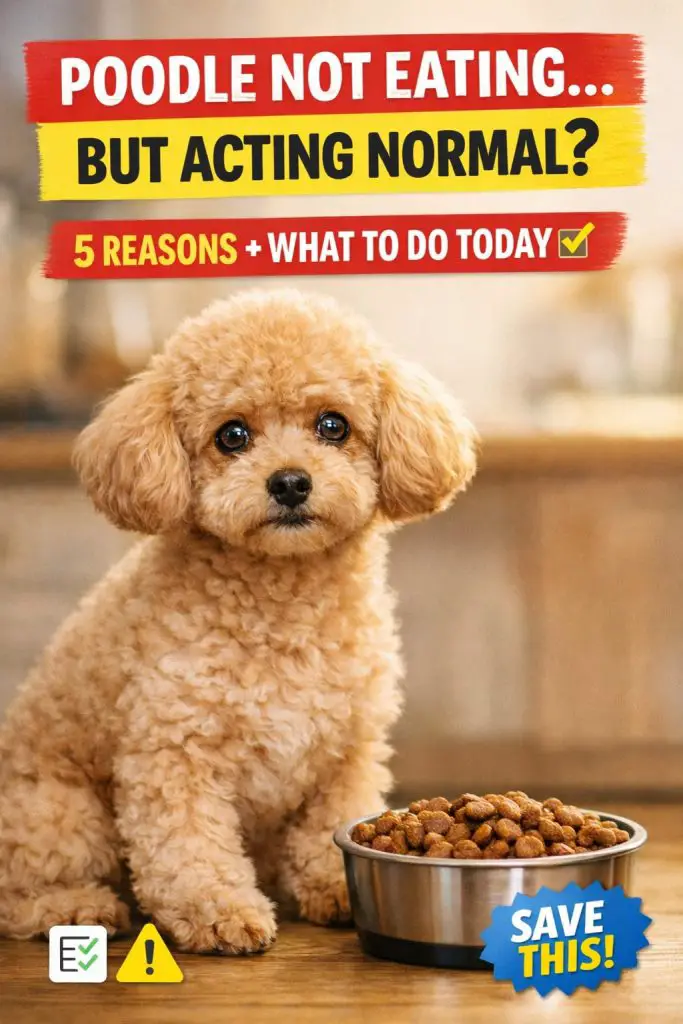
If your Poodle is not eating but acting normal, I totally get why you’re confused (and a little stressed). One minute they’re bouncing around like usual, asking for belly rubs, playing with their toys… and the next minute they’re walking away from their bowl like it’s invisible. It feels weird because when dogs are sick, we expect them to look “sick,” right?
I’ve been around Poodles and small dogs for years, and I’ve seen this exact situation happen more times than I can count. In my opinion, Poodles are masters at acting fine even when something small is bothering them (or when they’re just being picky). I think the hardest part is figuring out if it’s a harmless phase… or a sign you should take seriously. In this article, I’ll help you sort it out step-by-step.
The good news? Most of the time, this issue has a clear explanation and an easy fix. And even if it turns out to be something medical, you’ll know what to look for and what to do next—so you’re not guessing or panicking.
Why Would a Poodle Stop Eating But Still Act Normal?
Here’s the honest truth: appetite changes don’t always match energy changes.
A Poodle can seem totally okay because:
- They still have enough energy stored up
- They’re excited by attention, walks, or play
- The problem is mild (or early)
And sometimes… they’re simply holding out for something better. 😅
But before we call your Poodle “picky,” let’s take a smart approach and rule out the important stuff first.
First: Quick Checklist (Is This an Emergency?)
Before you try any tricks or food swaps, do a quick scan. If your dog checks any of these boxes, it’s time to call your vet ASAP.
🚩 Red Flags That Mean “Don’t Wait”
Contact a vet quickly if your Poodle has:
- Not eaten for 24+ hours (adult) or 12 hours (puppy)
- Vomiting, especially multiple times
- Diarrhea, especially watery or bloody
- Lethargy, weakness, or hiding
- Bloated belly or painful stomach
- Drooling, pawing at mouth, or trouble swallowing
- Labored breathing
- Signs of dehydration (dry gums, sunken eyes, sticky mouth)
Bold takeaway: If your Poodle isn’t eating AND something else looks off, treat it as urgent.
Step 1: Confirm It’s Really “Not Eating”
This sounds obvious, but sometimes dogs are eating less, not nothing.
Ask yourself:
- Are they eating treats but not meals?
- Are they skipping breakfast but eating dinner?
- Are they eating half their food and leaving the rest?
- Did you switch the bowl, the brand, or feeding location?
What “Not Eating” Usually Means
Most owners mean:
- The dog sniffs the food and walks away
- The dog eats one bite and quits
- The dog refuses kibble but accepts soft food
And that gives us clues.
Step 2: The Most Common Causes (And What They Mean)
Let’s break down the most likely reasons your Poodle won’t eat but still seems normal.
1) Your Poodle Is Being Picky (Yes, It’s Real)
Poodles are intelligent, sensitive, and honestly… a little dramatic sometimes. 😄
They can learn fast that refusing food leads to tastier options.
Common picky triggers:
- Too many treats
- Too many table scraps
- New food they don’t like
- Food is stale
- Eating in a stressful environment
IMO, picky eating is the #1 cause when everything else seems normal.
2) They’re Holding Out for “Better Food”
If you recently offered chicken, rice, wet food, or snacks, your Poodle might be thinking:
“Why should I eat boring kibble when I might get the good stuff again?”
That’s not bad behavior—it’s just dog logic.
3) Dental Pain (Even If They Still Play!)
This one is sneaky.
A Poodle may still act happy and playful but avoid food because chewing hurts.
Check for:
- Bad breath
- Red or swollen gums
- Dropping kibble while chewing
- Eating slower than usual
- Only licking soft foods
Bold takeaway: Mouth pain is one of the biggest hidden reasons dogs stop eating.
4) Stress or Routine Changes
Dogs can lose appetite from changes humans think are “no big deal.”
Things like:
- Guests in the house
- A recent move
- Loud noises (construction/fireworks)
- New pet or baby
- Different feeding schedule
Even switching where the bowl sits can cause some Poodles to hesitate.
5) Too Many Treats (The “Snack Trap”)
Treats add up fast, especially for small dogs.
If treats make up more than 10% of daily calories, your Poodle may skip meals because they’re already full.
And FYI—training treats can be tiny but frequent, so it adds up without you noticing.
6) A Mild Stomach Upset (But Not Serious Yet)
Sometimes the stomach is slightly off, but your dog still feels “okay enough” to behave normally.
Possible mild causes:
- Eating grass
- Sneaking human food
- Eating something weird outside
- Rich treats (cheese, fatty foods)
Usually, appetite comes back within a day if nothing serious is going on.
7) Heat or Weather Changes
Dogs often eat less when it’s hot.
Poodles (especially active ones) may drink more and eat less during warm days. If your Poodle is hydrated and acting normal, weather can absolutely be the reason.
8) Food Has Gone Bad or Lost Its Smell
Kibble can go stale, and dogs care about smell way more than we do.
Signs food might be “off”:
- The bag has been open for weeks
- Stored in a warm area
- Smells oily or different
- Expired date is close
Quick tip: Try offering a fresh handful from a new bag and compare reactions.
Step 3: What You Should Do (In the Right Order)
This is the part you really came for—so let’s keep it simple and practical.
✅ Step-by-Step Plan to Get Your Poodle Eating Again
1) Remove Treats for 24 Hours
I know, it feels mean. But this is a clean test.
If your Poodle skips meals but happily eats treats, this helps reset appetite fast.
Goal: Make real food the only option.
2) Offer Fresh Food at Set Times (Then Remove It)
Try a simple feeding structure:
- Put the food down for 15–20 minutes
- If they don’t eat, pick it up
- No grazing all day
This helps rebuild a feeding routine.
Bold takeaway: Scheduled feeding stops picky habits from getting worse.
3) Warm the Food Slightly
Warming food boosts smell—and smell triggers appetite.
Try:
- Add warm water to kibble and let it soften
- Microwave wet food for 5–8 seconds (not hot!)
Just make sure it’s warm, not burning.
4) Switch the Bowl (Yes, Really)
Some Poodles hate certain bowls.
Common issues:
- Metal bowl clanging scares them
- Bowl is too deep (whisker fatigue happens in some dogs)
- Bowl smells like soap
Try:
- A flat plate
- Ceramic bowl
- Stainless steel (freshly rinsed well)
5) Add a Simple, Safe “Food Topper”
If your Poodle needs a little encouragement, add something light—without turning dinner into junk food.
Good topper options:
- Plain boiled chicken (tiny amount)
- A spoon of warm low-sodium broth
- Pumpkin puree (plain, not pie filling)
- A small bit of wet food mixed in
Important: Mix it in—don’t just place it on top. Otherwise they’ll eat the topper and leave everything else.
6) Make Sure the Food Is the Right Size for a Poodle
Some kibble is too hard or too big, especially for toy and miniature Poodles.
Try:
- Small breed kibble
- Softer kibble
- Wet food temporarily (if needed)
7) Monitor Water Intake and Bathroom Habits
This is a major clue.
Watch:
- Drinking normally?
- Peeing normally?
- Pooping normally?
- Any straining or constipation?
If everything looks normal and they’re acting normal, it often means it’s not an emergency, but still worth watching.
Step 4: When to Call the Vet (Even If They Seem Fine)
This part matters because some serious issues start with only one symptom: not eating.
Call your vet if:
- Your Poodle refuses food for more than 24 hours
- Your Poodle is a puppy and hasn’t eaten in 12 hours
- Your dog suddenly refuses all food including favorite treats
- You notice weight loss
- You suspect dental pain
- You think they ate something unsafe
“Acting Normal” Doesn’t Always Mean “Everything Is Fine”
Dogs are good at hiding discomfort, especially breeds that are alert and energetic like Poodles.
Bold reminder: Appetite changes are a health signal—don’t ignore it if it lasts.
Common Mistakes That Make the Problem Worse
If your Poodle skips one meal, your brain goes into rescue mode. Totally normal! But these mistakes can accidentally create a picky eater long-term.
Avoid These Common Traps
- Constantly switching foods every meal
- Overfeeding treats to “make up for it”
- Leaving food out all day
- Adding rich toppings every time
- Panicking and forcing food
Instead, stick to a calm routine and do small adjustments.
What If Your Poodle Only Eats Wet Food (And Refuses Kibble)?
This is super common.
If your Poodle refuses kibble but eats wet food:
- It could be dental sensitivity
- The kibble might be too hard
- The wet food might simply smell better
What You Can Do
Try this transition plan:
- Mix 75% wet + 25% kibble
- After 2–3 days: 50% wet + 50% kibble
- After 2–3 days: 25% wet + 75% kibble
- Then full kibble again (if you want)
Pro tip: Soak kibble with warm water first to soften it.
What If Your Poodle Is Not Eating Breakfast But Eats Dinner?
That might actually be fine.
Some dogs naturally eat later in the day, especially if:
- They’re less active in the morning
- They get morning treats
- They’re stressed during morning routines
Try This Simple Fix
- Offer breakfast later (like 10–11 AM)
- Reduce treats early in the day
- Make breakfast smaller, dinner larger
If weight stays stable and energy is normal, this isn’t usually a big issue.
Special Note: Puppies vs Adult Poodles
Puppies (More Sensitive)
Poodle puppies should not go long without food.
Reasons:
- They have smaller energy reserves
- Blood sugar can drop faster
- Growth needs consistent calories
If a puppy skips meals, call your vet sooner rather than later.
Adult Poodles (Usually More Flexible)
Adult dogs can skip one meal and be okay—especially if they’re hydrated and energetic.
But if it goes beyond a day, you should investigate.
Simple “At-Home Appetite Test” You Can Try Today
This is my favorite way to tell if it’s picky behavior or something else.
The 3-Offer Test
Offer these one at a time:
- Normal kibble
- Warmed kibble (with water)
- Small amount of plain boiled chicken
If your Poodle refuses all three, that’s more concerning.
If they refuse kibble but inhale chicken… that’s usually pickiness or mild discomfort.
Bold takeaway: Refusing everything is a bigger warning sign than refusing kibble.
How to Prevent This From Happening Again
Once your Poodle starts eating again, you’ll want to avoid repeating the cycle.
Healthy Feeding Habits That Help Long-Term
- Feed at the same times daily
- Keep treats under 10% of calories
- Avoid frequent food switching
- Store kibble properly (airtight container)
- Do regular dental checks
- Keep a calm feeding area
Small routines = big results.
Final Thoughts (You’ve Got This)
Seeing your Poodle not eating but acting normal can feel confusing, because your gut says something is off—but your dog is still bouncing around like usual. Most of the time, it’s something simple like pickiness, treats, stress, or mild stomach upset.
Start with the easy fixes: remove treats, set meal times, warm the food, and watch bathroom habits. If it lasts more than 24 hours (or your puppy skips meals), call your vet to be safe. Either way, you’re already doing the right thing by paying attention.
FAQ: Poodle Not Eating But Acting Normal (What To Do)
1) How long can a Poodle go without eating if they seem fine?
Most healthy adult Poodles can skip a meal and be okay, but more than 24 hours without eating is a red flag and should be checked by a vet. Puppies should be seen sooner—within 12 hours if they won’t eat.
2) Why is my Poodle not eating kibble but will eat treats?
This is usually due to picky eating habits, too many treats, or boredom with the food. It can also be caused by dental discomfort if chewing kibble hurts. A structured feeding routine and fewer treats often fixes it.
3) Should I change my Poodle’s food immediately?
Not right away. Sudden food switching can make appetite issues worse. First try warming the food, using set meal times, and removing treats. If they still refuse food after 24 hours, talk to your vet before making a big diet change.
4) What can I add to my Poodle’s food to encourage eating?
Safe options include warm water, a small amount of plain boiled chicken, pumpkin puree, or a little low-sodium broth. Mix it into the food instead of placing it on top to avoid picky habits.
5) When is “not eating but acting normal” actually serious?
It’s serious if your dog refuses food for over 24 hours, refuses favorite treats, shows vomiting/diarrhea, seems painful, or is a puppy. Some illnesses start with appetite loss only, so ongoing refusal should always be evaluated by a veterinarian.