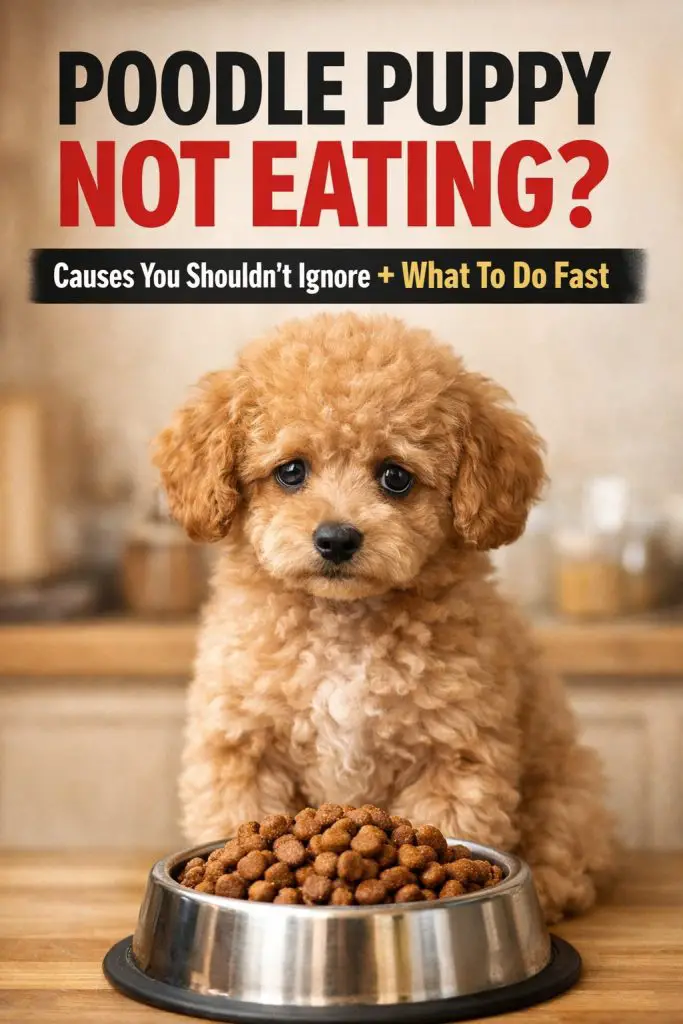
If your poodle puppy is not eating, it can be downright stressful. One day they’re bouncing around the house like a fluffy tornado, and the next they’re turning their nose up at food you know they should love. A puppy refusing meals can leave you wondering if something is seriously wrong or if you’re just overthinking it.
I’ve been there myself, and honestly, I remember staring at an untouched bowl thinking, Is this normal? Did I mess something up? In my opinion, food issues in puppies feel extra scary because they’re so small and growing so fast. I think that’s why I’m so passionate about breaking this topic down in a calm, practical way and helping you figure out what’s really going on.
The good news? Most cases of poodle puppy not eating are temporary and fixable. This article will walk you through the most common causes, what you can do right now, and when it’s time to call the vet—so you can stop guessing and start helping your puppy feel like themselves again.
Why Poodle Puppies Sometimes Refuse Food
Before jumping into solutions, it helps to understand why this happens. Puppies don’t skip meals for no reason, but the reason isn’t always serious.
Some causes are harmless and short-lived, while others need attention sooner rather than later. Knowing the difference is key.
Normal Reasons Your Poodle Puppy Isn’t Eating
Adjusting to a New Home
If you recently brought your poodle puppy home, this is one of the most common reasons for appetite loss.
New sights, smells, people, and routines can overwhelm a puppy. Stress alone can temporarily suppress appetite.
Signs this is the cause:
- Puppy is playful but not eating much
- Refusal lasts 1–3 days
- No vomiting, diarrhea, or lethargy
IMO, this is usually nothing to panic about—just a transition phase.
Food Changes or Preferences
Poodles can be surprisingly picky for such small dogs.
If you recently:
- Switched brands
- Changed flavors
- Moved from breeder food to store-bought food
Your puppy might simply not like the new option or need time to adjust.
Sudden food changes can also upset their stomach, making them hesitant to eat.
Teething Discomfort
Between 3–6 months, teething can make chewing uncomfortable.
Hard kibble may hurt sore gums, causing your puppy to avoid food even if they’re hungry.
You might notice:
- Chewing on furniture or toys
- Drooling more than usual
- Preferring softer foods
This phase is temporary, but it does affect appetite.
Concerning Causes You Shouldn’t Ignore
Digestive Upset or Mild Illness
A puppy that isn’t eating and shows other symptoms may not be feeling well.
Watch for:
- Diarrhea
- Vomiting
- Excessive sleepiness
- Whining or discomfort
Even a mild tummy bug can reduce appetite. Puppies have sensitive systems, FYI.
Parasites
Intestinal worms are unfortunately common in puppies.
They can cause:
- Poor appetite
- Weight loss
- Pot-bellied appearance
- Loose stools
This is why regular deworming is so important, especially in young poodles.
Vaccination Side Effects
After vaccinations, it’s normal for some puppies to eat less for 24–48 hours.
This usually comes with:
- Mild lethargy
- Slight soreness
- Reduced interest in food
If appetite doesn’t return after two days, it’s worth checking in with your vet.
How Long Is Too Long for a Puppy Not to Eat?
This is the question most owners ask—and for good reason.
General guideline:
- 12–24 hours: Usually okay if puppy is otherwise acting normal
- 24–48 hours: Monitor closely
- More than 48 hours: Call your vet
Poodles are small, and young puppies shouldn’t go long without nutrients.
What To Do When Your Poodle Puppy Won’t Eat
Now let’s get practical. Here’s how to handle the situation step by step.
Step 1: Check Your Puppy’s Overall Behavior
Before focusing only on food, look at the bigger picture.
Ask yourself:
- Is my puppy playful?
- Drinking water normally?
- Using the bathroom as usual?
If the answer is yes, the issue is likely minor.
Step 2: Stick to a Consistent Feeding Schedule
Free-feeding often backfires with picky puppies.
Instead:
- Offer food at the same times daily
- Leave the bowl down for 15–20 minutes
- Pick it up if uneaten
- Offer again at the next scheduled meal
This teaches your puppy that meals are predictable—not negotiable.
Step 3: Avoid Too Many Treats
Treats can quietly sabotage meals.
If your puppy fills up on:
- Training treats
- Table scraps
- Chews
They may simply not be hungry at mealtime.
Cut treats temporarily and see if appetite improves.
Step 4: Make Food More Appealing (Without Creating a Diva)
If teething or boredom is the issue, small tweaks can help.
Try:
- Adding warm water to kibble
- Mixing in a spoon of plain boiled chicken
- Slightly warming the food
Important: Do not constantly change foods. That teaches your puppy to hold out for better options.
Step 5: Create a Calm Feeding Environment
Poodles are sensitive and easily distracted.
Make sure:
- Feeding area is quiet
- No other pets hovering
- No loud noises or chaos
A stressed puppy rarely eats well.
Foods That Are Easier for Poodle Puppies to Eat
If chewing seems to be the problem, texture matters.
Good options include:
- Softened kibble
- High-quality puppy wet food
- Vet-approved puppy toppers
Always ensure food is age-appropriate and nutritionally balanced.
Common Mistakes That Make the Problem Worse
Sometimes we accidentally make things harder.
Avoid:
- Constantly switching food brands
- Hand-feeding long term
- Offering human food as a “backup”
- Skipping vet visits when symptoms persist
Short-term fixes are fine. Long-term habits can create picky eaters.
When to Call the Vet Immediately
Trust your instincts here.
Contact your vet if your puppy:
- Refuses food for more than 48 hours
- Is lethargic or weak
- Has vomiting or diarrhea
- Is losing weight
- Seems painful or withdrawn
Early intervention is always better with puppies.
Long-Term Tips to Prevent Future Eating Issues
Once your puppy is back to eating, these habits help prevent repeat problems.
- Keep feeding times consistent
- Use measured portions
- Limit treats
- Schedule regular vet checkups
- Stick with one high-quality puppy food
Healthy routines build healthy appetites.
FAQ: Poodle Puppy Not Eating – Causes And What To Do
Why is my poodle puppy suddenly not eating?
Sudden appetite loss is often caused by stress, food changes, teething, or mild illness. If your puppy is otherwise active and alert, it’s usually temporary. If it lasts more than 48 hours or includes other symptoms, consult your vet.
Is it normal for a poodle puppy to skip meals?
Yes, occasionally. Puppies may skip a meal due to excitement, fatigue, or minor digestive upset. Skipping multiple meals in a row is not normal and should be addressed.
Can teething make my poodle puppy stop eating?
Absolutely. Teething can make chewing painful, especially with hard kibble. Softening food or offering softer options can help during this phase.
Should I change my puppy’s food if they won’t eat?
Not immediately. Frequent food changes can make the issue worse. First, rule out stress, treats, and feeding habits. If the problem continues, consult your vet before switching foods.
When should I worry about my poodle puppy not eating?
You should worry if your puppy hasn’t eaten for more than 48 hours, seems lethargic, is vomiting, has diarrhea, or shows signs of pain. Puppies need regular nutrition, and prolonged appetite loss requires veterinary care.