What If the “Clean” Smell Is Actually the Problem?
Have you ever finished bathing your dog, stepped back to admire that fluffy coat, and thought, “Why does my pup seem itchy already?” If yes, you’re not alone. I’ve been there too—standing in the bathroom, towel in hand, wondering why something meant to clean and protect might be doing the exact opposite.
That moment is what pushed me to dig deeper into grooming shampoos. The truth is uncomfortable but important: not all grooming shampoos are safe, even when they’re marketed as “gentle” or “vet-approved.” Some contain ingredients that can irritate skin, trigger allergies, or cause long-term health issues with repeated use.
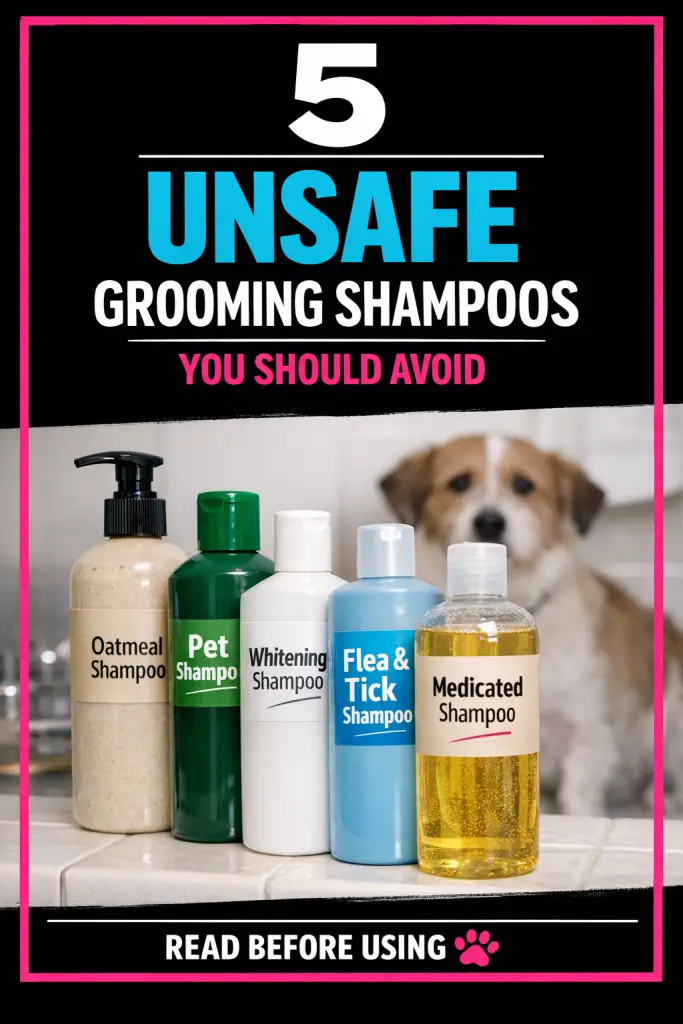
So today, let’s talk honestly about 5 unsafe grooming shampoos—not by brand-shaming, but by exposing the types of shampoos and ingredients you should avoid. Think of this as a friendly chat between dog parents who just want the best for their furry family members.
Why Some Grooming Shampoos Can Be Unsafe
Before we jump into the list, it helps to understand why certain grooming shampoos are risky in the first place.
Dogs have much more sensitive skin than humans. Their skin barrier is thinner, their pH balance is different, and their bodies absorb chemicals more easily. What feels mild to us can be harsh for them.
Unsafe shampoos often contain:
- Harsh detergents
- Synthetic fragrances
- Preservatives linked to skin reactions
- Ingredients banned or restricted in other countries
IMO, this isn’t about panic—it’s about awareness.
1. Shampoos Containing Harsh Sulfates
Why Sulfates Are a Red Flag
Sulfates are commonly used to create that rich, foamy lather people associate with “clean.” But for dogs, sulfates can be extremely drying and irritating.
Common sulfates include:
- Sodium Lauryl Sulfate (SLS)
- Sodium Laureth Sulfate (SLES)
Potential Problems
- Strips natural oils from the coat
- Causes dry, flaky, or itchy skin
- Can worsen existing skin conditions
FYI: More foam does not mean better cleaning.
Who Should Avoid These Most
- Dogs with sensitive skin
- Puppies
- Senior dogs
- Breeds prone to allergies
2. Shampoos With Artificial Fragrances and Dyes
The “Smells Amazing” Trap
Let’s be honest—some grooming shampoos smell incredible. But that strong scent often comes from synthetic fragrances, which are among the most common causes of skin reactions in dogs.
Artificial dyes add nothing except visual appeal.
Why These Ingredients Are Unsafe
- Can cause redness, itching, and rashes
- May trigger sneezing or watery eyes
- Some fragrance blends contain undisclosed chemicals
The scary part? Companies don’t have to list every chemical used in a fragrance blend.
Signs Your Dog Might Be Reacting
- Excessive scratching after baths
- Paw licking
- Head shaking
If the shampoo scent lasts days, that’s usually not a good thing.
3. Shampoos With Preservatives Linked to Skin Irritation
Preservatives Aren’t Always the Problem—These Ones Are
Preservatives keep products shelf-stable, but certain types have been linked to allergic reactions and skin sensitivity.
Ingredients to watch out for:
- Parabens
- Formaldehyde-releasing preservatives
- Methylisothiazolinone (MI)
Why They’re Risky
- Known to cause contact dermatitis
- Can build up in the body over time
- May trigger delayed reactions
What makes this tricky is that reactions aren’t always immediate. You might not connect the dots right away.
4. Medicated Shampoos Used Without Proper Guidance
When “Medicated” Doesn’t Mean “Safe”
Medicated shampoos can be helpful when used correctly. But using them without proper guidance can do more harm than good.
Common issues include:
- Overuse
- Using the wrong formula
- Applying for too long or too often
Potential Side Effects
- Skin thinning
- Increased sensitivity
- Disrupted natural skin balance
These shampoos often contain strong active ingredients meant for specific conditions—not routine grooming.
Important: Just because a shampoo treats a condition doesn’t mean it’s safe for long-term or frequent use.
5. Shampoos Containing Alcohol or Solvents
Drying Agents That Do Real Damage
Some grooming shampoos include alcohol-based ingredients or solvents to help with quick drying or degreasing. Unfortunately, these can be extremely harsh on dog skin.
Why Alcohol-Based Shampoos Are Unsafe
- Causes intense dryness
- Weakens the skin barrier
- Can create micro-irritations
Dogs rely on their skin barrier for protection. Once it’s compromised, infections and chronic irritation become more likely.
If your dog’s coat feels squeaky-clean or brittle after a bath, that’s usually a warning sign.
How to Spot an Unsafe Grooming Shampoo (Quick Checklist)
Here’s a simple way to evaluate a shampoo before it touches your dog’s skin:
- ❌ Strong artificial fragrance
- ❌ Long chemical ingredient list
- ❌ Sulfates listed near the top
- ❌ No clear usage instructions
- ❌ Marketed for “all pets” without specifics
If you can’t pronounce half the ingredients, it might be worth pausing.
What Happens When You Use Unsafe Grooming Shampoos Long-Term?
The effects aren’t always immediate, which makes this issue easy to overlook.
Possible Long-Term Effects
- Chronic itching and scratching
- Recurrent skin infections
- Dull, brittle coat
- Increased allergy sensitivity
Over time, repeated exposure can weaken your dog’s natural defenses. That’s not something any pet parent wants.
Safer Alternatives to Look For
Now for the good news—safe options do exist.
Features of a Safer Shampoo
- Sulfate-free formulas
- Fragrance-free or naturally scented
- Clear labeling
- Short, transparent ingredient lists
Look for shampoos designed specifically for dogs, with ingredients chosen for canine skin pH.
Less is often more when it comes to grooming.
How Often Should You Actually Bathe Your Dog?
Overbathing—even with a good shampoo—can still cause problems.
General Guidelines
- Most dogs: every 4–6 weeks
- Active or outdoor dogs: slightly more often
- Dogs with skin issues: follow professional advice
Bathing too often strips natural oils, making skin more vulnerable.
Common Myths About Grooming Shampoos
Let’s clear up a few misconceptions:
- “Natural means safe.” Not always. Some natural ingredients can still irritate.
- “Expensive equals better.” Price doesn’t guarantee safety.
- “Human shampoo is fine in emergencies.” Occasionally, maybe—but not as a habit.
Awareness beats assumptions every time.
Final Thoughts: Clean Should Never Hurt
At the end of the day, grooming should be a bonding experience, not a source of discomfort for your dog. Understanding the risks behind unsafe grooming shampoos empowers you to make better choices—and avoid unnecessary skin issues altogether.
To recap:
- Avoid shampoos with harsh sulfates, artificial fragrances, risky preservatives, and drying alcohols
- Be cautious with medicated formulas
- Always read labels and trust your dog’s reactions
If something doesn’t feel right after a bath, listen to that instinct.
Your dog depends on you to choose wisely—and with the right knowledge, you absolutely can.