If your dog eats food containing onion or garlic, call your veterinarian or the ASPCA Animal Poison Control Center (888-426-4435) immediately — do not wait for symptoms to appear. Both onion and garlic are toxic to dogs at any dose, and damage to red blood cells can begin within 24 hours even if your dog looks completely fine.
Many pet owners discover the problem after sharing leftovers or when a dog raids the kitchen counter. Knowing what to do if your dog eats food with onion or garlic in the next 30 minutes can make a real difference in how quickly your vet can intervene.
What Should I Do Right Away If My Dog Ate Onion or Garlic?

Call a vet or poison helpline within 15–30 minutes of discovering what your dog ate. The ASPCA Animal Poison Control Center is available 24/7 at 888-426-4435 (a $95 consultation fee may apply). Early decontamination — typically induced vomiting if ingestion was within 1–2 hours — is far more effective than treating symptoms after they develop.
Do not induce vomiting unless a veterinarian explicitly tells you to. Doing it incorrectly can cause additional harm.
When you call, have this information ready:
BEFORE YOU SCROLL PAST
Vet-Recommended Articles: 👇
👉 Earthbath Oatmeal And Aloe Shampoo Review
👉 Best Collar For Long Haired Dogs
- Your dog’s weight in pounds or kilograms
- What food was eaten and roughly how much (estimate in cups, tablespoons, or grams)
- Whether the onion or garlic was raw, cooked, dried, or powdered
- How long ago your dog ate it
- Any symptoms you have already noticed
Garlic powder and onion powder are significantly more concentrated than fresh forms — about 7–10 times more potent by weight, according to the Merck Veterinary Manual. Even a small amount of powder in seasoned food can be dangerous.
Onion and Garlic Toxicity in Dogs at a Glance
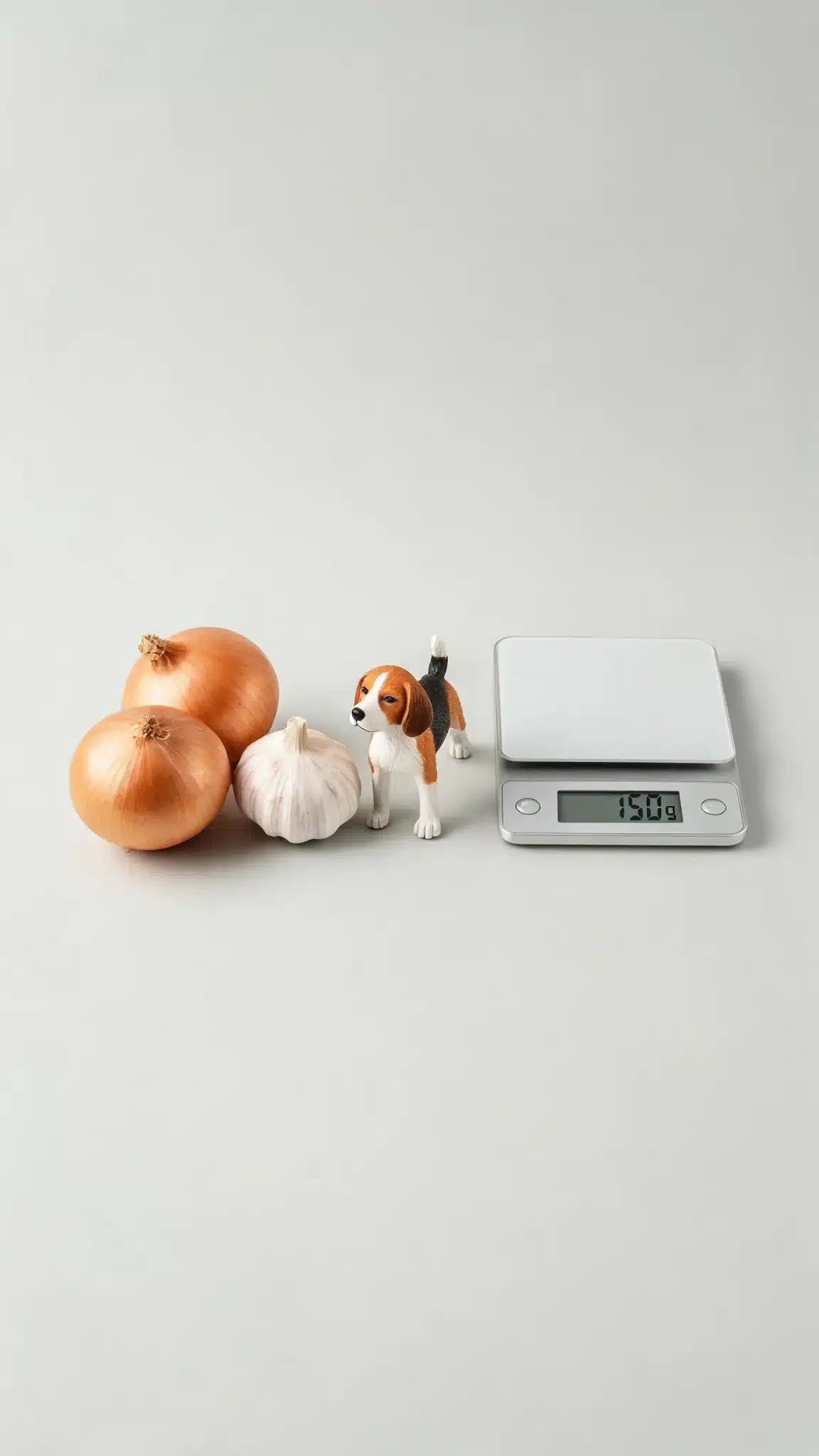
- Toxic compounds: Organosulfides (thiosulfates and disulfides) that damage canine red blood cells
- Toxic threshold: As little as 0.5% of a dog’s body weight in onion — roughly 1 oz (28 g) for a 12-lb (5.5 kg) dog — can cause harm
- Garlic vs. onion: Garlic is approximately 3–5 times more toxic than onion per gram
- Onset of symptoms: Signs of illness typically appear 1–5 days after ingestion
- Condition caused: Heinz body hemolytic anemia — destruction of oxygen-carrying red blood cells
- Recovery timeline: With prompt treatment, most dogs recover within 1–2 weeks; severe cases may require a blood transfusion
- Emergency contact: ASPCA Animal Poison Control Center — 888-426-4435 (24/7)
How Much Onion or Garlic Is Actually Toxic to Dogs?
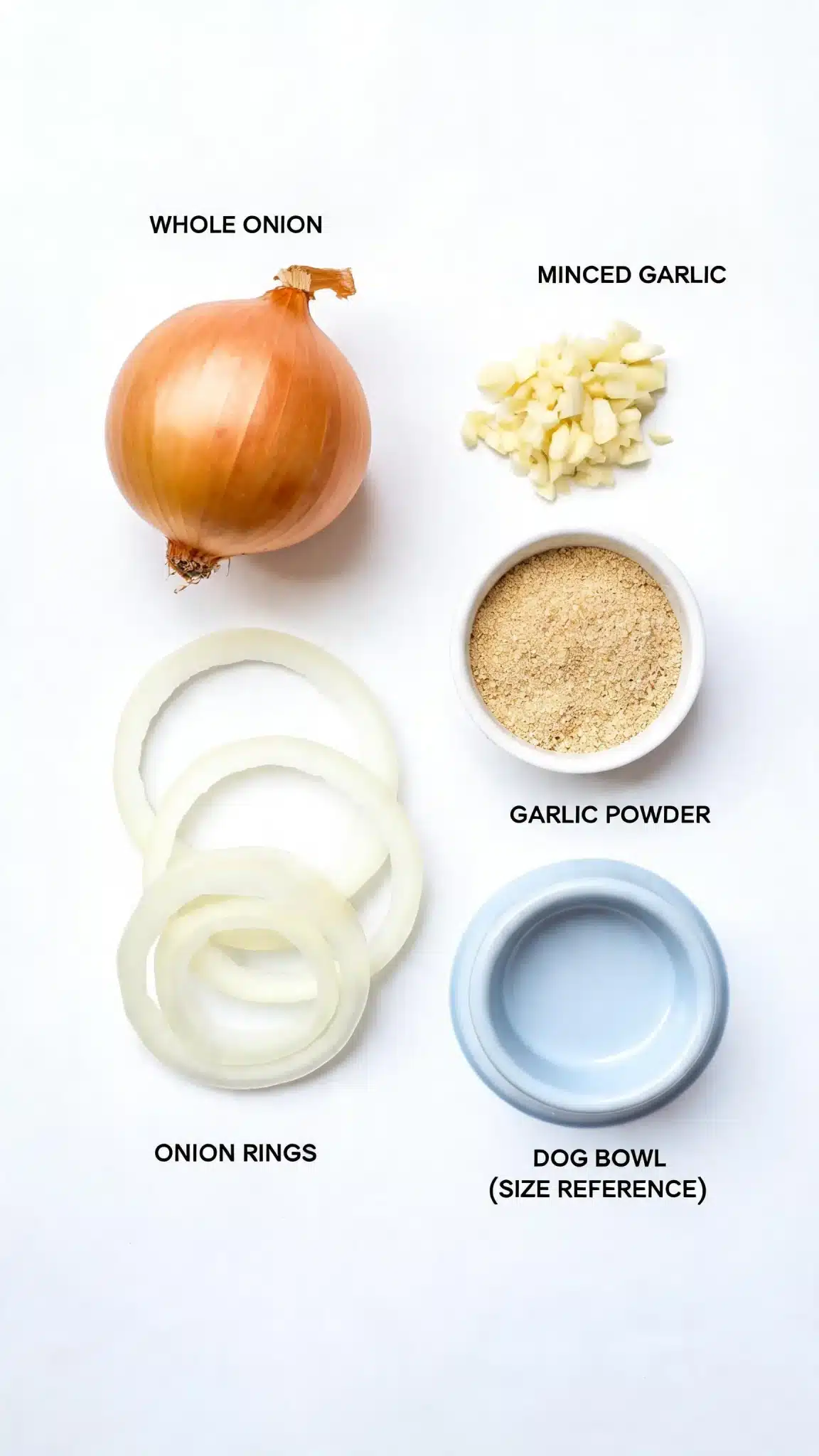
The toxic dose of onion for dogs is generally considered to be 0.5% of body weight or more, based on data referenced in the Merck Veterinary Manual. For a 20-lb (9 kg) dog, that equals roughly 1.6 oz (45 g) — about one small onion. Garlic is 3–5 times more toxic per gram, so the threshold is much lower: approximately 1–2 cloves (5–10 g) can be problematic for a medium-sized dog.
There is no truly “safe” dose — repeated small exposures accumulate over time.
| Dog Weight | Onion Concern Threshold | Garlic Concern Threshold |
|---|---|---|
| 10 lb (4.5 kg) | ~0.75 oz (21 g) | ~0.15–0.3 oz (4–8 g) |
| 20 lb (9 kg) | ~1.5 oz (43 g) | ~0.3–0.6 oz (8–17 g) |
| 50 lb (22.7 kg) | ~3.6 oz (102 g) | ~0.7–1.4 oz (20–40 g) |
| 80 lb (36 kg) | ~5.7 oz (162 g) | ~1.1–2.3 oz (32–65 g) |
These thresholds reflect acute single exposures. A dog that eats small amounts of garlic bread or onion soup regularly over weeks can still develop toxicity even if no single meal exceeded the threshold.
What Are the Symptoms of Onion or Garlic Poisoning in Dogs?

Symptoms of onion or garlic toxicity in dogs usually appear 1–5 days after ingestion and are driven by Heinz body hemolytic anemia — a process in which damaged red blood cells are broken down faster than the body can replace them. The ASPCA lists lethargy, pale gums, reduced appetite, and reddish urine among the primary warning signs.
Knowing these warning signs your dog is unhappy or unwell can help you catch problems early before they escalate.
Watch for these symptoms in the days after exposure:
- Lethargy or sudden drop in energy
- Pale, white, or yellowish gums (check by pressing a finger to the gum)
- Reddish, brown, or orange-tinted urine
- Rapid breathing or panting at rest
- Vomiting or diarrhea within the first few hours
- Weakness or reluctance to exercise
- Elevated heart rate (normal resting rate for dogs: 60–140 bpm depending on size)
Pale gums combined with lethargy and reddish urine is the classic triad of hemolytic anemia. If you see all three, treat it as an emergency and go to a veterinary clinic — do not wait for a scheduled appointment.
How Will a Vet Treat Onion or Garlic Poisoning?

Veterinary treatment for onion or garlic toxicity depends on how much time has passed since ingestion and how severe the anemia is. According to Cornell University College of Veterinary Medicine, decontamination within 1–2 hours of ingestion (induced vomiting, activated charcoal) is the most effective intervention. After that window, treatment shifts to supportive care.
Keeping your dog calm during recovery matters — everyday stressors can slow a dog’s recovery when their body is already working hard to rebuild red blood cells.
Decontamination (within 1–2 hours)
The vet may induce vomiting using apomorphine or 3% hydrogen peroxide under controlled conditions. Activated charcoal may follow to reduce further absorption from the gastrointestinal tract. A veterinary activated charcoal product is something pet owners can ask their vet about having on hand.
Supportive Care (after 2 hours or with symptoms present)
- IV fluids to maintain hydration and support kidney function
- Oxygen therapy if the dog is breathing rapidly or showing distress
- Blood work every 24–48 hours to monitor red blood cell counts (normal canine PCV: 37–55%)
- Blood transfusion if packed cell volume (PCV) drops below 20–25%
- Hospitalization for 1–3 days in moderate-to-severe cases
Most dogs with mild-to-moderate exposure and prompt treatment recover fully within 1–2 weeks as the bone marrow produces new red blood cells.
Raw vs. Cooked vs. Powdered: Does the Form Matter?
Yes — the form of onion or garlic changes the concentration of toxic compounds, but not whether toxicity occurs. Cooking does not destroy organosulfides; a cooked onion is still toxic to dogs. Powdered and dehydrated forms are the most dangerous because they are 7–10 times more concentrated by weight than fresh onion or garlic, according to the Merck Veterinary Manual.
No form of onion or garlic is safe for dogs — raw, cooked, pickled, or powdered.
| Form | Relative Toxicity | Common Sources |
|---|---|---|
| Raw onion or garlic | Baseline | Accidentally dropped while cooking |
| Cooked onion or garlic | Similar to raw | Soups, stews, stir-fries, table scraps |
| Garlic powder / onion powder | 7–10× more concentrated | Seasoned meats, baby food, snack foods |
| Garlic supplements (marketed for dogs) | Variable — often unsafe | Some herbal pet products |
Baby food is a surprising hidden source — some formulas contain onion or garlic powder as flavoring. Always read labels before offering any human food to your dog. A simple habit of checking ingredients on shared food can prevent most accidental exposures. Having a bag of dog-safe training treats on hand makes it easier to redirect sharing habits.
Common Mistakes Pet Owners Make After a Dog Eats Onion or Garlic
- Waiting to see if symptoms develop: Symptoms appear 1–5 days after ingestion, long after the treatment window has closed. Call a vet immediately, not after you see pale gums.
- Inducing vomiting at home without guidance: Improper induction can cause aspiration pneumonia or additional injury. Only do this with direct veterinary instruction.
- Assuming cooked onion is safe: Heat does not break down the toxic organosulfides. Cooked onion in a soup or stew is equally dangerous.
- Dismissing small amounts: Repeated small exposures accumulate. A dog eating garlic bread twice a week can develop anemia over weeks even if no single dose was large.
- Overlooking garlic in pet supplements: Some herbal products marketed as flea deterrents contain garlic. The American Animal Hospital Association (AAHA) does not endorse garlic supplements for dogs.
Frequently Asked Questions About What To Do If Your Dog Eats Food With Onion Or Garlic
My dog ate a tiny bit of onion in my food — should I still call the vet?
Yes, call your vet even for a small amount, especially if the onion was powdered or your dog is small. Your vet can calculate whether the dose is likely harmful based on your dog’s weight and the amount ingested.
How long after eating onion or garlic will my dog show symptoms?
Symptoms of onion or garlic toxicity in dogs typically appear 1–5 days after ingestion. Vomiting or diarrhea may occur sooner, within a few hours, but the more serious anemia signs develop later.
Is garlic more dangerous than onion for dogs?
Garlic is roughly 3–5 times more toxic than onion per gram for dogs. This means a much smaller amount of garlic — as little as 1–2 cloves for a medium-sized dog — can cause harm compared to onion.
Can a dog recover from onion or garlic poisoning without treatment?
Mild cases may resolve on their own, but moderate to severe cases require veterinary intervention. Without treatment, severe hemolytic anemia can be fatal. Prompt veterinary care within the first 1–2 hours gives the best outcome.
What if my dog ate garlic bread or onion soup — not plain onion?
Garlic bread and onion soup still contain toxic compounds in meaningful quantities. Estimate the total onion or garlic content as best you can and report that to your vet or the ASPCA Animal Poison Control Center when you call.
Are some dog breeds more sensitive to onion or garlic toxicity?
Japanese breeds — including Shiba Inus, Akitas, and Japanese Chins — appear more sensitive to oxidative damage to red blood cells, according to veterinary literature. All dogs are at risk, but these breeds may develop toxicity at lower doses.
What To Do Next
The single most important thing to remember: call a vet or the ASPCA Animal Poison Control Center (888-426-4435) within 30 minutes of any suspected onion or garlic ingestion — not after symptoms appear. Decontamination within that first 1–2 hour window is dramatically more effective than treating anemia once it sets in.
Save that number in your phone today. Many owners also keep a pet first aid kit in their home for fast reference during emergencies.
Understanding the everyday habits and stressors that put your dog at risk is just as valuable as knowing what to do in a crisis. You can learn more about common mistakes that harm dogs without owners realizing it and daily habits that stress dogs out to build safer routines from the ground up.
Sources
This article references guidance from the following authorities:
- Merck Veterinary Manual — Onion and garlic toxicity in dogs, organosulfide concentrations by form
- ASPCA Animal Poison Control Center — Emergency contact information and toxicity thresholds
- Cornell University College of Veterinary Medicine — Decontamination protocols and supportive care for toxic ingestion
- American Animal Hospital Association (AAHA) — Stance on garlic supplements in canine care