If your miniature poodle is dealing with loose stools, gassy episodes, or vomiting after meals, you are not alone. Sensitive stomachs are one of the most common issues mini poodle owners face, and it can be genuinely stressful to watch your dog suffer after every meal.
Mini poodles have a few things working against them when it comes to digestion. Their small size means even minor ingredient sensitivities can cause big reactions. On top of that, poodles as a breed are known to be more prone to food allergies and gastrointestinal sensitivity than many other breeds. Choosing the wrong food — even a well-reviewed one — can make things worse quickly.
The good news is that with the right food and a little patience, most mini poodles with sensitive stomachs do really well. This guide breaks down exactly what to look for, what to avoid, and which dog food options consistently deliver the best results for pint-sized poodles with touchy tummies.
🛒 Products Our Readers Use Every Day
👉 Glucosamine & Chondroitin Chews for Dogs
What to Feed a Mini Poodle with a Sensitive Stomach
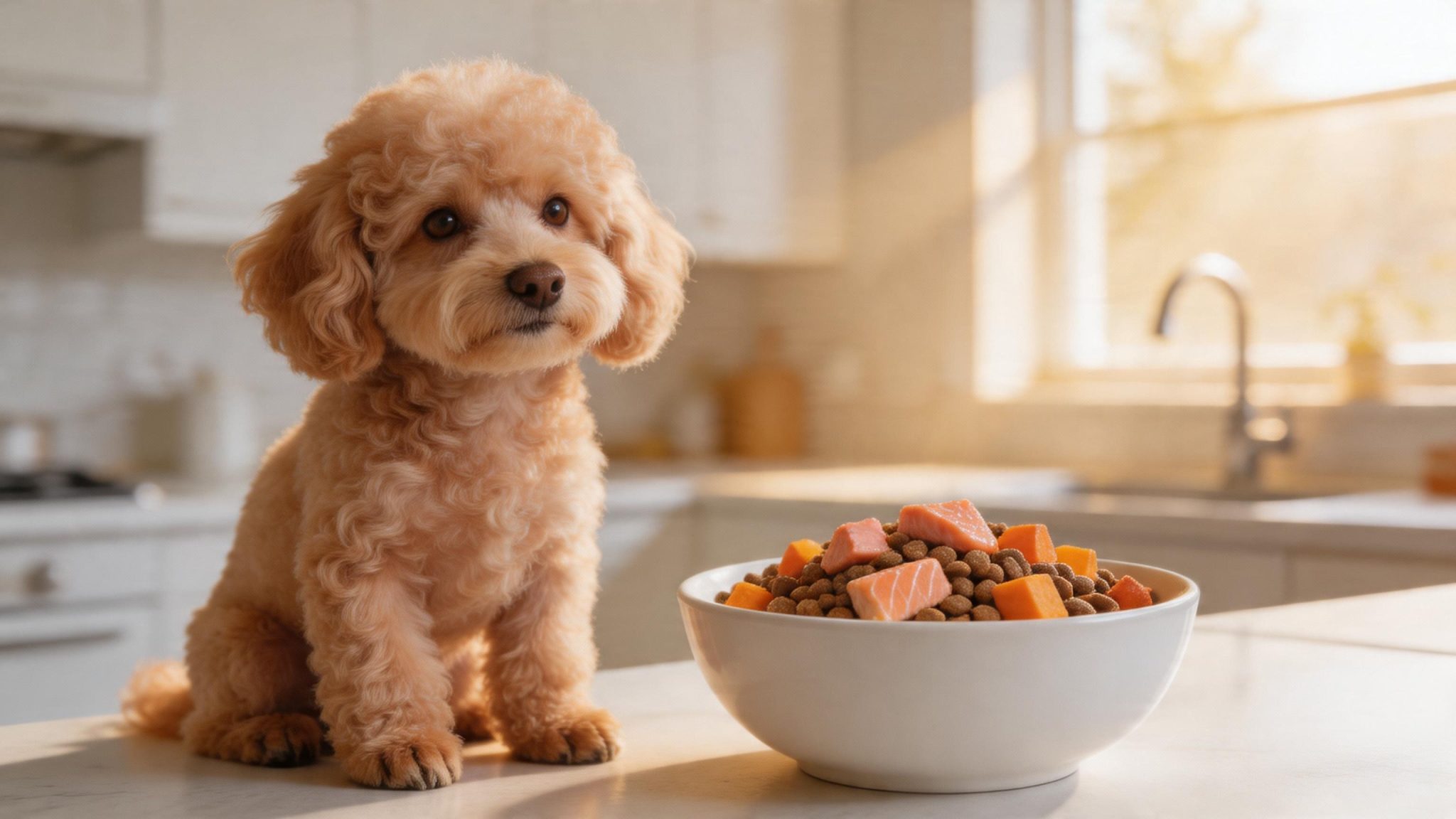
If your mini poodle is showing digestive issues, the most helpful first step is switching to a limited-ingredient, easily digestible food with a single animal protein source. Here is a quick overview of what works best:
- Choose a limited ingredient diet (LID) — fewer ingredients means fewer chances for a reaction
- Single protein source is key — options like salmon, duck, or lamb are often easier on sensitive stomachs than chicken or beef
- Look for easily digestible carbs — sweet potato, brown rice, and oatmeal are gentler than corn, wheat, or soy
- Prebiotics and probiotics in the formula help support gut health over time
- Avoid artificial preservatives, colors, and flavors — these are common stomach irritants
- Grain-free is not always better — some mini poodles actually do better with whole grains like brown rice
- Portion size matters too — mini poodles typically need only 1/2 to 1 cup of dry food per day depending on weight and activity level
If symptoms are severe or ongoing for more than a week, always check with your vet before making a food change on your own.
Why Mini Poodles Are Prone to Digestive Issues

Understanding the root cause makes it much easier to pick the right food. In our experience working with mini poodle owners, the digestive problems almost always come down to one of three things: a food allergy, a food intolerance, or a general sensitivity to low-quality ingredients.
Food Allergies vs. Food Intolerances
These two things sound similar but behave differently. A food allergy triggers an immune response — you might notice itchy skin, ear infections, or paw licking alongside the stomach upset. A food intolerance is purely digestive — your dog just cannot process a certain ingredient well, and the result is gas, diarrhea, or vomiting.
🛒 Vet-Recommended Wellness Picks
👉 Dog Probiotic & Prebiotic Powder
Many of our readers tell us their mini poodle reacted to chicken-based foods specifically. Chicken is the most common protein allergen in dogs, and it shows up in a huge number of mainstream dog foods — sometimes even hidden in the ingredient list as “poultry fat” or “chicken meal.”
Small Breed Digestive Differences
Mini poodles weigh between 10 and 15 pounds on average. At that size, their digestive system processes food faster than large breeds, and their gut bacteria can be more easily disrupted by sudden changes or poor-quality ingredients. This is why transitioning to a new food slowly over 7 to 10 days is not optional — it is essential.
A real-world example: One mini poodle owner switched her dog from a chicken-based kibble to a salmon and sweet potato formula overnight because her dog was vomiting. The vomiting got worse for three days. Once she restarted the transition gradually — mixing 25% new food with 75% old food and increasing slowly — her dog adjusted with zero stomach upset within two weeks.
Top Dog Food Types That Work for Sensitive Mini Poodles
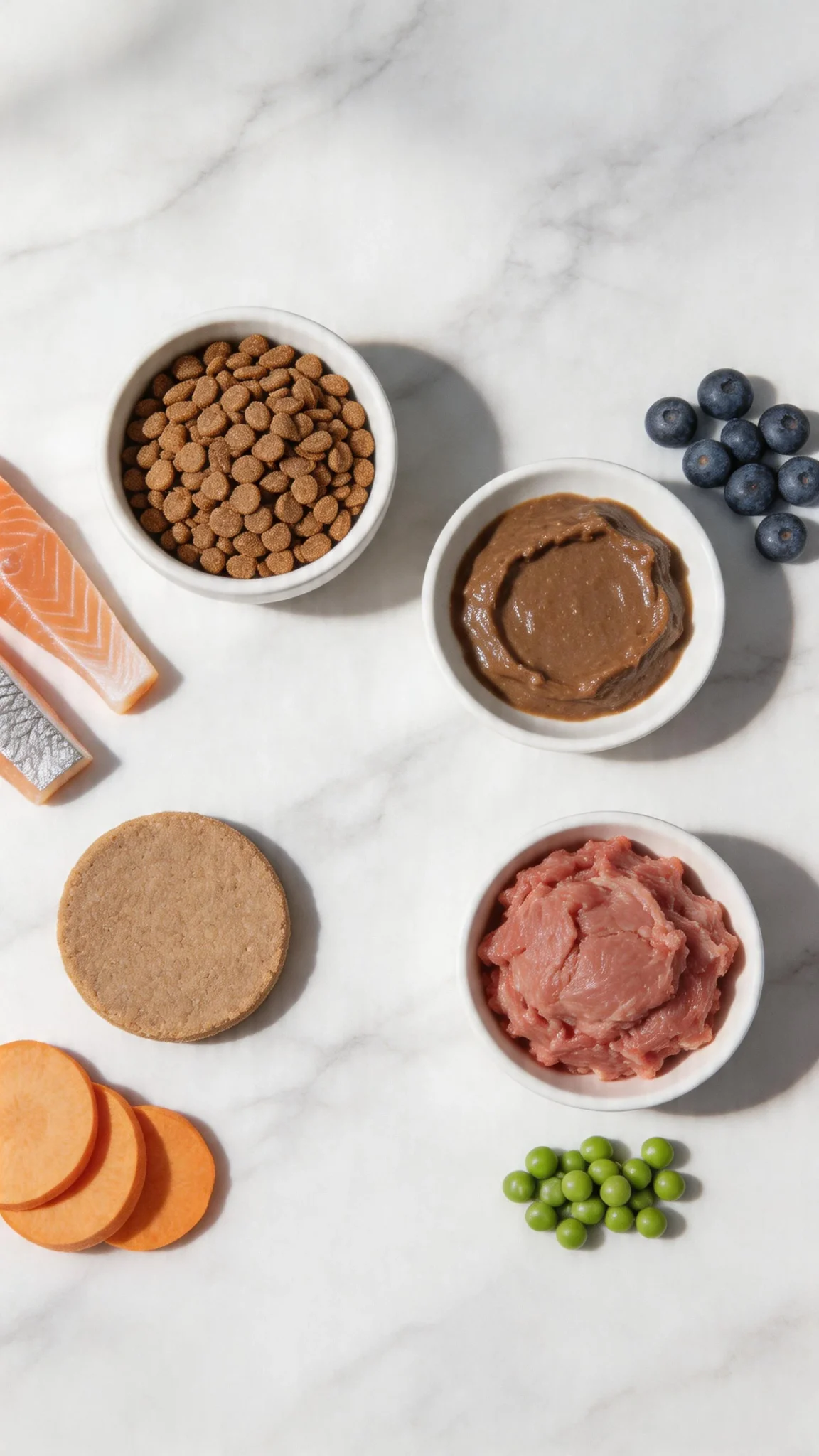
There is no single food that works for every mini poodle, but certain formulas and formats consistently perform well. Here is what we have found works best across the most common situations.
Limited Ingredient Dry Kibble
Dry kibble is still the most practical choice for most owners because it is affordable, easy to store, and widely available. For sensitive stomachs, look specifically for limited ingredient formulas with a short, clean ingredient list.
A limited ingredient small breed dog food with salmon or duck as the first ingredient and sweet potato or pea as the carb source is a solid starting point. Avoid anything with multiple protein sources in the first five ingredients — that makes it harder to identify what is causing a reaction.
Wet and Canned Food for Easier Digestion
Wet food is higher in moisture and often easier to digest than dry kibble. For mini poodles who are recovering from a stomach flare-up, mixing a small amount of sensitive stomach wet dog food into their dry food can help ease digestion and encourage eating when appetite is low.
The downside is cost and shelf life — wet food is more expensive per serving and needs refrigeration after opening. Many owners use a hybrid approach: dry kibble as the base with a tablespoon or two of wet food mixed in.
Fresh and Freeze-Dried Raw Food
Fresh dog food subscriptions and freeze-dried raw options have become popular for dogs with chronic digestive issues. What we have found is that some mini poodles with long-standing stomach problems do significantly better on fresh or lightly cooked food because it contains fewer processed additives.
Freeze-dried raw food is a good middle ground if you want the benefits of raw without the mess. Look for options with a single protein and limited added ingredients. A freeze-dried raw small breed dog food can be served on its own or used as a food topper to add digestive-friendly nutrients.
Key Ingredients to Look for and Avoid
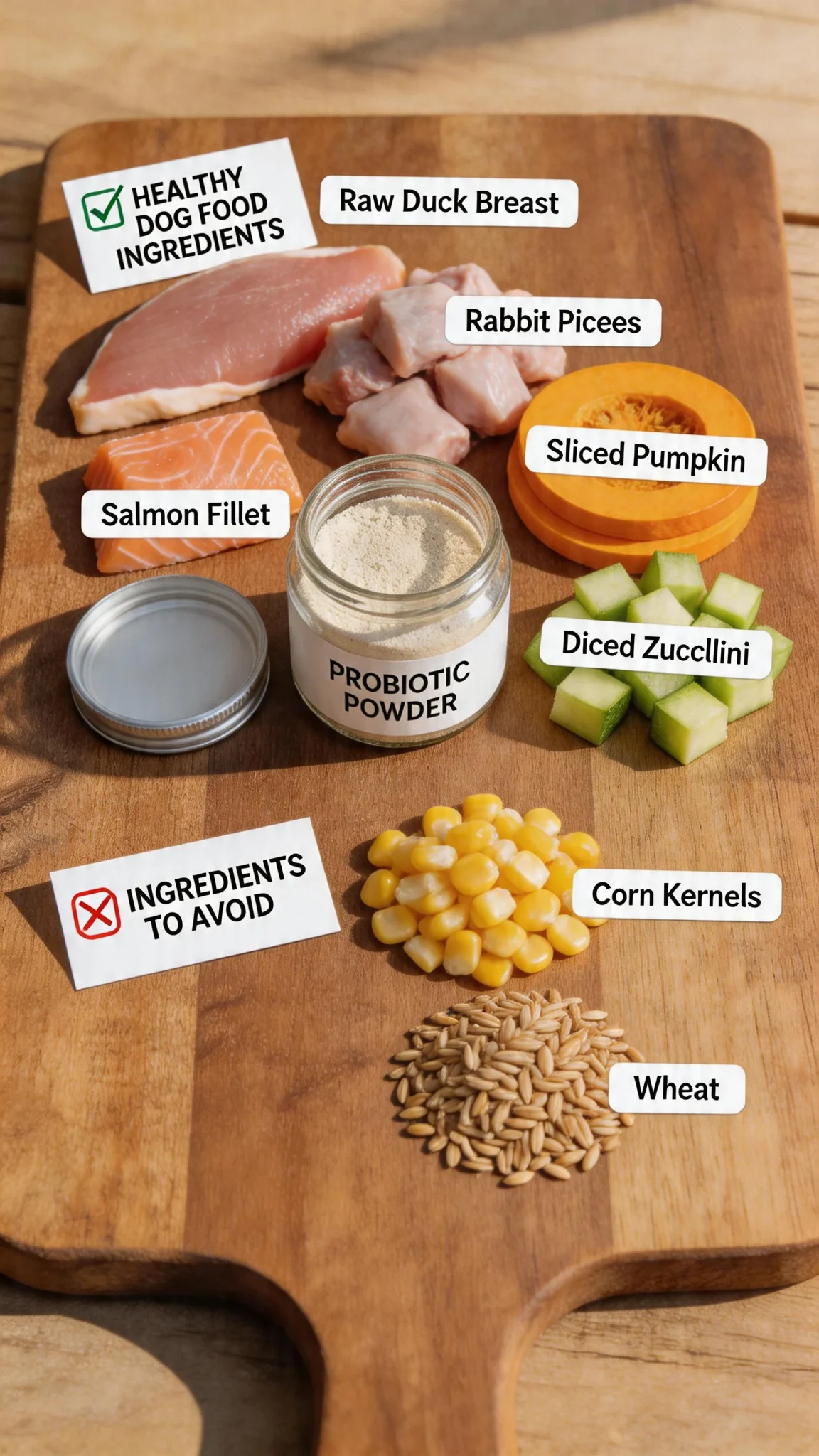
Ingredients That Support Sensitive Stomachs
- Novel proteins — duck, rabbit, venison, or salmon if your dog has not eaten them before
- Digestive enzymes — help break down food more efficiently
- Probiotics like Lactobacillus acidophilus — support healthy gut flora
- Prebiotic fiber — chicory root and pumpkin are gentle and effective
- Omega-3 fatty acids — reduce gut inflammation
- Brown rice or oatmeal — easy-to-digest carb sources
Adding a probiotic supplement for small dogs can also help support digestive recovery, especially after a flare-up or antibiotic treatment.
Ingredients to Avoid
- Corn, wheat, and soy — common fillers that can cause sensitivity
- Artificial preservatives — BHA, BHT, and ethoxyquin are linked to digestive upset
- By-product meal — lower quality protein that is harder to digest
- Multiple protein sources in one formula — makes allergy identification impossible
- High-fat formulas — can trigger pancreatitis in small breeds
- Carrageenan in wet foods — a seaweed-based thickener associated with gut inflammation
How to Switch Your Mini Poodle to a New Food Safely
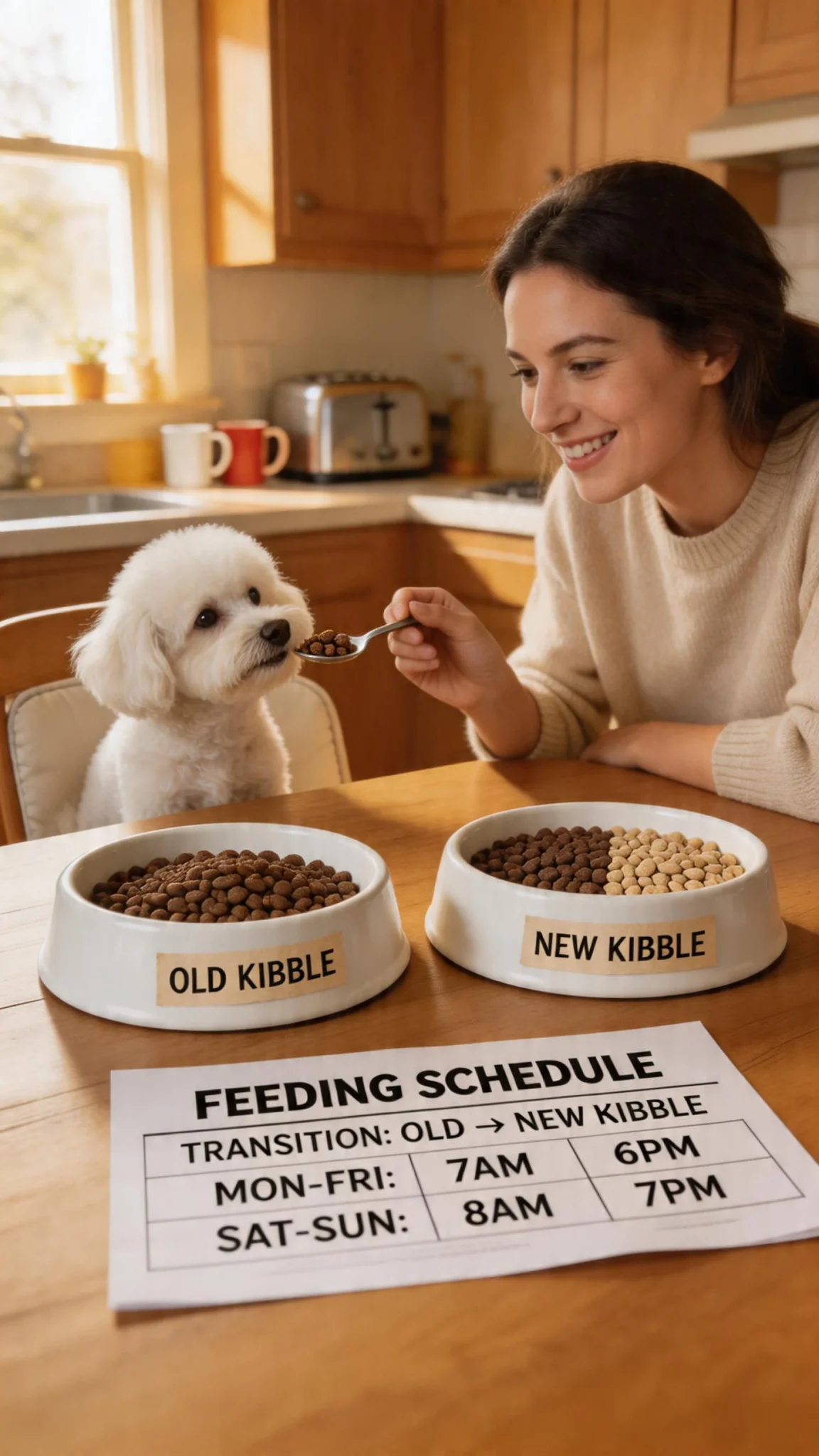
Switching foods too fast is one of the most common mistakes owners make, and it almost always makes digestive issues temporarily worse. Here is the transition schedule that works best for sensitive mini poodles:
- Days 1–2: Feed 75% old food, 25% new food
- Days 3–4: Feed 50% old food, 50% new food
- Days 5–6: Feed 25% old food, 75% new food
- Days 7–10: Feed 100% new food
If your dog shows symptoms at any stage — loose stool, vomiting, or refusing to eat — pause the transition and hold at the previous ratio for two more days before moving forward. Some sensitive dogs need a full 14-day transition rather than 7.
🛒 This Is What Vets Use For Their Own Dogs
👉 Dog Allergy Relief Immune Support Chews
During this time, avoid introducing any new treats, table scraps, or supplements. Keep the diet as consistent as possible so you can accurately track whether the new food is helping.
Common Mistakes Mini Poodle Owners Make with Sensitive Stomach Diets
Even when owners choose a great food, a few habits can undermine the whole effort. Many of our readers tell us they did not realize these were problems until they eliminated them and finally saw improvement.
- Giving too many treats — even high-quality food paired with cheap treats can cause stomach upset. Use limited ingredient dog treats for sensitive stomachs instead
- Free feeding — leaving food out all day disrupts digestive rhythm; scheduled meals (twice daily) work much better for small breeds
- Switching foods repeatedly — every time you change foods, you restart the adjustment period and make it harder to identify what is actually working
- Ignoring water intake — dehydration can worsen constipation and digestive issues; always provide fresh water alongside meals
- Overfeeding — at 10 to 15 pounds, a mini poodle does not need much food; overfeeding strains digestion and causes loose stools even with a good food
A practical scenario: One reader had been trying four different foods in two months with no improvement. When she committed to one food for a full 6 weeks without changing anything else, her mini poodle’s digestion completely normalized. Consistency was the fix — not a new food.
Expert Insights on Mini Poodle Nutrition
Veterinary nutritionists consistently recommend that dogs with chronic digestive issues be evaluated for an underlying condition before assuming the problem is purely diet-related. Conditions like small intestinal bacterial overgrowth (SIBO), inflammatory bowel disease, and exocrine pancreatic insufficiency (EPI) can all look like simple food sensitivity on the surface.
If a clean, limited ingredient diet does not produce improvement within 6 to 8 weeks, that is a strong signal to pursue diagnostic testing with your vet rather than continuing to change foods. Early testing saves time, money, and a lot of stress for both you and your dog.
According to a survey by the American Kennel Club, approximately 15 to 20 percent of dogs experience food sensitivities at some point in their lives, with small breeds and poodles ranking among the most commonly affected groups. That means if your mini poodle has a sensitive stomach, you are dealing with something genuinely common — and genuinely solvable.
Keeping your mini poodle healthy goes beyond food. If you are also thinking about grooming — which affects overall comfort and stress levels in your dog — check out our guide to the best dog clippers for poodles to keep your pup comfortable and looking great.
Frequently Asked Questions About Best Dog Food Options for Mini Poodles with Sensitive Stomachs
What Is the Best Protein for a Mini Poodle with a Sensitive Stomach?
Novel proteins like salmon, duck, rabbit, or venison tend to work best for sensitive mini poodles because they are less likely to trigger an immune response. Chicken and beef are the most common allergens, so if your dog has been eating those without improvement, switching to a novel protein is a smart next step.
Is Grain-Free Food Better for Mini Poodles with Digestive Issues?
Not necessarily. Some mini poodles do better with whole grains like brown rice and oatmeal, which provide gentle fiber and support digestion. Grain-free diets can be helpful if your dog has a specific grain allergy, but there is no blanket reason to go grain-free just because your dog has a sensitive stomach.
How Long Does It Take to See Improvement After Switching Dog Food?
Most dogs show noticeable improvement within 3 to 4 weeks of a full food transition, but for dogs with true food allergies, it can take 8 to 12 weeks to see the full benefit of an elimination diet. Give any new food at least 6 weeks of consistent feeding before deciding it is not working.
Can I Add Pumpkin to Help My Mini Poodle’s Digestion?
Yes — plain canned pumpkin (not pumpkin pie filling) is one of the most effective natural remedies for mild digestive upset in dogs. One teaspoon mixed into your mini poodle’s meal once or twice daily can help firm up loose stools and soothe the gut. It is safe, inexpensive, and most dogs love the taste.
Should I Feed My Mini Poodle Wet Food or Dry Kibble for Sensitive Stomachs?
Both can work well — what matters more is the ingredient quality and protein source than the format. A hybrid approach using dry kibble as the base with a small amount of wet food mixed in gives you the convenience of kibble with the digestibility benefits of wet food. Start with whatever format your dog is used to and transition slowly.
When Should I See a Vet About My Mini Poodle’s Stomach Issues?
See your vet right away if your dog is vomiting repeatedly, has bloody stools, is losing weight, or shows signs of pain. For milder ongoing issues like soft stools or frequent gas, a vet visit is still worthwhile if a quality diet change has not helped within 6 to 8 weeks. Some digestive problems have medical causes that food changes alone will